



01. Edit your 2017 schedule d tax worksheet online
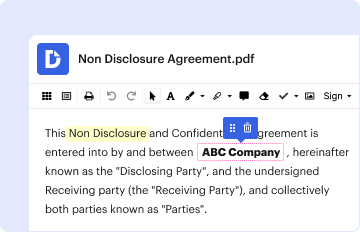
Type text, add images, blackout confidential details, add comments, highlights and more.

Type text, add images, blackout confidential details, add comments, highlights and more.
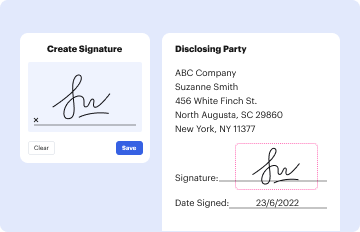
Draw your signature, type it, upload its image, or use your mobile device as a signature pad.

Send 2017 schedule d via email, link, or fax. You can also download it, export it or print it out.
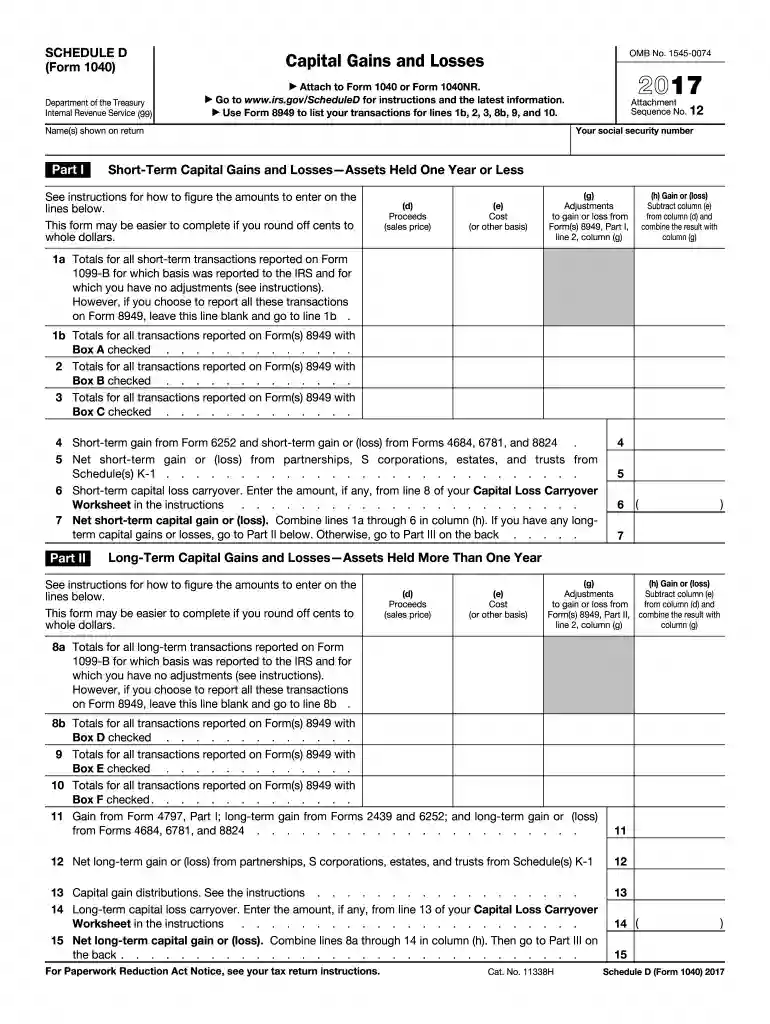
Schedule D (Form 1040) is utilized by individuals to declare capital gains and losses resulting from the sale or exchange of assets. These capital transactions could include items such as stocks, bonds, or real estate. It's a critical component in calculating your total taxable income because it records both short-term and long-term gains or losses. The distinction between these two forms of gains is vital as they are taxed differently. Short-term gains are typically taxed at ordinary income tax rates, while long-term gains may benefit from reduced tax rates.
Gather Required Information: Collect all documents detailing gains and losses, such as transaction statements from brokers or financial institutions. Ensure you have correct purchase and sale dates, acquisition and sale prices, and any related costs.
Classify Transactions: Distinguish between short-term and long-term transactions. Short-term refers to assets held for a year or less, while long-term pertains to assets held for more than a year.
Calculate Gains and Losses: For each transaction, subtract the asset's cost from the selling price to determine gains or losses. Be mindful of including all pertinent expenses.
Complete Parts I & II: Enter short-term transactions in Part I and long-term transactions in Part II. Tally the totals for each section.
Net Gains or Losses: Subtract total losses from total gains to find your net capital gain or loss. This figure will impact your overall tax liability or refund.
The Schedule D 2017 form can be acquired through various methods:
Individuals who have conducted transactions involving capital assets throughout the tax year need to use this form. These users usually include:


The IRS provides detailed instructions accompanying Schedule D. These instructions clarify which transactions need to be reported, how to calculate gains and losses, and how losses can be carried over to reduce taxable income in subsequent years. The guidelines also outline any special considerations or exceptions that may affect how taxpayers report their transactions.
Filing the Schedule D requires various supporting documents, including:
For the 2017 tax year, the Schedule D and Form 1040 were due by April 17, 2018. Taxpayers needed to ensure all forms, including extensions, were filed by this deadline to avoid penalties. If using a fiscal year different from the calendar year, filers must adhere to those specific deadlines.
Schedule D can be completed using various tax preparation software. Popular platforms like TurboTax, QuickBooks, and TaxSlayer offer robust support for inputting capital gains and losses, automating calculations, and ensuring compliance with all IRS rules. These software solutions facilitate ease of filing and offer electronic submission options.
Failing to file Schedule D accurately or omitting it from your tax return can result in penalties, including fees based on unpaid taxes (if additional taxes are due) and additional interest on owed amounts. The IRS may also audit past returns if significant discrepancies are found, making accurate reporting crucial for compliance.
The legal use of Schedule D requires honesty and accuracy in reporting all applicable gains and losses. Taxpayers must adhere to IRS rules to effectively leverage any potential tax benefits, such as loss carryovers or preferential tax treatment for long-term capital gains. Misreporting or underreporting can lead to legal ramifications.
We've got more versions of the 2017 schedule d tax worksheet form. Select the right 2017 schedule d tax worksheet version from the list and start editing it straight away!
| Versions | Form popularity | Fillable & printable |
|---|---|---|
| 2025 | 4.1 Satisfied (26 Votes) | |
| 2024 | 4.2 Satisfied (58 Votes) | |
| 2023 | 4.1 Satisfied (28 Votes) | |
| 2022 | 4.5 Satisfied (56 Votes) | |
| 2021 | 4.9 Satisfied (24 Votes) | |
| 2020 | 4.4 Satisfied (80 Votes) | |
| 2019 | 4.3 Satisfied (168 Votes) | |
| 2018 | 3.9 Satisfied (48 Votes) | |
| 2017 | 4.2 Satisfied (53 Votes) | |
| 2016 | 4.2 Satisfied (39 Votes) | |
| 2015 | 4 Satisfied (22 Votes) | |
| 2014 | 4 Satisfied (59 Votes) | |
| 2013 | 4.3 Satisfied (33 Votes) | |
| 2012 | 4 Satisfied (29 Votes) | |
| 2011 | 4 Satisfied (20 Votes) |
At DocHub, your data security is our priority. We follow HIPAA, SOC2, GDPR, and other standards, so you can work on your documents with confidence.
Jan 31, 2018 This publication discusses the rules for deduct- ing home mortgage interest. Part I contains general information on home.Read more
Complete the Qualified Dividends and Capital Gain Tax Worksheet in the instructions for Form 1040, line 44 (or in the instructions for Form 1040NR, line 42).Read more
Sep 23, 2017 F of Schedule D needs to be updated as part of an advisers annual updating amendment but does not need to be updated more frequently. TheseRead more


