



01. Edit your 2019 schedule d online
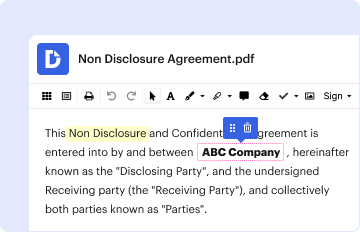
Type text, add images, blackout confidential details, add comments, highlights and more.

Type text, add images, blackout confidential details, add comments, highlights and more.
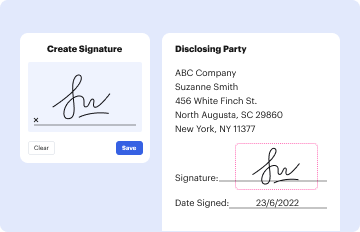
Draw your signature, type it, upload its image, or use your mobile device as a signature pad.

Send schedule d 2019 via email, link, or fax. You can also download it, export it or print it out.
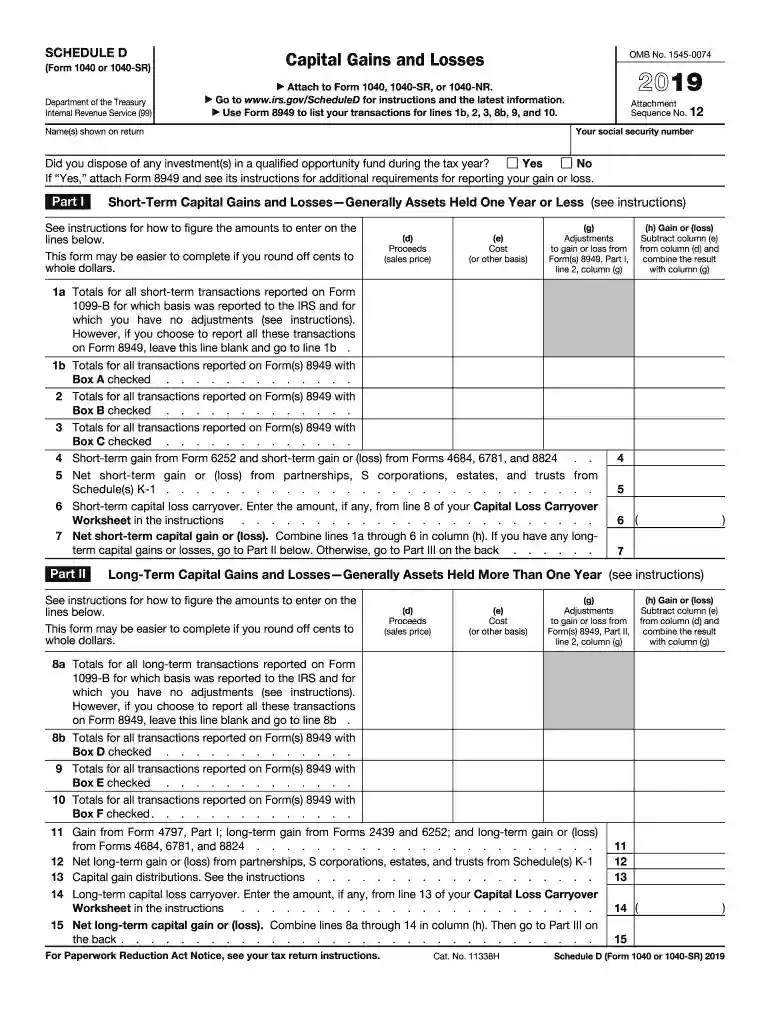
Schedule D is a crucial component of the U.S. tax system, focusing on capital gains and losses. It is used by individuals filing Form 1040 or 1040-SR to report transactions related to capital assets. This form provides essential insights into both short-term and long-term capital gains, which are critical for determining tax implications. The primary objective of Schedule D is to help taxpayers compute the tax due on these gains or claim deductions on losses, thus impacting the adjusted gross income. Understanding the terminology and processes associated with Schedule D is vital for accurate tax filing and compliance.
Short-term Gains and Losses: These are from assets held for one year or less before being sold or exchanged. They are typically taxed at ordinary income rates.
Long-term Gains and Losses: These result from assets held for more than a year. They generally benefit from lower tax rates compared to short-term gains.
Adjustments Required: Adjustments may include wash sales or specific calculations related to cost bases that impact the gains and losses reported.
Obtaining Schedule D is a straightforward process. Taxpayers can download the form directly from the IRS website in PDF format, ensuring they have the latest version. It is also available through most tax software applications, which streamline the process and ensure accuracy. Printed copies can be found in libraries or post offices during tax season, although filing electronically is encouraged for efficiency.
IRS Website: Provides free access to Schedule D and all related instructions. Download and print or use digital copies for electronic submission.
Tax Software: Programs like TurboTax and QuickBooks include Schedule D, integrating it with complete tax return assemblies. This integration handles complex calculations and validations automatically.
Completing Schedule D requires attention to detail and accuracy. The process involves summarizing capital gains and losses, identifying each asset's holding period, and performing calculations according to IRS guidelines.
Gather Relevant Documents: Collect all 1099-B forms from brokers or transaction statements indicating investment sales.
Fill in Part I and II: These parts detail ordinary (short-term) and extraordinary (long-term) gains and losses. Provide the necessary information, such as asset descriptions, acquisition and sale dates, and the proceeds received.
Carry Over Losses: If applicable, calculate carryover of prior year's losses.
Ensure Accuracy: Double-check that all entries match supporting documentation to avoid IRS scrutiny.
Proceeds and Cost Basis: Ensure accurate reporting of sale proceeds and cost basis. These figures are crucial for calculating gains or losses.
Enter Totals Correctly: Pay attention to line instructions for entering and transferring totals from Schedule D to Form 1040 or 1040-SR.
Schedule D is primarily used by individuals who buy and sell capital assets, including stocks, bonds, real estate, and other investments. This form is also crucial for certain businesses and trusts engaged in similar transactions. Understanding who should utilize Schedule D aids in accurate tax reporting and planning.
Individual Investors: Anyone engaged in the buying or selling of securities will likely need to file Schedule D to report investment gains or losses.
Retirees with Investment Income: Retirees managing their investments should report all relevant capital transactions using this form.


The IRS provides comprehensive guidelines that dictate how Schedule D should be completed. These guidelines ensure compliance and accurate tax computation, which affects both tax liability and eligibility for deductions.
Special Rules for Certain Gains: Different rules apply to certain types of transactions, such as those involving qualified opportunity funds.
Internal Revenue Code Compliance: Align all reporting with applicable sections of the Internal Revenue Code to avoid audits and penalties.
Non-compliance with Schedule D filing requirements can lead to significant penalties. Missing or inaccurate reports can trigger audits, result in fines, or even lead to legal action. Understanding these implications encourages taxpayers to follow schedules correctly and submit complete information.
Fines and Interest: Late filings or underpayments result in interest charges and penalties, which accumulate over time.
Audit Risk: Accurate completion decreases chances of an IRS audit, which can further complicate tax matters.
Schedule D is versatile and applicable in various taxpayer scenarios. Consider examples like an individual selling mutual fund shares or a business owner divesting a portion of a real property portfolio. Each case involves distinctive reporting on Schedule D, reflecting different gain or loss implications.
Stock Trades: Reporting gains from stocks held over two years versus those held for six months highlights differences in tax treatment.
Real Estate Sales: Depicts how selling a rental property impacts long-term capital gain calculations.
Accurate completion of Schedule D relies on having the necessary documents. These include brokerage statements, transaction confirmation receipts, and prior tax year loss carryover documentation.
Form 1099-B: Provided by brokers, detailing sales of stocks, bonds, and other securities.
Purchase and Sale Receipts: Verify acquisition costs and sale proceeds for all reported transactions.
Having a comprehensive understanding of Schedule D ensures proper utilization and compliance with federal tax regulations. This form plays a crucial role in capital gains taxation, impacting overall financial planning and tax liability for individuals and businesses alike.
We've got more versions of the 2019 schedule d form. Select the right 2019 schedule d version from the list and start editing it straight away!
| Versions | Form popularity | Fillable & printable |
|---|---|---|
| 2025 | 4.1 Satisfied (26 Votes) | |
| 2024 | 4.2 Satisfied (58 Votes) | |
| 2023 | 4.1 Satisfied (28 Votes) | |
| 2022 | 4.5 Satisfied (56 Votes) | |
| 2021 | 4.9 Satisfied (24 Votes) | |
| 2020 | 4.4 Satisfied (80 Votes) | |
| 2019 | 4.3 Satisfied (168 Votes) | |
| 2018 | 3.9 Satisfied (48 Votes) | |
| 2017 | 4.2 Satisfied (53 Votes) | |
| 2016 | 4.2 Satisfied (39 Votes) | |
| 2015 | 4 Satisfied (22 Votes) | |
| 2014 | 4 Satisfied (59 Votes) | |
| 2013 | 4.3 Satisfied (33 Votes) | |
| 2012 | 4 Satisfied (29 Votes) | |
| 2011 | 4 Satisfied (20 Votes) |
At DocHub, your data security is our priority. We follow HIPAA, SOC2, GDPR, and other standards, so you can work on your documents with confidence.
Jan 23, 2026 Use Schedule D (Form 1040) to report the following: The sale or exchange of a capital asset not reported on another form or schedule.Read more
(D) Schedule D The term Schedule D means a form or information filed by a taxpayer to report sales, exchanges or some involuntary conversions of capitalRead more
If the federal depreciation deduction is larger than the New York State depreciation deduction, subtract column D from column C and enter the result in column ERead more


