




01. Edit your form online
Type text, add images, blackout confidential details, add comments, highlights and more.

Type text, add images, blackout confidential details, add comments, highlights and more.

Draw your signature, type it, upload its image, or use your mobile device as a signature pad.

Send it via email, link, or fax. You can also download it, export it or print it out.
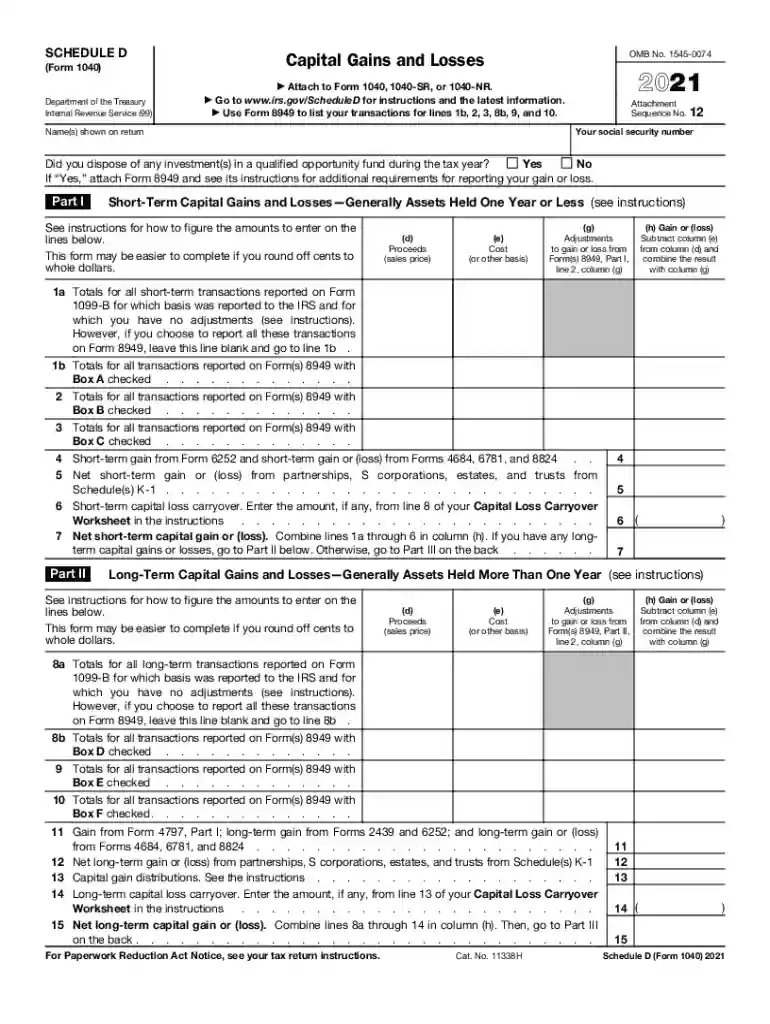
Schedule D (Form 1040) is a tax form used by individuals in the United States to report capital gains and losses on their federal income tax returns. This form is crucial for those involved in buying and selling investments such as stocks, bonds, or real estate. Schedule D helps taxpayers calculate whether they owe additional taxes on capital gains or are eligible for deductions based on their capital losses. The form splits transactions into short-term and long-term categories, depending on the duration for which the asset was held before being sold.
Filing Schedule D requires careful attention to detail, as errors can result in inaccurate tax obligations.
Reporting Proceeds and Costs: Start by listing all proceeds from sales of investments. These should be broken down into short-term and long-term gains or losses.
Calculating Adjustments: Make necessary adjustments for any investment expenses or changes in basis before arriving at the net gain or loss.
Net Gain or Loss: Tally up all the short-term and long-term totals to calculate an overall net gain or loss. This figure will transfer to the 1040 form to determine your tax liability.
Attachment: Schedule D must accompany your main 1040 tax return form, ensuring all supporting documentation is in order.
Understanding the specific language and terms related to Schedule D is key to accurate completion.
Adhering to IRS deadlines is essential to avoid penalties for late submission.
Taxpayers can file for an extension if they are unable to meet the initial deadline; however, this does not exempt them from paying any taxes owed by the original deadline.
Compiling necessary documentation will streamline the filing process.
Brokerage Statements: These provide detailed records of all trades and transactions including dates, amounts, and costs.
Purchase and Sale Records: Maintain records of initial purchase prices and expenses incurred during buying or selling transactions.
Following IRS standards ensures that taxpayers remain compliant with federal tax laws.
Accurate Reporting: Double-check all figures and ensure that transactions are classified correctly according to IRS guidelines.
Audit Preparedness: Maintain thorough documentation of all reported transactions in case of an IRS audit.
The digital age provides various online tools to help streamline the completion of Schedule D.
Tax Software: Programs such as TurboTax and QuickBooks can assist in electronically filing Schedule D, offering step-by-step guidance.
E-Filing Advantages: Faster processing times and immediate confirmation of receipt from the IRS are some benefits of e-filing your tax forms.
Failing to provide accurate information or meeting deadlines can result in penalties from the IRS.
Late Filing Penalties: Interest and fines accumulate if Schedule D and Form 1040 are not filed timely.
Underpayment Penalties: If estimated tax payments were required but not made, additional penalties might also apply.
By familiarizing oneself with the rules and requirements surrounding Schedule D, taxpayers can effectively manage their capital gains and losses, ensuring accurate and timely tax filings.
We've got more versions of the schedule d form. Select the right schedule d version from the list and start editing it straight away!
| Versions | Form popularity | Fillable & printable |
|---|---|---|
| 2025 | 4.1 Satisfied (26 Votes) | |
| 2024 | 4.2 Satisfied (58 Votes) | |
| 2023 | 4.1 Satisfied (28 Votes) | |
| 2022 | 4.5 Satisfied (56 Votes) | |
| 2021 | 4.9 Satisfied (24 Votes) | |
| 2020 | 4.4 Satisfied (80 Votes) | |
| 2019 | 4.3 Satisfied (168 Votes) | |
| 2018 | 3.9 Satisfied (48 Votes) | |
| 2017 | 4.2 Satisfied (53 Votes) | |
| 2016 | 4.2 Satisfied (39 Votes) | |
| 2015 | 4 Satisfied (22 Votes) | |
| 2014 | 4 Satisfied (59 Votes) | |
| 2013 | 4.3 Satisfied (33 Votes) | |
| 2012 | 4 Satisfied (29 Votes) | |
| 2011 | 4 Satisfied (20 Votes) |
At DocHub, your data security is our priority. We follow HIPAA, SOC2, GDPR, and other standards, so you can work on your documents with confidence.
Apr 15, 1976 Increased section 179 deduction dollar limits. The maximum amount you can elect to deduct for most sec- tion 179 property you placed inRead more
After completing Form 4797, Mr. Rosso fills in Schedule D (Form 1040) to report gains and losses on capital assets. He prints his name, his wifes name, andRead more
Use Schedule D (Form 1040) to report the following: The sale or exchange of a capital asset not reported on another form or schedule.Read more


