




Here's how it works
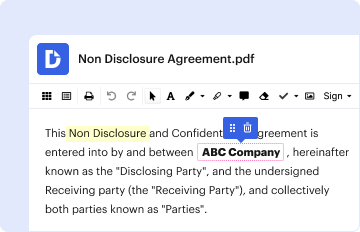
01. Edit your beef cow share lease agreements online
Type text, add images, blackout confidential details, add comments, highlights and more.
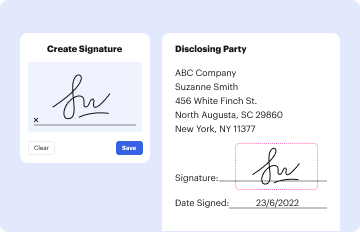
02. Sign it in a few clicks
Draw your signature, type it, upload its image, or use your mobile device as a signature pad.
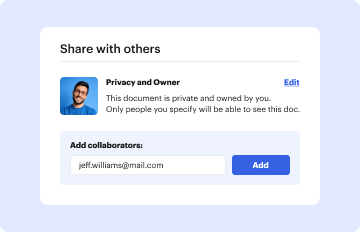
03. Share your form with others
Send beef cow lease agreements via email, link, or fax. You can also download it, export it or print it out.
How to use or fill out Beef Cow Share Lease Agreements with our platform

- Click ‘Get Form’ to open the Beef Cow Share Lease Agreement in the editor.
- Begin by entering the names and contact information of both parties involved: the Cow Owner (lessor) and the Ranch/Operator (lessee). This ensures clear identification of all parties.
- Specify the number of livestock being leased, along with the start and end dates of the lease. This section is crucial for defining the terms of custody and care.
- Detail how calves will be divided between parties. For example, if using a percentage share lease, indicate what percentage each party will receive from the calf crop.
- Include provisions for animal care, death loss documentation, and responsibilities regarding maintenance of facilities. Clearly outline these obligations to avoid future disputes.
- Review all terms carefully to ensure clarity and mutual understanding before finalizing. Make any necessary adjustments directly in the editor.
Start filling out your Beef Cow Share Lease Agreement today for free on our platform!
Fill out Beef Cow Share Lease Agreements online
It's free
It's free
See more Beef Cow Share Lease Agreements versions
We've got more versions of the Beef Cow Share Lease Agreements form. Select the right Beef Cow Share Lease Agreements version from the list and start editing it straight away!
| Versions | Form popularity | Fillable & printable |
|---|---|---|
| 2025 | 4 Satisfied (34 Votes) | |
| 2025 | 4.8 Satisfied (31 Votes) | |
| 2025 | 4.3 Satisfied (34 Votes) | |
| 2025 | 4.2 Satisfied (34 Votes) | |
| 2025 | 4.6 Satisfied (55 Votes) | |
| 2025 | 4.5 Satisfied (44 Votes) | |
| 2025 | 4.2 Satisfied (37 Votes) | |
| 2025 | 4.7 Satisfied (34 Votes) | |
| 2025 | 4.5 Satisfied (26 Votes) | |
| 2025 | 4.5 Satisfied (36 Votes) | |
| 2025 | 4.5 Satisfied (40 Votes) | |
| 2024 | 4.3 Satisfied (21 Votes) | |
| 2024 | 4.6 Satisfied (51 Votes) | |
| 2024 | 4.5 Satisfied (23 Votes) | |
| 2024 | 4.8 Satisfied (29 Votes) |
Got questions?
We have answers to the most popular questions from our customers. If you can't find an answer to your question, please contact us.
Contact us
What is the average profit per cow?
USDAs Economic Research Service provides annual cow-calf costs and returns estimates for the United States and key production regions. Annual U.S. returns over variable costs in the current cattle cycle have averaged $124 per cow, with a high of $391 per cow in 2014 and a low of $12 per cow in 2022.
How does a cow share work?
Put simply, a herdshare program is like partially adopting a portion of a herd of cows. Members of the program own a portion of the herd or pay a fee to cover the care and boarding of the animals in return for a share of the milk and other dairy products produced by the herd.
How does a cattle lease work?
In a cow lease arrangement, one party owns the animals (the owner) and one party manages the herd (the operator). Owners who might consider leasing out their cows include: Those interested in reducing stocking rates while retaining ownership, genetics and income.
How do cattle contracts work?
Futures contracts enable ranchers to lock in a price for their cattle with the promise to transfer ownership at a later date. This type of sale is referred to as a forward contract. The counter position would be to sell (short) a contract now and buy it back later.
How much does a cattle lease cost?
To illustrate this type of lease arrangement, the pasture rent for a yearling steer could be set at $25.00 per month. The total lease charge would be $100.00 for a 4 month grazing season ($25.00/month 4 months). During the days on pasture, a 220-pound gain per animal would be a reasonable expectation.
Security and compliance
At DocHub, your data security is our priority. We follow HIPAA, SOC2, GDPR, and other standards, so you can work on your documents with confidence.
Learn more


Related forms
Db1n
The document is a claim form for assigned benefits under the Health Insurance Act 1973, specifically for services render ...

Health Intake Form REV3 pages - Columbus - Thrive
The document is a client intake form for colon hydrotherapy at the Nardella Clinic. It collects personal information, me ...

Public Records Request - Oregon City Oregon
The document outlines the process for submitting a public records request to the City of Oregon City, including required ...
Child Performer Health Form - Department of Labor
The document is an application form for obtaining an Apparel Industry Certificate of Registration in New York. It outlin ...
Preschool physical form
The document is a physical examination form for preschool entrance at Knowlton Township Elementary School. It includes s ...
Phone: 734-663-3418 Fax: 734-663-6678
The document is a Plumbing Permit Application for Ann Arbor Charter Township, detailing the necessary information and re ...

Land InformationZoningForms & Documents
The document is a Zoning Permit Application for Marinette County, requiring a fee of $175. It includes sections for pers ...

Community Development AgencyNevada County, CA
The document outlines the application process for swimming pool and barrier permits in Cobb County, detailing required i ...
People also ask
How does cattle leasing work?
Cows in a share agreement are leased on a percentage split depending on inputs contributed by the owner and operator. Each partys share of income is based on the percentage of their contribution to total production costs. Shares can be given as cash payments or actual possession of calves.