




01. Edit your https benefits oregon gov periodic report online
Type text, add images, blackout confidential details, add comments, highlights and more.

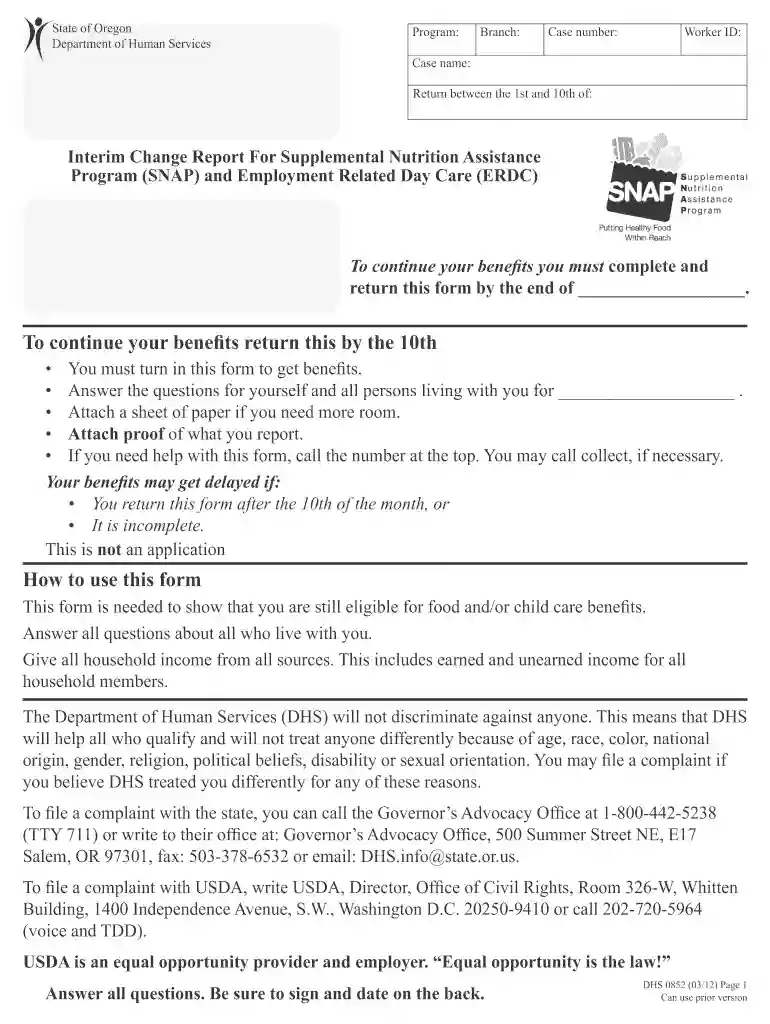
Type text, add images, blackout confidential details, add comments, highlights and more.

Draw your signature, type it, upload its image, or use your mobile device as a signature pad.

Send oregon snap renewal via email, link, or fax. You can also download it, export it or print it out.
SNAP, or the Supplemental Nutrition Assistance Program, is a federally funded program in the United States, including Oregon, designed to assist low-income individuals and families in purchasing food. The primary aim of SNAP is to alleviate hunger and improve nutritional standards among eligible beneficiaries. Each state administers its own SNAP program, operating within federal guidelines but also adapting to local needs and circumstances.
In Oregon, the program is managed by the Department of Human Services (DHS), which implements policies to ensure that benefits are distributed fairly and efficiently. Households eligible for SNAP can receive financial assistance monthly through Electronic Benefits Transfer (EBT) cards, which can be used like debit cards at approved grocery stores and markets.
The benefits received from SNAP can significantly enhance the grocery budgets of participating families, facilitating better access to healthful food options, which is crucial for overall well-being. Understanding what SNAP entails is essential for potential beneficiaries who wish to navigate the application process effectively.
To qualify for SNAP in Oregon, applicants must meet specific eligibility criteria, which generally include:
Income Limits: Households must have gross monthly income at or below 185 percent of the federal poverty level. Net income calculations exclude certain expenses like housing and child care.
Household Composition: The size of a household affects the benefit amount. Understanding how household members are defined is critical.
Residency Requirements: Applicants must be residents of Oregon and provide valid identification to verify their status.
Work Requirements: Able-bodied adults without dependents may need to meet work requirements to maintain their benefits.
Understanding these criteria is crucial, as they form the basis for eligibility and the determination of benefits when applying for SNAP in Oregon.


Obtaining SNAP benefits in Oregon involves a structured application process that can be completed online, by mail, or in-person at local DHS offices. The following outlines the steps involved:
Gather Documentation: Applicants need personal identification, proof of income, and details about household expenses. Examples include pay stubs, rental agreements, and utility bills.
Complete an Application: This can be done through the Oregon Department of Human Services website via the online application portal, or by using a paper application available at local offices.
Interview Process: After the application is submitted, applicants typically participate in a phone or in-person interview to verify the information provided and discuss any additional documentation needed.
Receive Benefits Notification: After processing the application, individuals will receive a notification indicating whether they are approved or denied the benefits, including the amount they are eligible to receive if approved.
Navigating the application process can be complex; therefore, utilizing DHS resources and support can be beneficial for prospective applicants.
Completing the SNAP application in Oregon requires careful attention to detail and adherence to specific steps:
Access the Application: Navigate to the Oregon Department of Human Services website and locate the SNAP application section.
Fill Out the Application: Provide necessary information such as:
Submit Additional Documentation: Attach any required documents that support your application. Failure to provide this can delay processing.
Schedule and Attend Your Interview: Follow any instructions for scheduling your interview. Be prepared to discuss your application details with a DHS representative.
Monitor Your Application Status: After submission, applicants can check their application status online or contact a local DHS office.
Following these steps diligently ensures a smoother application process for SNAP benefits in Oregon.
Understanding key terminology associated with SNAP is essential for navigating the program effectively:
EBT (Electronic Benefits Transfer): A system that allows benefits to be loaded onto an electronic card, which users can swipe at participating retailers.
Household Composition: The individuals living together and sharing meals. This can include family members, roommates, or others who purchase and prepare food together.
Gross and Net Income: Gross income is the total income before taxes, while net income is what remains after allowable deductions. Determining this accurately is crucial for eligibility.
Work Requirement: Conditions that require certain adult participants to engage in work-related activities to receive benefits.
Grasping these terms will help applicants better understand their rights and responsibilities under the SNAP program.
Failure to comply with SNAP program requirements can lead to serious penalties. Understanding what non-compliance entails is vital for beneficiaries:
Misreporting Income or Household Changes: Not reporting changes in income or household composition may result in overpayment, which beneficiaries will need to repay. It can also lead to disqualification from the program.
Fraudulent Activities: Engaging in fraudulent behavior, such as using benefits for unauthorized purchases, can result in criminal charges.
Failure to Attend Scheduled Appointments: Not attending required interviews or follow-ups can delay or deny benefits.
Penalties can significantly impact beneficiaries, so adherence to program rules is essential for maintaining assistance.
SNAP benefits are legally designated for purchasing food items that provide nutritional value. Understanding the permissible items and their legal implications ensures proper use of benefits:
Eligible Foods:
Ineligible Items:
Beneficiaries must ensure they use their SNAP benefits solely for eligible food items, as using them otherwise could lead to legal consequences.
SNAP in Oregon encompasses several essential elements that make the program effective and accessible:
Application Accessibility: Users can apply via online platforms or in-person visits to local offices, facilitating comprehensive reach to potential beneficiaries.
Timely Benefit Distribution: Once approved, benefits are generally distributed monthly, ensuring timely assistance for food purchases.
Support Services: The DHS provides extensive resources, including counseling services to help beneficiaries maximize their benefits and maintain compliance with program rules.
Understanding these key elements contributes to a smoother experience when engaging with the SNAP program in Oregon.
We've got more versions of the https benefits oregon gov periodic report form. Select the right https benefits oregon gov periodic report version from the list and start editing it straight away!
At DocHub, your data security is our priority. We follow HIPAA, SOC2, GDPR, and other standards, so you can work on your documents with confidence.


Call 855-673-2372 or visit the ADRC website. SNAP for non-citizens in Oregon. Some people who are not U.S. citizens can get SNAP food benefits in Oregon.Read more
Oct 1, 2025 During a government shutdown, SNAP benefits will be disbursed on schedule. October 2025 disbursements will go out as planned. Key Changes toRead more
Oct 21, 2018 Low-income Americans enrolled in the Supplemental Nutrition Assistance Program (SNAP) can use their monthly benefits to purchase food in farmersRead more


