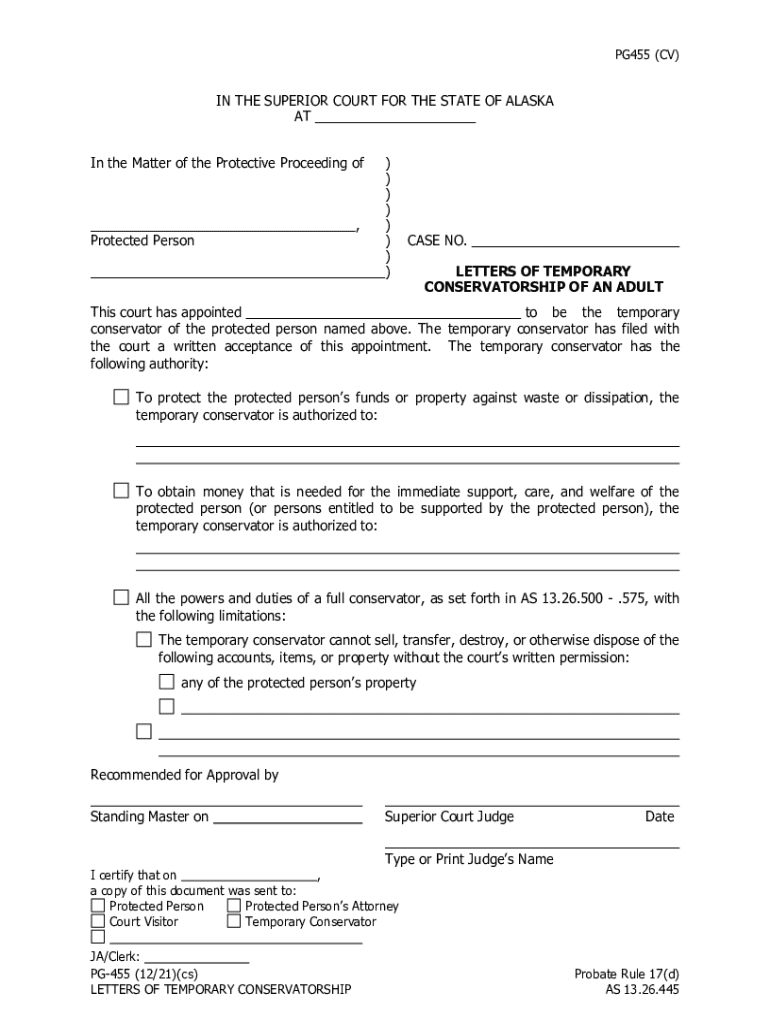







Definition and Purpose of the P-455 Affidavit
The P-455 Affidavit of Reasonable Investigation is a legal document used in specific circumstances, primarily within the United States, to verify that a thorough inquiry has been conducted regarding a particular matter. This affidavit often serves as a confirmation that all necessary steps were taken to gather and evaluate information pertinent to a case or issue at hand. By providing an affidavit, the affiant ensures that all due diligence has been performed, which is critical in legal, business, and financial contexts.
Common Uses and Applicability
The affidavit is employed in various scenarios, especially in litigation, contract disputes, or compliance verifications. It could be used by attorneys to demonstrate due diligence before submitting documents to court or by businesses to assure partners that all investigative efforts were exhausted during negotiations or mergers. This form assures interested parties that all relevant factors have been considered before reaching a decision or taking action.
Steps to Complete the P-455 Affidavit
Completing the P-455 Affidavit of Reasonable Investigation involves several key steps to ensure accuracy and compliance with legal standards. Here is a detailed breakdown:
-
Introduction Section: Begin by providing the full name, contact information, and role of the affiant.
-
Scope of Investigation: Clearly outline the parameters and objective of the investigation, specifying what was examined and why.
-
Methods Used: Describe in detail the methods and processes used during the investigation, including any tools, resources, or consultations that were part of the procedure.
-
Findings and Conclusions: Summarize the key findings that resulted from the investigation. This section should present the data or observations gathered.
-
Affiant's Declaration: The affiant must declare that the information provided is truthful and accurate to the best of their knowledge.
-
Notarization: The affidavit should be signed in the presence of a notary public who can verify the identity of the affiant and the authenticity of the signature.
Tips and Considerations
- Ensure that the language is precise and free of ambiguities.
- Attach any supporting documents that validate the claims made in the affidavit.
- Review all legal requirements in the relevant jurisdiction as they may vary.
Legal Implications and Requirements
When using the P-455 Affidavit, understanding the legal implications is crucial. This document is legally binding, and any false statements can lead to penalties, including perjury charges. Therefore, the affiant must be absolutely certain of the accuracy and completeness of the information provided.
Legal Context
-
Court Proceedings: The affidavit can be submitted in court to support motions or pleadings, serving as evidence that due diligence was observed.
-
Business Transactions: In mergers or acquisitions, the affidavit can verify that financial and operational investigations were comprehensive.
State-Specific Rules
While the P-455 Affidavit serves a similar purpose across various jurisdictions, specifics can vary from one state to another. Some states might require additional information or specific language to be included, so it is essential to check state-specific guidelines.
Examples of State Variations
- California: May require additional disclosures relating to consumer protection.
- New York: Could have stricter requirements regarding financial disclosures and ethical practices.
Key Elements of the P-455 Affidavit
To ensure that the affidavit fulfills its intended purpose, certain elements are inherently crucial. These elements not only substantiate the investigation but also uphold the affidavit's validity:
- Identification of Parties Involved: All individuals and entities involved in the investigation should be clearly identified.
- Description of Investigative Actions: Include a step-by-step recount of each significant action taken during the investigation.
- Timeline: Establish a clear timeline of when the investigation started, key milestones, and completion date.
- Documentary Evidence: Attach any supporting documents as exhibits to add weight to the statements made in the affidavit.
Penalties for Non-Compliance
Failing to provide a truthful and comprehensive P-455 Affidavit can result in severe legal consequences. Penalties may include:
- Fines: Monetary penalties imposed by courts or regulatory bodies.
- Legal Action: Potential lawsuits for fraud or misrepresentation.
- Professional Repercussions: Disciplinary action against professionals, potentially leading to loss of licensure.
Practical Examples and Case Scenarios
The P-455 Affidavit is versatile across numerous industries and contexts. Here are a few practical examples:
-
Real Estate: Before a property sale, a due diligence investigation might be required to affirm that there are no undisclosed liens or encumbrances.
-
Financial Audits: Companies may use the affidavit to confirm that exhaustive financial examinations were conducted in adherence to regulatory standards.
-
Legal Defense: In legal defense strategies, an attorney might present an affidavit as evidence that all avenues were explored to meet the burden of proof or rebut claims.
Conclusion
The P-455 Affidavit of Reasonable Investigation plays a pivotal role in ensuring thoroughness and accountability in various professional spheres. Understanding its proper application, completing it accurately, and recognizing the legal consequences underscores its significance in establishing credibility and trust.