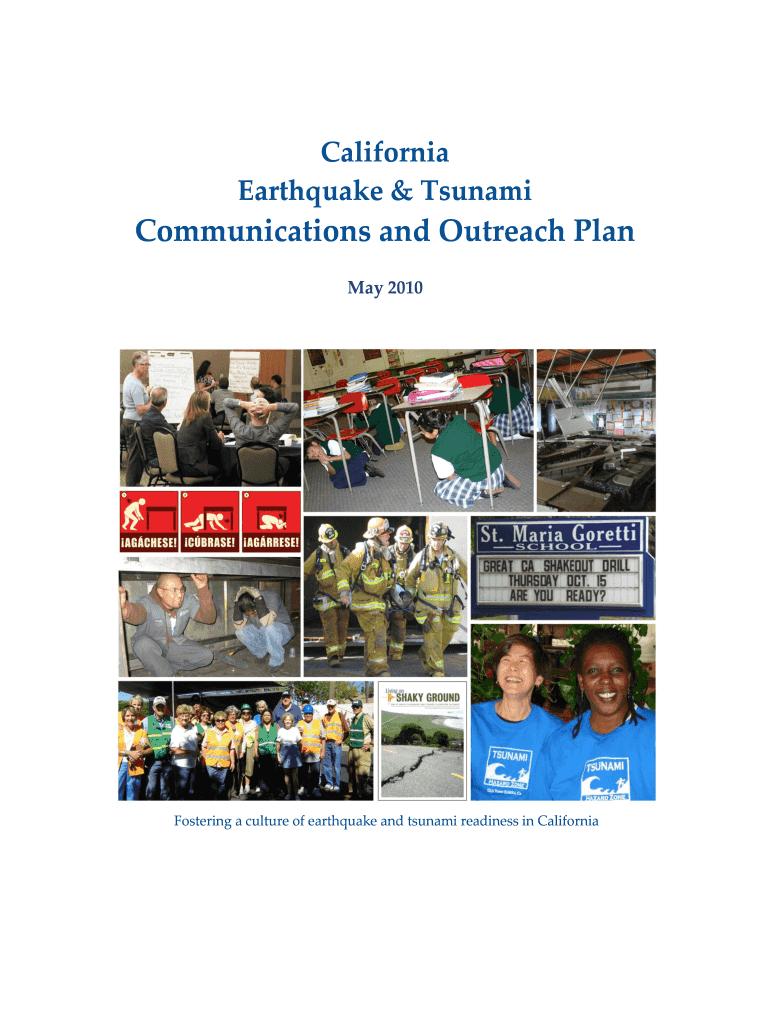







Key Elements of the Communications and Outreach Plan
The Communications and Outreach Plan developed by Cal EMA is structured to improve emergency readiness in California. It comprises three main phases:
- Building an Alliance: Establish partnerships with government agencies, local organizations, and media to promote consistent messaging.
- Engaging Target Audiences: Focus on preparedness activities to ensure specific communities are ready to respond to emergencies.
- Expanding Outreach: Reach out to underserved and unengaged groups to create a broad-based culture of preparedness.
Detailed Strategies for Each Phase
-
Phase One: Building an Alliance
- Collaborate with local and state entities for a unified message.
- Train stakeholders on effective communication methods.
- Develop media partnerships for broader message dissemination.
-
Phase Two: Engaging Target Audiences
- Host workshops and seminars in areas prone to earthquakes and tsunamis.
- Utilize social media platforms for widespread engagement.
- Distribute educational materials focused on emergency response.
-
Phase Three: Expanding Outreach
- Identify and target unengaged communities and vulnerable populations.
- Create inclusive programs to ensure comprehensive community involvement.
Legal Use and Compliance
California's Communications and Outreach Plan is designed to align with state and federal emergency management regulations. It ensures:
- Regulatory Adherence: Compliance with state laws for emergency preparedness.
- Data Protection: Secure handling of personal information gathered during outreach activities.
- Accountability Measures: Tracking progress and accountability in outreach efforts.
How to Use the Plan
To effectively use the California Emergency Communications and Outreach Plan, follow these steps:
- Review the Full Document: Understand the scope and objectives of each phase.
- Customize Strategies: Adjust specific actions to meet the needs of your local community or organization.
- Coordinate with Stakeholders: Involve local agencies, businesses, and community leaders.
- Monitor Progress: Use metrics to measure the effectiveness of communication and outreach initiatives.
Implementation Examples
-
Case Study: City of San Francisco
- Held regular earthquake drills, involving local schools and businesses.
- Leveraged local radio and TV to disseminate emergency preparedness tips.
-
Example: Community Workshops
- Partnered with local nonprofits to host workshops in community centers.
- Focused on personalized emergency plans and kit preparedness.
Steps to Complete the Communications and Outreach Plan
The process of completing and implementing the Communications and Outreach Plan includes various steps:
-
Initial Assessment
- Conduct an assessment of current community preparedness levels.
- Identify gaps in existing communication strategies.
-
Stakeholder Engagement
- Organize initial meetings with potential partners.
- Define roles and responsibilities.
-
Strategy Development
- Develop tailored action plans based on community needs.
-
Implementation
- Launch engagement activities across multiple platforms.
- Facilitate continuous feedback loops for plan refinement.
-
Evaluation and Adjustment
- Regularly review outcomes against initial objectives.
- Adapt the plan as necessary to increase effectiveness.
Who Typically Uses the Plan
This plan is primarily designed for use by:
- Emergency Management Agencies
- Lead coordination efforts and ensure compliance with state regulations.
- Local Governments
- Tailor strategies to meet specific geographical and demographic needs.
- Community Organizations
- Advocate for participation and facilitate community readiness programs.


Organizational Benefits
- Businesses leverage the plan to develop internal emergency protocols.
- Schools use it to educate students on disaster preparedness and response.
Required Documents and Resources
To effectively implement the Communications and Outreach Plan, ensure access to:
- Emergency Contacts Lists: A comprehensive directory of all stakeholders.
- Resource Inventory: List of available resources and materials for outreach.
- Training Materials: Guides and handbooks for workshops and seminars.
Tools and Software
- DocHub can be used for managing the distribution and collaboration on outreach documents.
- Google Workspace for seamless integration and management.
Penalties for Non-Compliance
Failure to implement or adhere to the Communications and Outreach Plan can result in:
- Regulatory Penalties: Potential fines for non-compliance with state mandates.
- Reduced Funding: Loss of eligibility for state and federal emergency response funding.
- Community Risk: Increased vulnerability of communities to natural disasters.
Mitigating Risks
- Regular Audits: Conduct routine checks to ensure adherence to the plan.
- Training Programs: Ongoing education and training efforts for all stakeholders.
Conclusion
The California Emergency Communications and Outreach Plan serves as a critical blueprint for enhancing public readiness for emergencies like earthquakes and tsunamis. It is essential for stakeholders to effectively implement and regularly update the plan to maintain compliance and improve community safety. Organizations must ensure all activities align with Cal EMA's regulations and strive to engage diverse communities in preparedness initiatives.