






Understanding the Firearm Motivation Letter PDF
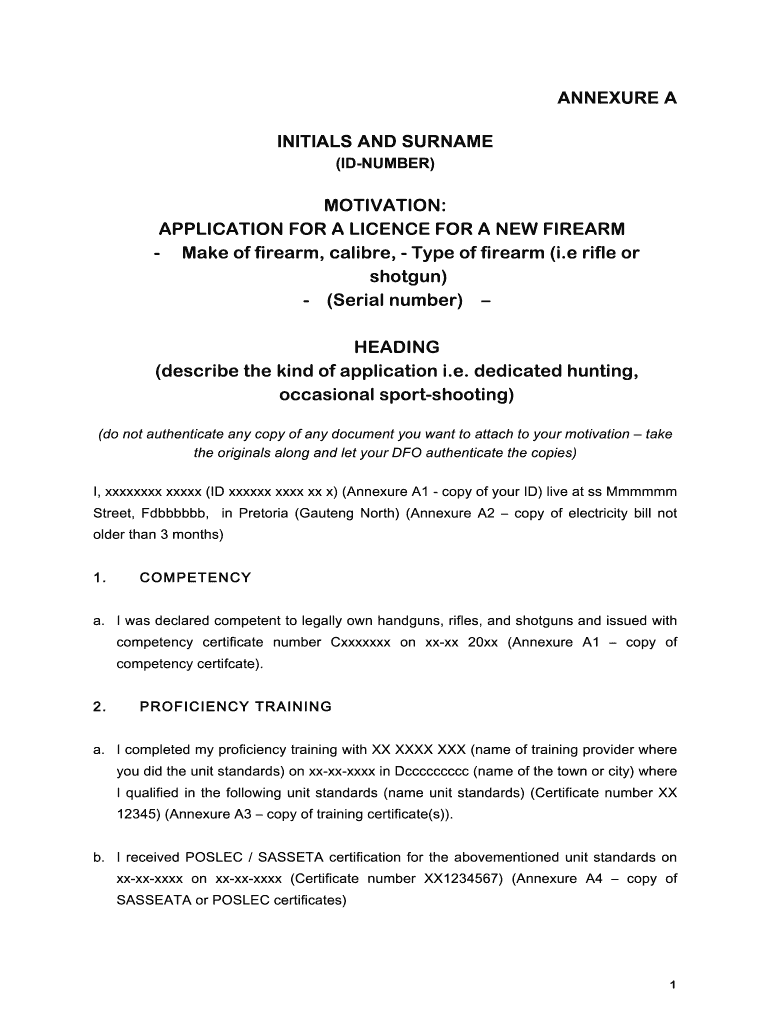
The firearm motivation letter pdf serves as an essential component for individuals seeking to justify their application for a firearm. This document outlines the applicant's personal circumstances, intentions, and reasons for needing a firearm. It is a pivotal requirement in many jurisdictions, particularly in the United States, where strict regulations govern firearm ownership. Understanding its significance can ease the application process and enhance the likelihood of approval.
Key Elements of the Firearm Motivation Letter PDF
A comprehensive firearm motivation letter should include specific key elements that address various aspects of responsible firearm ownership. These elements are:
- Personal Information: Include full name, address, date of birth, and contact details to establish identity.
- Purpose of Ownership: Clearly outline the reasons for acquiring the firearm, such as self-defense, hunting, or sport shooting, providing sufficient context.
- Training and Competency: Mention any formal training or courses completed that demonstrate proficiency in firearm handling and safety. Include certificates or endorsements from recognized institutions if available.
- Safe Storage Practices: Explain how the firearm will be stored securely to prevent unauthorized access, which is critical for compliance with legal regulations.
- Affiliations: List any memberships in legitimate hunting or shooting organizations that underscore a commitment to safe and responsible firearm use.
How to Complete the Firearm Motivation Letter PDF
Filling out the firearm motivation letter pdf involves several steps to ensure a well-articulated and effective presentation. Consider the following process:
- Start with Personal Information: Fill out your personal details accurately to avoid any misinformation that could impact the application.
- Describe Your Reasons for Firearm Possession: Use clear, concise language to delineate why you are applying for a firearm. Include personal experiences or concerns that validate your needs.
- Detail Training Experiences: Document any relevant training that contributes to your readiness for firearm ownership. Providing specifics about the duration and nature of training can strengthen your application.
- Outline Safety Measures: Elaborate on the measures you will take to ensure responsible ownership and storage, such as investing in a secure safe.
- Review and Revise: After completing the letter, review it thoroughly for clarity and completeness. Consider asking a trusted friend or family member to read it for additional feedback.
Legal Considerations for the Firearm Motivation Letter PDF
Understanding the legal implications surrounding the firearm motivation letter is vital for compliance and successful application. Key legal considerations include:
- State Regulations: Different states have varying requirements and definitions regarding firearm ownership. Ensure your letter complies with local laws to avoid delays or rejections.
- Documentation Requirements: Some jurisdictions may request supporting documents, such as proof of training or verification of membership in shooting clubs. Include these details in your letter or as additional attachments.
- Privacy Concerns: Maintain confidentiality regarding personal information and security details while ensuring you provide sufficient data to demonstrate responsibility and commitment.
Examples of Effective Firearm Motivation Letters
Examining examples of well-structured firearm motivation letters can serve as a guide for applicants. Some scenarios include:
- Self-Defense: A letter that articulates specific incidents or threats that necessitate owning a firearm can provide a persuasive argument for self-defense applications.
- Hunting: An effective letter from a hunter might discuss family traditions, experiences in wildlife management, or competitive hunting achievements, reinforcing the validity of the application.
- Sport Shooting: An example from a sport shooter may emphasize their competitive involvement in events or clubs, highlighting training and networking within the shooting community.
Common Mistakes in Firearm Motivation Letters
Awareness of frequent pitfalls can help applicants improve their letters. Common mistakes include:
- Vagueness: Avoid overly generalized statements; specificity can strengthen arguments.
- Lack of Structure: A poorly organized letter can distract from the key points. Organize information logically to improve readability.
- Inadequate Justification: Ensure the reasoning for firearm possession is robust and well-supported by personal anecdotes or factual data.
By considering these aspects, applicants can craft a compelling firearm motivation letter pdf that meets legal requirements and effectively communicates their intentions and qualifications.