Definition and Meaning of the Self Reliance Form
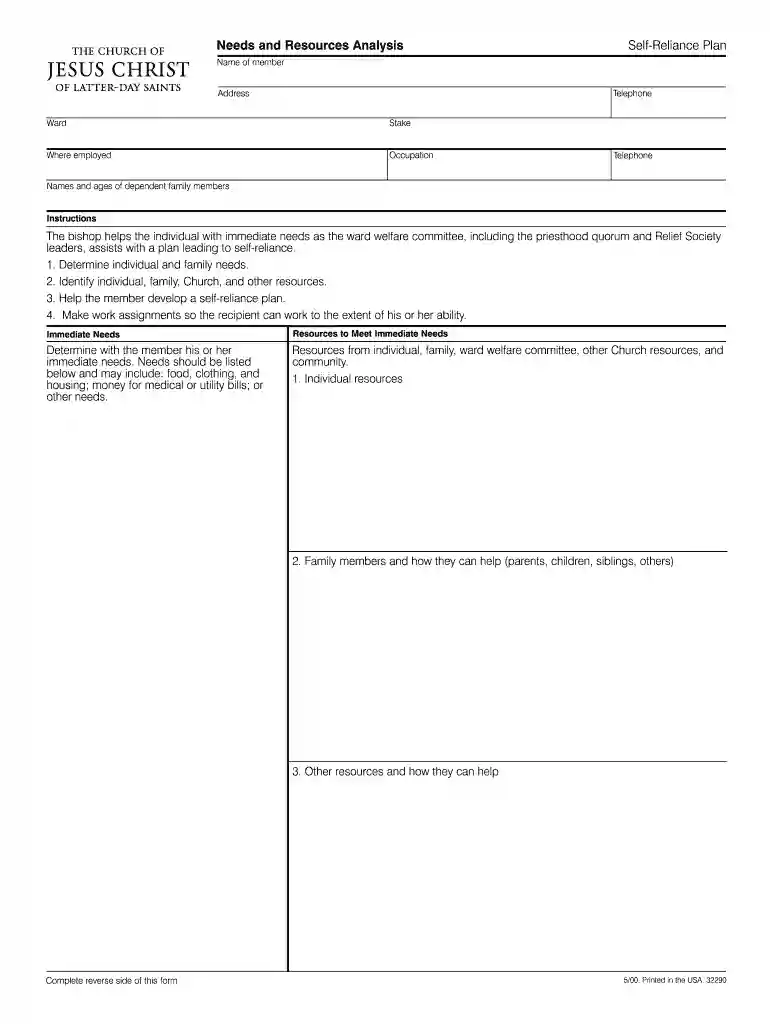
The self reliance form serves as a structured document aimed at helping individuals and families identify their personal needs, resources, and strategies for achieving greater self-sufficiency. This form is particularly significant within contexts such as the Latter-day Saint (LDS) community, where tools for self reliance are emphasized. The self reliance form encompasses multiple elements designed to facilitate a comprehensive assessment of one's circumstances and the development of a tailored plan for improvement.
- Purpose: The primary function of the self reliance form is to guide users in recognizing their immediate needs—such as food, shelter, and financial resources—while also outlining steps toward long-term self-reliance and sustainability.
- Target Audience: While predominantly utilized within the LDS community, the self reliance form is applicable to any individual or family looking to enhance their independence, manage resources effectively, and set actionable goals.
- Components: The self reliance form typically includes sections for personal information, immediate needs analysis, resource identification, and a plan for achieving self-sufficiency, encompassing practical action items and support networks.
Key Elements of the Self Reliance Form
Understanding the essential components of the self reliance form is critical for effective use. The form is structured to include various sections that require comprehensive responses to facilitate a full assessment of needs and resources.
- Personal Information: Users begin by entering basic personal details, including names, contact information, and family composition. This section helps to establish a foundational understanding of the individual's or family's situation.
- Needs Assessment: This section prompts users to evaluate their immediate needs related to food, housing, employment, and health care. This assessment encourages honest reflection, ensuring that the plan developed later is both realistic and attainable.
- Resource Identification: Users are asked to detail available resources, including government assistance, community programs, and personal networks. Identifying these resources is vital for leveraging external support in the journey toward self-reliance.
- Action Plan Development: A key element of the self reliance form is the creation of an action plan that outlines specific steps to take towards achieving greater self-sufficiency. This plan may include setting goals related to job searches, budgeting, and accessing training programs.
- Support Networks: Users are encouraged to identify individuals or organizations that can provide support throughout the self-reliance journey. This can include family members, friends, church communities, and local agencies.
Steps to Complete the Self Reliance Form
Completing the self reliance form requires a systematic approach to ensure all necessary information is captured accurately. The following steps provide a clear pathway to filling out the form effectively.
- Gather Information: Before starting, gather any relevant documents, such as income statements, bills, and information on available community resources.
- Fill Out Personal Information: Begin by entering your personal details accurately. This sets the stage for the rest of the form and ensures that any support services can contact you easily.
- Assess Immediate Needs: Take time to reflect on your current situation and identify specific needs in various categories, including food security, housing stability, and health care access.
- List Available Resources: Identify what resources you have at your disposal. This includes community programs, governmental assistance, or personal assets that can assist in addressing your identified needs.
- Develop Action Items: Based on your needs and resources, create a list of actionable steps. Assign deadlines to these tasks to maintain accountability and momentum.
- Consult with Support Networks: Reach out to individuals or organizations that you’ve identified as support resources. Discuss your plans and seek further assistance or mentorship.
- Review and Revise: Once the form is completed, review all sections carefully. Make sure all information is accurate and reflects your current needs. Adjust any plans based on feedback or further insights.
Legal Use of the Self Reliance Form
The legal framework governing the use of the self reliance form can vary based on location and intended outcomes. Understanding these aspects is crucial for individuals looking to utilize the form effectively in a structured manner.
- Legal Compliance: While the self reliance form itself may not have specific legal compliance requirements, it is important to ensure that any provided information is accurate and truthful to avoid future complications, especially when applying for assistance or support.
- Confidentiality Concerns: Users should be aware of the sensitivity surrounding the information shared on the form. Ensuring that personal and financial details are kept confidential can protect users from potential privacy issues.
- Eligibility for Programs: The information provided in the self reliance form may be used to assess eligibility for various assistance programs. It is essential to maintain accuracy to meet the criteria set forth by organizations or governmental bodies that review the form.
Who Typically Uses the Self Reliance Form
The self reliance form is utilized by a diverse range of individuals and families, often influenced by specific needs and community contexts. Understanding the typical user base can help tailor support and resources effectively.

- Individuals in Crisis: Those facing immediate personal or financial crisis often turn to the self reliance form as a structured means to identify and address urgent needs.
- Families Seeking Stability: Families aiming to improve their overall stability and self-sufficiency frequently use the self reliance form to create actionable plans for long-term growth and sustainability.
- Community Organizations: Many community ministries, non-profits, and service organizations employ the self reliance form as part of their outreach efforts, helping clients assess their circumstances and connect with relevant resources.
- LDS Members: Within the LDS framework, members are encouraged to use the self reliance form for evaluating their situation and enhancing their capability to provide for their families while contributing to their community.
Examples of Using the Self Reliance Form
Practical examples of how the self reliance form can be utilized provide insights into its effectiveness in different scenarios.
- Case Study One: A single mother struggling with job loss uses the self reliance form to evaluate her immediate needs and identify community resources like food banks and job training programs. Through the form, she develops a plan to apply for government benefits while also seeking employment, thus enhancing her ability to provide for her children.
- Case Study Two: A recently retired couple uses the self reliance form to assess their financial stability and explore options for part-time work. They list their skills and resources, allowing them to connect with local community organizations that provide training and volunteer opportunities.
- Case Study Three: A young adult transitioning out of foster care utilizes the self reliance form to navigate the complexities of independent living. By focusing on immediate needs such as housing and employment, they set specific goals and access support services that assist in building a sustainable future.
Important Terms Related to the Self Reliance Form
Familiarity with relevant terminology associated with the self reliance form enhances understanding and utilization of its components.
- Self-sufficiency: The ability to meet one’s daily needs independently, often the ultimate goal of utilizing the self reliance form.
- Resource mapping: The process of identifying and listing available resources, which is a core element of completing the self reliance form effectively.
- Community support systems: These include family, friends, and formal organizations that provide assistance and resources, essential for achieving goals outlined in the self reliance form.
- Goal setting: A critical process within the self reliance form, allows users to articulate clear and actionable outcomes based on their needs and resources.
The self reliance form serves as a valuable tool for individuals and families seeking to navigate their circumstances with greater awareness and actionable steps for improvement. By employing a structured approach and leveraging community solutions, users can significantly enhance their paths toward self-sufficiency.