




01. Edit your bail release form online
Type text, add images, blackout confidential details, add comments, highlights and more.

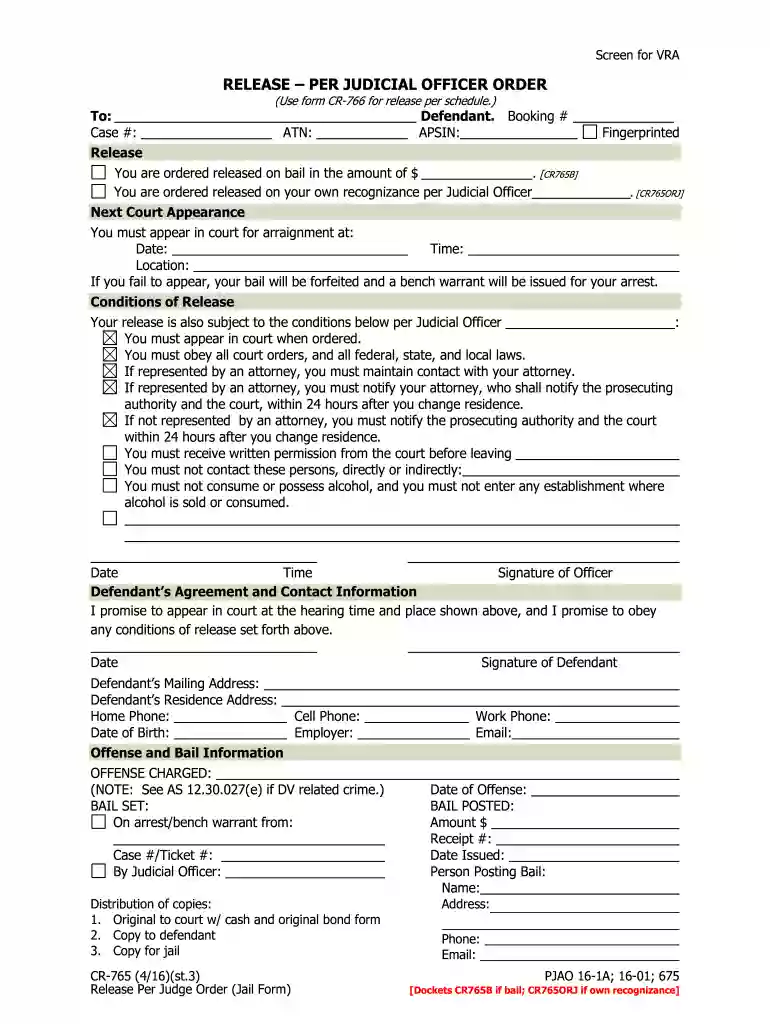
Type text, add images, blackout confidential details, add comments, highlights and more.

Draw your signature, type it, upload its image, or use your mobile device as a signature pad.

Send jail document via email, link, or fax. You can also download it, export it or print it out.
The CR-765 Release Jail Form is a vital jail document utilized within the U.S. legal system. Its primary function is to facilitate the release of defendants on bail or their own recognizance as determined by a judicial officer. This form outlines critical details such as the conditions under which the release is granted, applicable bail amounts, and mandates concerning future court appearances.
This form serves both procedural and legal purposes:
Understanding this form's importance is essential for individuals involved in the bail process, including defendants, attorneys, and bail bondsmen. The clarity provided by the CR-765 helps maintain legal compliance and supports the orderly functioning of the justice system.
Acquiring the CR-765 Release Jail Form is a straightforward process, typically dependent on the jurisdiction of the court involved. Here are the general methods:
When obtaining this form, it’s critical to ensure that you have the most recent version, as forms can undergo changes.
Completing the CR-765 involves several key steps to ensure that all necessary information is accurately provided. Following this process can facilitate smoother processing by the court:
It’s advised to keep copies of the completed form for personal records and future reference.
Understanding the key elements of the CR-765 is essential for effective usage. These include:
Being aware of these key components helps users complete the form correctly and comply with legal requirements.
Several terms commonly associated with the CR-765 Release Jail Form are important for understanding its context and implications:
Understanding these terms helps clarify the overall bail process and the critical aspects involved in using the CR-765 form effectively.
The CR-765 must comply with state and federal regulations, making its proper use essential in legal proceedings. This section elaborates on its legal framework:
Failure to adhere to these legal requirements can result in penalties or complications in the defendant's case, making it imperative that users are diligent in their compliance with the legal framework surrounding the release process.
We've got more versions of the bail release form form. Select the right bail release form version from the list and start editing it straight away!
At DocHub, your data security is our priority. We follow HIPAA, SOC2, GDPR, and other standards, so you can work on your documents with confidence.





Call 1-833-500-5090 within 24 hours of release for instructions. Electronic monitoring (EM) ordered. You shall remain in custody until the monitor is attached.Read more
A warrant may be issued for any of the following: (1) evidence of a crime; (2) contraband, fruits of crime, or other items illegally possessed;Read more
Jul 23, 2021 Centers for Disease Control and Prevention. Rochelle P. Walensky, MD, MPH, Director. Debra Houry, MD, MPH, Acting Principal Deputy Director.Read more


