







Definition and Meaning of a Mental Health Safety Plan
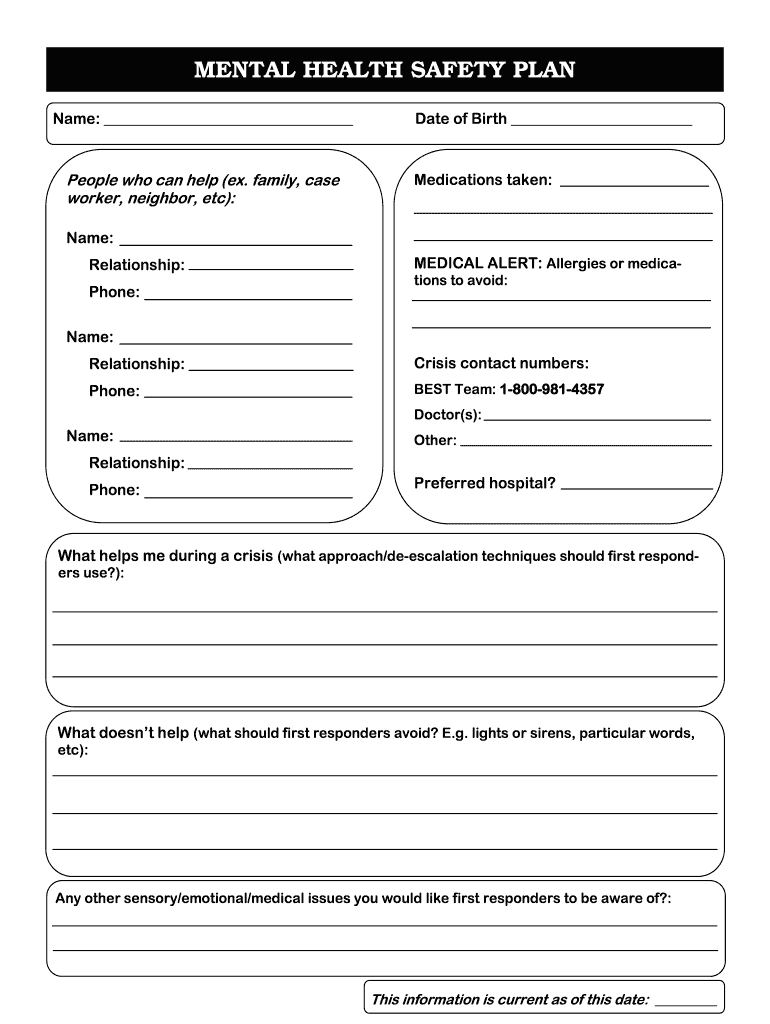
A Mental Health Safety Plan is a personalized tool designed to assist individuals who may experience a mental health crisis. The plan serves as a proactive framework that outlines strategies to manage distress and prevent escalation into a more severe crisis. Typically, it includes sections for personal information, emergency contacts, medications, and coping strategies. The primary aim is to provide a structured response to mental health challenges, ensuring safety and stability for individuals during difficult times.
Key Components
- Personal Details: A section for essential personal information, including name, address, and contact details.
- Emergency Contacts: A list of people who can be contacted in case of a crisis, often including family, friends, and mental health professionals.
- Medications and Allergies: Information about current medications and known allergies to ensure accurate medical support.
- Coping Strategies: A personalized list of techniques and activities that help manage stress and anxiety, such as deep breathing, mindfulness, or listening to music.
How to Use the Mental Health Safety Plan
Utilizing a Mental Health Safety Plan involves several critical steps to ensure its effectiveness during a crisis. The plan should serve as an immediate reference when an individual begins to feel overwhelmed.
- Review Regularly: It’s important to regularly review and update the plan to reflect any changes in medication, contacts, or coping strategies.
- Practice Coping Techniques: Regular practice of coping techniques listed in the plan can enhance their effectiveness in a crisis situation.
- Share with Trusted Individuals: Sharing the plan with family members or mental health professionals can provide additional support when needed.
Steps to Complete the Plan
Completing a Mental Health Safety Plan is a process that requires careful consideration of personal experiences with mental health challenges.
- Gather Information: Start by collecting all necessary personal, medical, and contact information to be included in the plan.
- Identify Triggers: Reflect on and document situations or thoughts that have previously led to mental distress.
- Develop Coping Strategies: List personalized techniques and activities that help alleviate stress and anxiety.
- Fill in Sections: Populate each section of the plan with detailed, accurate information.
- Review for Completeness: Ensure all relevant information is current and accurately recorded.
- Consult a Professional: Consider discussing your plan with a mental health professional for additional insights and recommendations.
Why One Should Have a Mental Health Safety Plan
Having a Mental Health Safety Plan provides a sense of preparedness and control during times of emotional distress. It acts as a roadmap to navigate through challenging periods with a structured approach.
- Prevention of Escalation: Early intervention with a safety plan can prevent situations from worsening into a full-blown crisis.
- Clarity in Crisis: Provides clear steps and contacts to reach out to, removing ambiguity during high-stress periods.
- Empowerment: Having a plan empowers individuals by giving them practical tools to handle their mental health proactively.
Who Typically Uses a Mental Health Safety Plan
Mental Health Safety Plans are generally utilized by individuals experiencing recurring mental health challenges, but they can be beneficial to a broader audience.
- Individuals with Mental Health Disorders: Often used by those diagnosed with conditions like depression, anxiety, or PTSD.
- Healthcare Providers: Mental health professionals may implement these plans as part of a patient's treatment process.
- Family Members: Can be used by family members to support loved ones in distress, ensuring everyone is on the same page during crises.
Key Elements of a Mental Health Safety Plan
Each plan should include several critical components to be effective and comprehensive in supporting mental health management.
- Warning Signs: Identifying early warning signs of distress and documenting them for early intervention.
- Support Network: A well-defined list of contacts available for support, such as friends, family, or therapists.
- Safe Environment: Steps or contacts for ensuring a safe physical environment when experiencing a crisis.
Specific Elements
- Respite Strategies: Activities or places that provide a mental break, like visiting a park or engaging in a hobby.
- Professional Resources: Contact information for mental health services, such as hotlines or emergency departments.
Examples of Using a Mental Health Safety Plan
Real-world scenarios illustrate the practical utility of such plans:
- Scenario One: A person experiencing anxiety might use their Safety Plan to practice breathing exercises and call a friend listed as a support contact for reassurance.
- Scenario Two: During a depressive episode, an individual might review their coping strategies and reach out to their therapist using contact information documented in the plan.
Legal Use of the Mental Health Safety Plan
While Mental Health Safety Plans are primarily personal tools, there are legal considerations to be mindful of:
- Confidentiality: Ensure that any shared information complies with HIPAA regulations if included in a therapeutic setting.
- Consent: If the plan involves minors or individuals with legal guardians, appropriate consent should be secured for its development and use.




