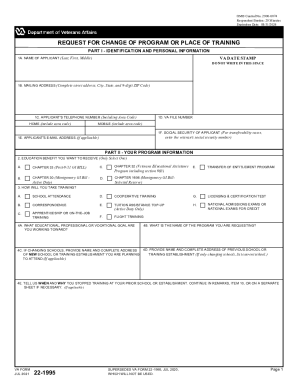



California calepa 220 form 2026

Get Form
california calepa 220 form Preview on Page 1

Here's how it works

01. Edit your form online
Type text, add images, blackout confidential details, add comments, highlights and more.
02. Sign it in a few clicks
Draw your signature, type it, upload its image, or use your mobile device as a signature pad.
03. Share your form with others
Send it via email, link, or fax. You can also download it, export it or print it out.

How to use or fill out California Cal/EPA 220 form with our platform

Form edit decoration
9.5
Ease of Setup
DocHub User Ratings on G2
9.0
Ease of Use
DocHub User Ratings on G2
  1. Click ‘Get Form’ to open the California Cal/EPA 220 form in the editor.
  2. Begin by entering the 'Grantee Name' as it appears on your grant agreement in the first field.
  3. Next, input the 'Grant Number' assigned by Cal/EPA in the second field.
  4. For the 'Payment Request Number', start with 1 for your first request and continue numbering subsequent requests consecutively.
  5. Select the type of payment request: Initial, Reimbursement, or Final. Ensure you attach any necessary supporting documentation.
  6. Enter the 'Amount Requested' for payment in the designated field.
  7. Provide your Federal Employer Identification Number (FEIN) and indicate if you are a Non-Profit Entity or a Federally Recognized Tribe.
  8. Fill out the contact information where you want the warrant sent, including name, address, city, state, and zip code.
  9. In the certification section, print or type your name and title as authorized on your application. Sign and date this section.
  10. Finally, review all fields for accuracy before submitting your completed form along with any required documentation to Cal/EPA.

Start using our platform today to easily fill out and submit your California Cal/EPA 220 form for free!

See more california calepa 220 form versions

We've got more versions of the california calepa 220 form form. Select the right california calepa 220 form version from the list and start editing it straight away!
Versions Form popularity Fillable & printable
2013 4.7 Satisfied (55 Votes)
2006 4.8 Satisfied (122 Votes)
be ready to get more

Complete this form in 5 minutes or less

Get form

Got questions?

We have answers to the most popular questions from our customers. If you can't find an answer to your question, please contact us.
Contact us
CalEPA consists of the California Air Resources Board (CARB), the Department of Pesticide Regulation (DPR), the Department of Resources Recycling and Recovery (CalRecycle), the Department of Toxic Substances Control (DTSC), the Office of Environmental Health Hazard Assessment (OEHHA), and the State Water Resources
CalEPAs boards and departments implement and enforce environmental laws that regulate air and water pollution, toxic substances, the use of pesticides, and waste recycling and reduction.
The Office of Civil Enforcement (OCE) develops and prosecutes administrative civil and judicial cases and provides legal support for cases and investigations initiated in EPA regions. OCE directly implements and enforces federal programs, i.e., those where there are no EPA-authorized state programs.
EPAs criminal enforcement program focuses on criminal conduct that threatens peoples health and the environment. It was established in 1982 and granted full law enforcement authority by congress in 1988.
The EPA is regulated by Congress, the President, the Office of Inspector General (OIG), and the federal courts. Public oversight, state governments, and regulatory agencies also influence EPA policies. The EPA enforces laws through fines, sanctions, and monitoring industries for compliance.

Security and compliance

At DocHub, your data security is our priority. We follow HIPAA, SOC2, GDPR, and other standards, so you can work on your documents with confidence.

Learn more
ccpa2
pci-dss
gdpr-compliance
hipaa
soc-compliance
be ready to get more

Complete this form in 5 minutes or less

Get form

People also ask

The Environmental Protection Agency was established in the executive branch as an independent agency pursuant to Reorganization Plan No. 3 of 1970 (5 U.S.C.

Related links