



01. Edit your 21 0845 online
Type text, add images, blackout confidential details, add comments, highlights and more.

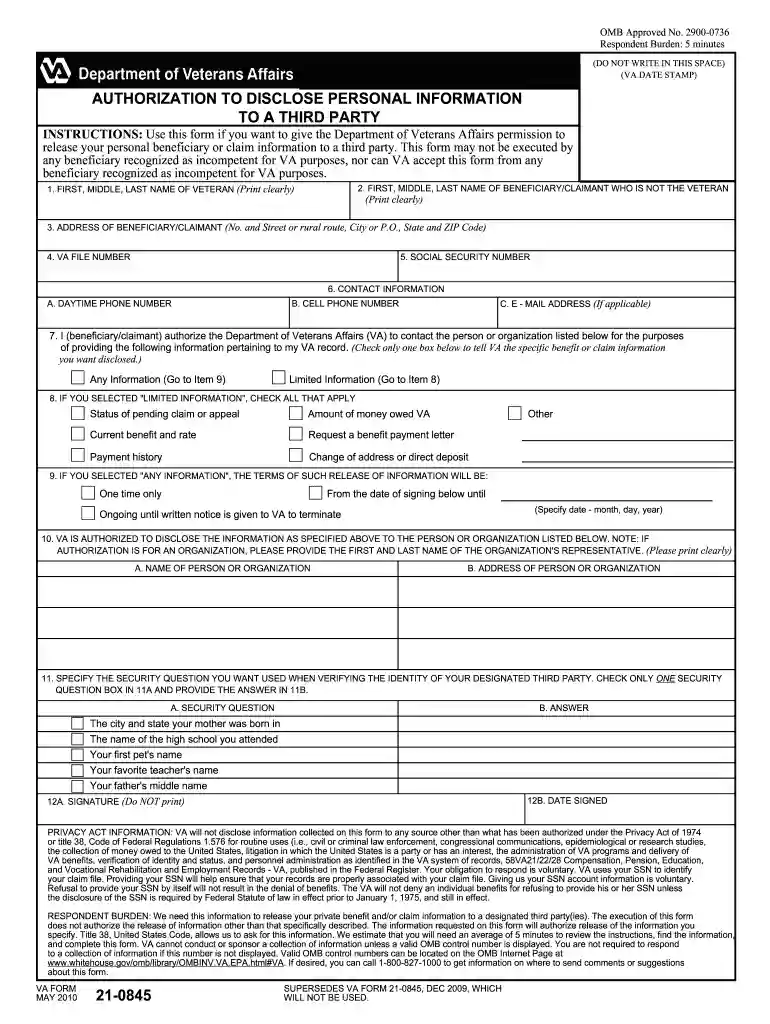
Type text, add images, blackout confidential details, add comments, highlights and more.

Draw your signature, type it, upload its image, or use your mobile device as a signature pad.

Send va form 21 0845 printable via email, link, or fax. You can also download it, export it or print it out.

Start using our platform today for free to streamline your form completion process!
We've got more versions of the 21 0845 form. Select the right 21 0845 version from the list and start editing it straight away!
At DocHub, your data security is our priority. We follow HIPAA, SOC2, GDPR, and other standards, so you can work on your documents with confidence.





Figure 21: DX2010 Sensor Loop Wiring, Doubled Loop Configuration. Tables 9 and Table 10 identify the 106 and 107 DX2010 sensor loop addresses, respectively.Read more
Dec 18, 2025 Use VA Form 21-0845 to authorize VA to share your personal information with a non-VA (third-party) individual or organization. Downloadable PDF.Read more


