




01. Edit your 1065 form online
Type text, add images, blackout confidential details, add comments, highlights and more.

Type text, add images, blackout confidential details, add comments, highlights and more.

Draw your signature, type it, upload its image, or use your mobile device as a signature pad.

Send form 1065 via email, link, or fax. You can also download it, export it or print it out.
IRS Form 1065 is a pivotal tax document that partnerships use to report their annual income, deductions, and credits to the Internal Revenue Service (IRS). The form itself does not calculate the tax burden of the partnership, as partnerships generally do not pay federal income tax. Instead, the income and losses from the partnership are passed through to the individual partners who report this information on their personal tax returns. For the 2012 tax year, Form 1065 continues to serve this essential function, requiring partnerships to provide a comprehensive summary of financial activities throughout the year.
Gather Required Information: Before filling out the 2012 IRS 1065 form, gather all necessary financial records, such as income statements, balance sheets, and records of distributions to partners. Accurate documentation is crucial for reporting income, deductions, and credits.
Fill Out Basic Information: Start by entering the partnership’s information, including its name, address, employer identification number (EIN), principal business activity, and principal product or service.
Enter Income and Deductions: Report the partnership’s income, including gross receipts or sales, cost of goods sold, and other income such as interest or rental income. Deduct applicable business expenses, which may include salaries, rents, and utilities.
Schedule K-1 Preparation: For each partner, fill out a Schedule K-1 form that details each partner's share of income, deductions, credits, and other necessary items. This document is essential for partners to accurately complete their individual tax returns.
Review and Submit: Double-check all entries for accuracy before signing and submitting the form. Ensure compliance by filing the form by the 15th day of the third month following the end of the partnership’s tax year.
Step 1: Gather All Financial Records: Compile all necessary financial documentation, which should include detailed records of income and expenses throughout the year.
Step 2: Fill Out Partnership Information: Accurately provide general information such as the partnership’s name and EIN.
Step 3: Report Income: Enter all gross receipts, capital gains, and other forms of income. Ensure accurate classification of income types.
Step 4: Document Deductions: Include allowable expenses such as business insurance, salaries, and other operational costs.
Step 5: Distribute K-1 Forms to Partners: Complete and issue Schedule K-1 forms for individual partners, reflecting their share of the partnership’s finances.
Step 6: Review and Certify: Verify that all information is correct and consistent before submitting the form to the IRS.
Form 1065 is generally used by businesses classified as partnerships. This includes groups where two or more individuals engage in a trade or business and share in profits and losses. Examples include:
General Partnerships: Where partners manage the business and assume responsibility for the partnership's liabilities.
Limited Partnerships: Composed of general partners who manage the business and limited partners who invest but have limited liability.
Limited Liability Partnerships (LLPs): Firms that provide some liability protection for its partners, often used by professional groups such as lawyers or accountants.


Partner Information: Essential details about each partner, including Social Security Numbers and partnerships' profit-sharing percentages.
Income Reporting: Accurate documentation of various types of income, crucial for determining net earnings.
Deductions: Detailed breakdown of expenditures incurred during the tax year, often used to reduce taxable income.
Schedule K-1: Individual reports for partners detailing each partner's share of income, deductions, and credits.
Typically due by March 15: Partnerships using Form 1065 must file by the 15th day of the third month following the end of their tax year.
Extension Option: An automatic six-month extension can be requested using Form 7004, provided it is filed by the original due date.
Late Filing: Failure to file Form 1065 by the due date may result in a penalty for each month or part of a month the return is late.
Inaccurate Information: Incorrect or incomplete reporting can also incur penalties, emphasizing the importance of accurate documentation and filings.
While Form 1065 remains the standard for partnerships, it can be complemented with additional schedules, such as:
Schedule B-1: Information on each partner’s net share.
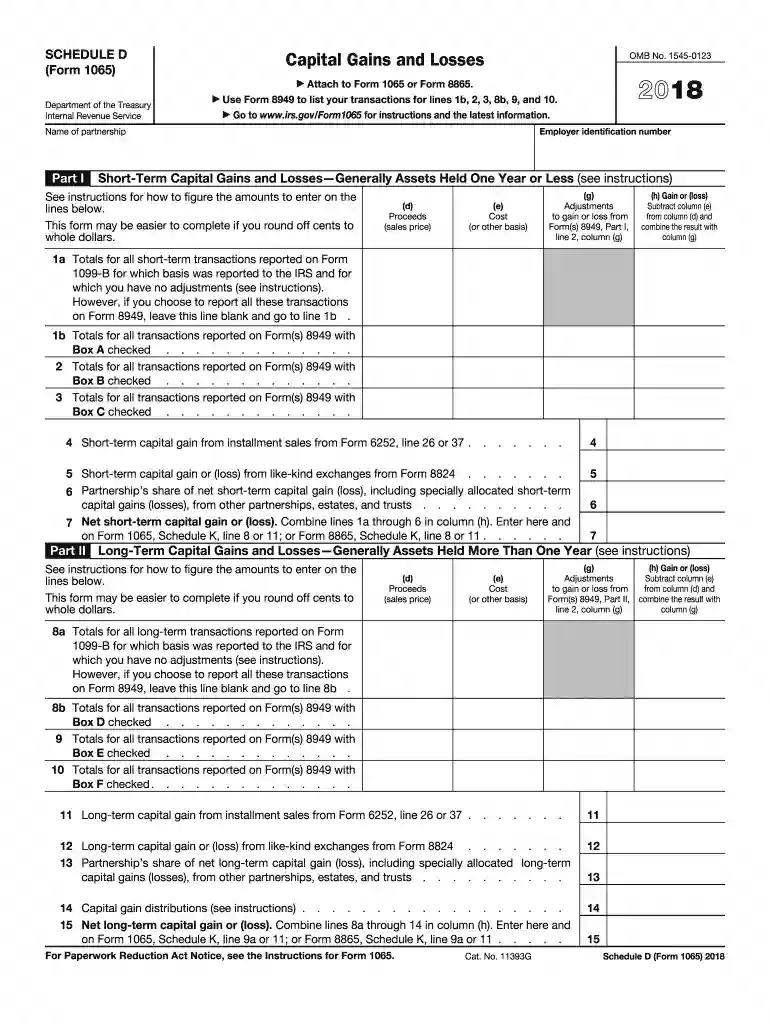
Schedule D: Reporting of capital gains and losses.
Form 1065-X: To amend one's partnership return if errors are discovered after submission.
Understanding and appropriately handling the 2012 IRS Form 1065 ensures that a partnership adequately complies with tax regulations while efficiently reporting and distributing financial information among partners.
We've got more versions of the 1065 form form. Select the right 1065 form version from the list and start editing it straight away!
| Versions | Form popularity | Fillable & printable |
|---|---|---|
| 2025 | 4.1 Satisfied (39 Votes) | |
| 2024 | 4.9 Satisfied (45 Votes) | |
| 2023 | 4.3 Satisfied (44 Votes) | |
| 2022 | 4.5 Satisfied (36 Votes) | |
| 2021 | 4.8 Satisfied (80 Votes) | |
| 2020 | 4.2 Satisfied (108 Votes) | |
| 2019 | 4.2 Satisfied (62 Votes) | |
| 2018 | 4.3 Satisfied (209 Votes) | |
| 2017 | 4.3 Satisfied (43 Votes) | |
| 2016 | 4.4 Satisfied (670 Votes) | |
| 2015 | 4 Satisfied (58 Votes) | |
| 2014 | 4.1 Satisfied (61 Votes) | |
| 2013 | 3.9 Satisfied (33 Votes) | |
| 2012 | 4 Satisfied (47 Votes) | |
| 2011 | 4.1 Satisfied (68 Votes) |
At DocHub, your data security is our priority. We follow HIPAA, SOC2, GDPR, and other standards, so you can work on your documents with confidence.
Aug 1, 2012 Form 1065 is an information return used to report the income, gains, losses, deductions, credits, etc., from the operation of a partnership. ARead more
Jun 30, 2020 Delaware. 20-4536774. (State of incorporation). (I.R.S. Employer Identification No.) 601 Jefferson Street, Suite 3400. Houston. Texas. 77002.Read more
Jan 25, 2013 The 2012 Form 1065 is an information return for calendar year 2012 and fiscal years that begin in 2012 and end in 2013. For a fiscal year orRead more


