
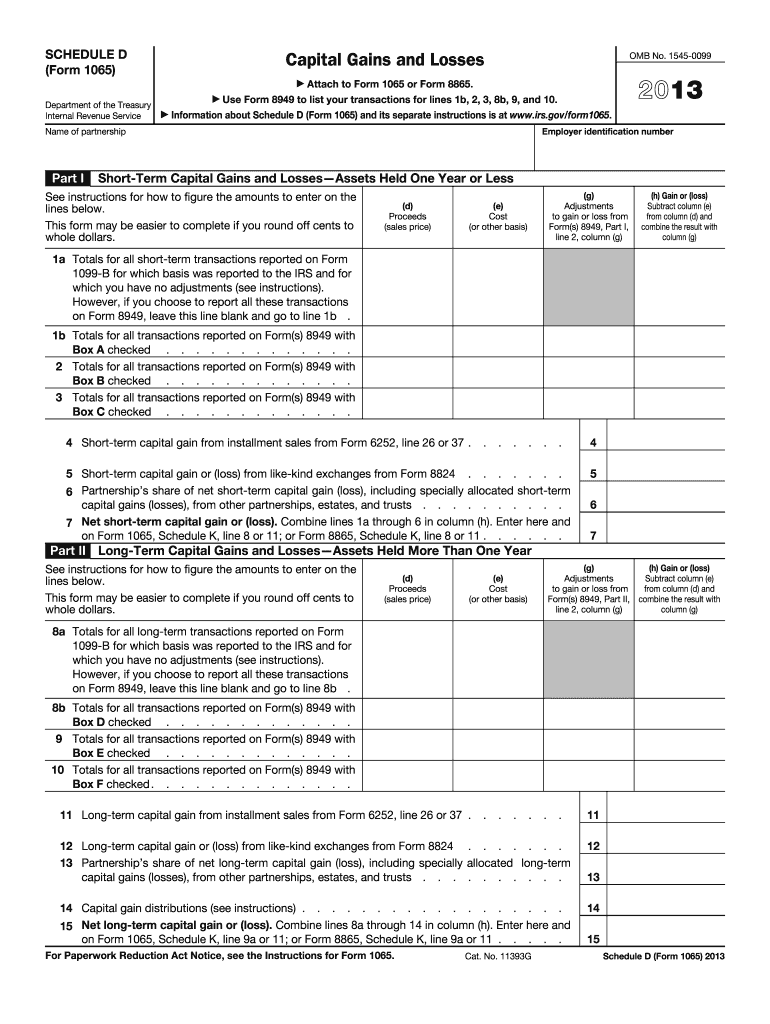







Definition & Purpose of the 2013 IRS Form Schedule D
The 2013 IRS Form Schedule D is essential for taxpayers who need to report capital gains and losses from various transactions. This form is part of the process in determining net capital gain or loss, which impacts how much tax a taxpayer will owe or which deductions they may be eligible for. Utilizing Form 8949, taxpayers summarize transactions before transferring totals to Schedule D. This form is vital for those who invest in stocks, bonds, or real estate, allowing them to report profits or losses from these investments accurately.
How to Use the 2013 IRS Form Schedule D
To use the 2013 IRS Form Schedule D effectively, it is necessary to organize your financial records regarding capital asset transactions. Ensure you have Form 1099-B from your brokerage, as this contains critical details about sales and proceeds. Transfer this data to Form 8949, adjust for any discrepancies, and then total everything on Schedule D. Correctly identifying each transaction as short-term or long-term is crucial because they are taxed at different rates. The net results will then influence your overall tax liability.
Steps to Complete the 2013 IRS Form Schedule D
-
Gather Proceeds and Costs: Ensure you have all the necessary documents like Form 1099-B and records of purchase costs and sale proceeds.
-
Fill Out Form 8949: Enter each stock, bond, or property transaction details—include date acquired, sold, original cost, sales price, and any adjustments or disallowed losses.
-
Transfer to Schedule D: Summarize the short-term and long-term transactions on Form 8949 and input these figures into corresponding sections of Schedule D.
-
Calculate Capital Gains and Losses: Within Schedule D, determine if you have a net gain or loss. If losses exceed gains, part can be used to offset other income.
-
Finalize and Attach to Tax Return: After calculations, attach Schedule D to your 1040 form to submit with your federal tax return.
Key Elements of the 2013 IRS Form Schedule D
- Transaction Type: Highlight whether gains or losses are short-term or long-term.
- Calculations: Totals from Form 8949 and determined net amounts.
- Netting Rules: Instructions for netting capital losses against gains.
- Carryover Losses: Procedures for applying past year losses to this year’s return.
Common Users of the 2013 IRS Form Schedule D
Common users include individual investors, business owners dealing with securities, and real estate transaction participants. Taxpayers engaged in frequent trading or who own substantial portfolios also regularly use this form. Both individuals and partnerships required to report capital transactions must adhere to Form 8949 and Schedule D for accurate reporting.


IRS Guidelines for the 2013 IRS Form Schedule D
The IRS offers clear guidelines on who needs to complete Schedule D. Primarily, individuals with capital gains or losses from sales or exchanges of stocks, bonds, or other capital assets must use this form. The IRS provides detailed instructions on how to fill it out, including defining what counts as a capital gain or loss and how these figures affect taxable income.
Filing Deadlines for the 2013 IRS Form Schedule D
The Schedule D form must be completed and submitted by the federal tax return due date, typically April 15. Extensions can be requested through Form 4868, but they must be approved to avoid penalties. It is crucial to adhere to these deadlines to prevent interest charges and penalties on unpaid taxes.
Penalties for Non-Compliance with 2013 IRS Form Schedule D
Failing to file Schedule D when required can result in significant penalties from the IRS. Notable consequences include fines for underpayment of estimated taxes and added interest for late payments. It is imperative to ensure accurate completion and timely filing of Schedule D to avoid financial penalties.
Software Compatibility for the 2013 IRS Form Schedule D
The 2013 IRS Form Schedule D is compatible with various tax preparation software like TurboTax and QuickBooks. These tools frequently update to accommodate the latest tax regulations and offer step-by-step guidance, ensuring that all transactions are accurately categorized and reported, easing the burden of filing taxes for taxpayers with complex financial portfolios.




