
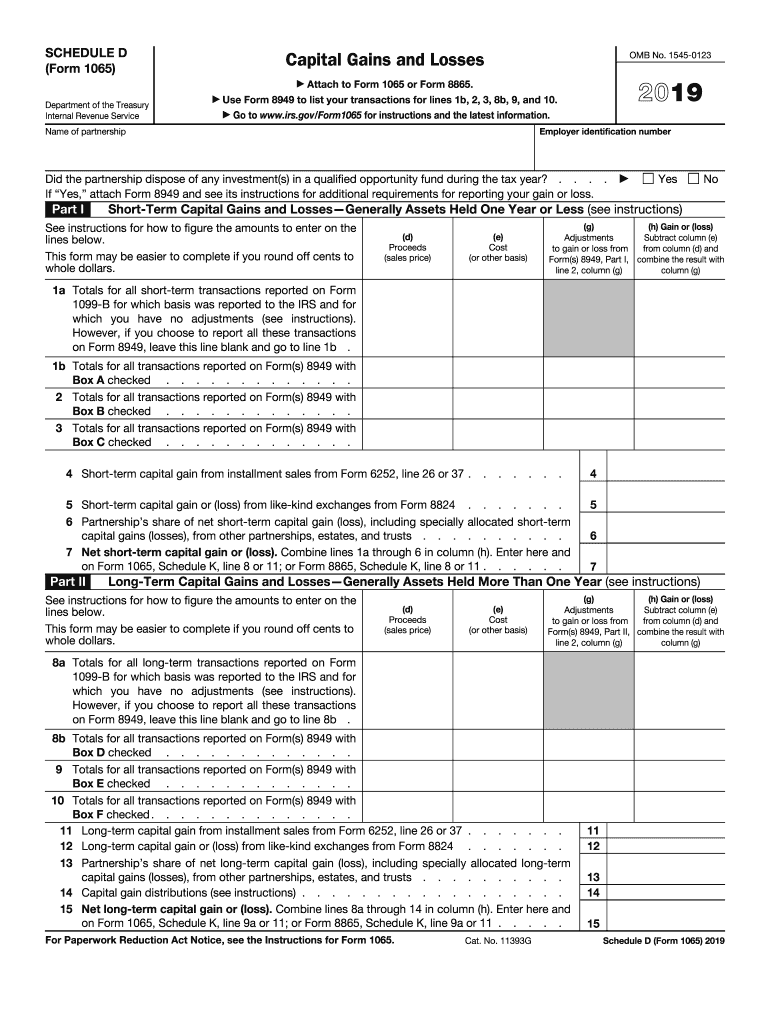







Definition and Purpose of Form 1065 Instructions 2018
Form 1065 is a U.S. tax form used by partnerships to report their annual financial information to the Internal Revenue Service (IRS). The 2018 instructions offer detailed guidance on how to accurately complete the form, including information on calculating income, deductions, and other financial details. The instructions are critical for ensuring compliance with federal tax regulations and avoiding potential penalties. Partnerships use Form 1065 to report their income, gains, losses, deductions, and credits, and the instructions provide the framework needed for consistent and correct filing.
Steps to Complete Form 1065 Instructions 2018
Completing Form 1065 involves several steps to ensure accuracy and compliance.
- Gather Financial Information: Assemble all relevant financial data, including income statements, balance sheets, and records of deductions and credits.
- Identify Partnership Information: Enter the partnership's name, address, and Employer Identification Number (EIN) in the appropriate section.
- Compute Income and Deductions: Follow the instructions to calculate ordinary business income and allowable deductions. This will typically involve detailing each partnership income category and the specific deductions applicable.
- Complete Partner Information: Use Schedule K-1 to report each partner's share of income, deductions, and other financial attributes. Each partner's information must be accurately reflected on this schedule.
- Review and Signature: Before submission, review all entries for accuracy and completeness. The form should then be signed by one of the partner's authorized representatives.
- Submission: File Form 1065 electronically through the IRS systems or by using approved tax software.
Why and Who Uses Form 1065 Instructions 2018
Form 1065 instructions are crucial for partnerships to ensure compliance with IRS regulations. The instructions also help partnerships avoid common errors that can lead to penalties or delays in processing. These guidelines cater to all partnership types, including general partnerships, limited partnerships, and LLCs treated as partnerships for tax purposes. By following the instructions meticulously, partnerships can accurately report financial details and allocate income or losses to partners.
Important Terms Related to Form 1065 Instructions 2018
Understanding key terms is crucial for accurately completing Form 1065.
- Ordinary Business Income: Reflects the net income from regular business operations.
- Schedule K-1: A form detailing each partner's share of income, credits, and deductions.
- Cost of Goods Sold (COGS): Represents the direct costs associated with producing goods sold by the business.
- Partnership Contributions: Covers any capital contributions made by partners during the tax year.
- Distributive Share: The portion of a partnership's income or loss allocated to each partner.
IRS Guidelines and Filing Deadlines
The IRS sets specific guidelines and deadlines for the submission of Form 1065. Typically, the form is due by the 15th day of the third month following the close of the partnership's fiscal year. For calendar-year taxpayers, this is usually March 15th of the following year. The IRS guidelines also provide specific instructions on how to handle extensions and what to do in case of late filing.
Required Documents for Filing
When preparing Form 1065, partnerships must gather several key documents:
- Financial Records: Includes income statements and balance sheets.
- Partner Information: Names, addresses, and taxpayer identification numbers of all partners.
- Supporting Schedules: Any additional worksheets used to calculate financial details.
- Prior Year Returns: Previous year's Form 1065, if applicable.
Methods for Submitting Form 1065
Form 1065 can be submitted through several methods:
- Electronic Filing: Preferred by the IRS, electronic filing ensures faster processing and acknowledgement of receipt.
- Mail: For those opting for physical submission, Form 1065 can be mailed to the appropriate IRS service center.
- Approved Tax Software: Many partnerships use IRS-approved tax software that provides features for submitting the form electronically.
Penalties for Non-Compliance
Failure to file Form 1065 on time can result in penalties. The IRS may impose a penalty for each month the form is late, per partner, up to a maximum number of months. Therefore, it's imperative to understand all filing requirements and deadlines to avoid additional costs. Moreover, errors in reporting or incomplete submissions can result in delays and further scrutiny from the IRS, potentially leading to more penalties.
By adhering to Form 1065 instructions, partnerships can ensure that they are compliant with current tax laws and regulations, minimizing risks associated with financial reporting.




