






Definition & Meaning
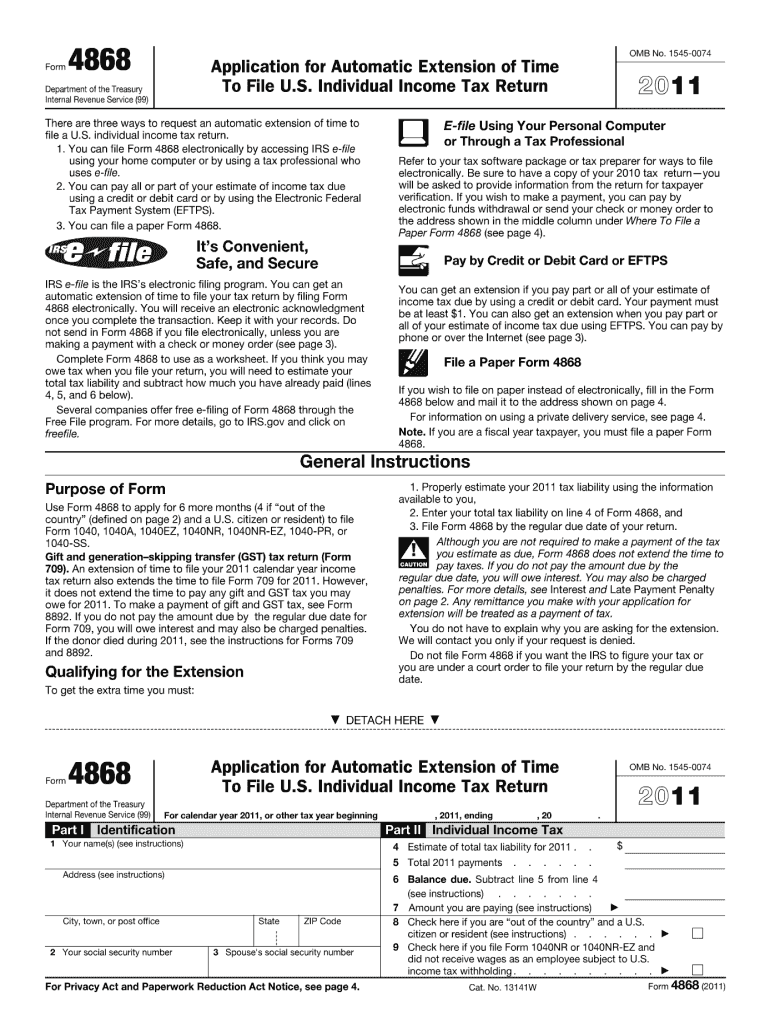
Form 4868, officially known as the “Application for Automatic Extension of Time To File U.S. Individual Income Tax Return,” allows taxpayers in the United States to request additional time for filing their individual income tax returns. Specifically, the 4 form pertains to requests for extensions in the tax year 2011. This form provides an automatic extension, typically up to six months, allowing more time to prepare tax documents without incurring late filing penalties. While it grants extra time for filing, it does not extend the time to pay taxes owed.
How to Use the 4 Form
- Deciding to file: Assess whether you need additional time to gather necessary tax information or resolve financial matters. Filing an extension may be beneficial if waiting for delayed tax documents or if personal circumstances require extra time.
- Filling out the form: Enter your personal information, including your name, Social Security number, and estimated tax liability for the year.
- Payment of taxes: While the form extends your filing deadline, any tax due payments should be made by the original due date to avoid interest and penalties.
Detailed Instructions
- Calculate your tax liability: Estimate your total tax liability based on current information.
- Include payments: Account for prepayments made, such as withholding and estimated tax payments.
- Determine the balance due, if any: Calculate the amount you owe or the anticipated refund.
- Submit the form: Ensure submission by the tax filing deadline to receive the extension.
How to Obtain the 4 Form
- Download from the IRS website: Visit the official IRS website to find and download the form in a PDF format.
- Request by mail: Contact the IRS to have a physical copy mailed to your address.
- Utilize tax software: Use software like TurboTax or QuickBooks, which typically include downloadable forms and facilitate electronic submission.
Steps to Complete the 4 Form
- Personal information: Enter your legal name and Social Security number.
- Estimate total tax liability: Use your current financial documents and information to estimate your tax obligation.
- Account for payments: Fill in the withholding and estimated tax payments already made.
- Calculate balance due: Determine if any remaining tax amount is owed.
- Sign and submit the form: Ensure that you have accurately provided all required information and submit it by the deadline.
Why You Should File the 4 Form
Filing Form 4868 for the 2011 tax year is crucial if you require additional time to accurately complete your income tax return. Circumstances such as waiting for relevant financial documents, encountering personal difficulties, or handling complex financial situations make this extension vital. Although the form delays the filing process, it helps avoid potential filing penalties and ensures completeness and accuracy of your return.
Who Typically Uses the 4 Form
- Individuals: Typically used by taxpayers who need additional time beyond the regular April filing deadline.
- Self-employed individuals: May face complex financial situations requiring careful calculation and documentation.
- Those facing exceptional life events: Instances such as illness, family emergencies, or financial changes necessitate an extension.


Filing Deadlines / Important Dates
- Original filing deadline: For most taxpayers in 2011, the deadline was April 18.
- Extended deadline: Generally allows an additional six months, making the extended deadline October 17, 2011.
- Tax payment deadline: Despite the filing extension, tax payments were still due by the original April deadline to avoid penalties.
IRS Guidelines
- Accuracy: Ensure the accuracy of information to avoid processing delays.
- Effective estimation: Make a good-faith effort to estimate tax liability.
- Funding tax payments: Even with an extension, the payment deadline does not change; any taxes owed should be paid by the original due date.
Form Submission Methods (Online / Mail / In-Person)
- Electronic submission: Most recommended, allowing immediate confirmation and receipt of the extension request.
- Mail: Print and send the form to the designated IRS address; ensure it's postmarked by the filing deadline.
- In-person: Less common, often involves physically visiting IRS offices or drop-off locations.
Providing the maximum amount of relevant and detail-rich information about the 4 form ensures that readers gain a thorough understanding of the form's purpose, requirements, and benefits. By focusing on critical sections, this structured approach aids in intelligent planning and compliance.