



01. Edit your 2018 file return online
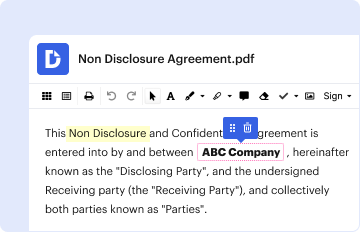
Type text, add images, blackout confidential details, add comments, highlights and more.

Type text, add images, blackout confidential details, add comments, highlights and more.

Draw your signature, type it, upload its image, or use your mobile device as a signature pad.

Send irs 2018 file via email, link, or fax. You can also download it, export it or print it out.
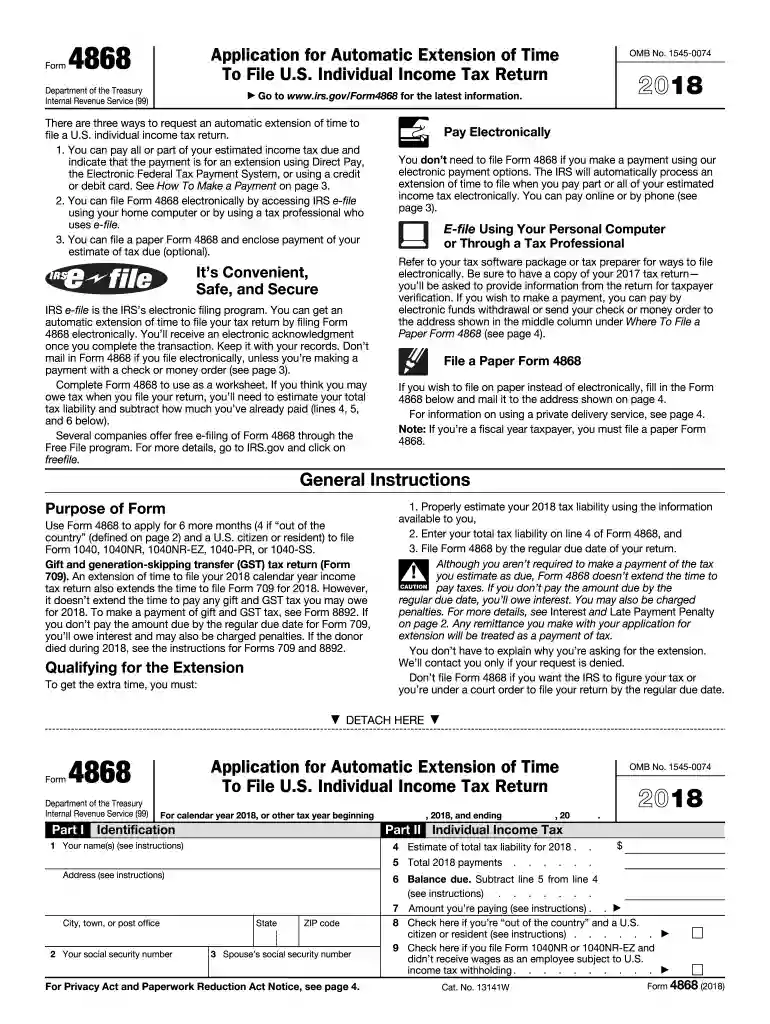
IRS Extension Form 4868, also known formally as the "Application for Automatic Extension of Time to File U.S. Individual Income Tax Return," allows taxpayers to extend their filing deadline for their federal tax returns by six additional months. The form serves as a filing extension but does not grant more time to pay any taxes owed. It is crucial for individuals who are not ready to file their complete tax return by the original due date. By using Form 4868, taxpayers can avoid the late filing penalty, although interest will still be charged on any tax due after the original deadline.
To effectively utilize IRS Extension Form 4868, taxpayers should begin by estimating their total tax liability for the year. This involves calculating expected income, deductions, and credits to determine whether any taxes will be owed. If a payment is due, it can be submitted along with Form 4868 to minimize interest charges. The form provides three main methods for filing: submitting it electronically, sending it by mail, or using a tax preparation software. Electronic filing is the quickest and most reliable method, as it provides an immediate confirmation receipt.
Gather Necessary Information: Before filling out Form 4868, collect your important tax-related documents, such as W-2s, 1099s, and records of other income and deductions.
Estimate Tax Liability: Calculate your estimated tax liability using prior year tax returns as a guide. This will include your overall income, applicable deductions, and credits.
Complete Part I of Form 4868: Enter personal information, including your full name, address, and social security number. Ensure all details match your records from prior filed returns.
Calculate and Enter Estimated Tax Owed: In Part II, provide your estimated total tax liability and any tax payments you have already made this year. Subtract payments from tax liability to determine the amount owed.
Choose Filing Method: Decide whether to file electronically, by mail, or through a licensed tax professional. If filing electronically, use approved IRS e-file providers. If filing by mail, ensure it’s postmarked by the tax deadline.
Form 4868 is mainly used by individuals who require more time to gather necessary paperwork or verify data, such as self-employed individuals or taxpayers with complex incomes. It's also commonly filed by those waiting for income statements or other tax documents. Individuals who have experienced unexpected events or have complicated financial situations that prevent them from meeting the initial filing deadline benefit from this extension, as it gives them ample time to accurately file their federal tax returns.


The primary deadline for submitting Form 4868 is on the original due date of the tax return, usually April 15 for most taxpayers. If filing electronically, the submission must be completed by midnight local time on the due date. The extension grants an additional six months, moving the deadline to October 15. It’s important to note that if the due date falls on a weekend or legal holiday, the deadline is extended to the next business day. For taxpayers living outside the U.S., the initial extended filing date is June 15.
Taxpayers have several options for submitting Form 4868:
Online Submission: The form can be submitted through online service platforms, such as IRS e-file or participating tax software programs. This method provides immediate confirmation and is highly secure.
Mail: If you prefer traditional mail, complete and send Form 4868 to the appropriate IRS address, which varies depending on your state of residence. Include a check or money order if a payment is due.
Tax Professionals: Many taxpayers use the services of tax professionals who can file Form 4868 on their behalf, ensuring correctness and compliance with IRS guidelines.
Failure to file Form 4868 or submit a tax return on time can lead to significant penalties. The late filing penalty is typically five percent of the unpaid taxes for each month or part of a month that a tax return is late, not exceeding 25% of your unpaid taxes. However, this penalty does not apply if you've received an extension. The late payment penalty is generally 0.5% of the tax not paid by the original due date, accumulating monthly. Interest on unpaid taxes accrues from the original deadline until the taxes are paid in full.
Adhering to IRS guidelines ensures a smooth filing process. Taxpayers are encouraged to file Form 4868 even if they cannot estimate the exact tax amount owed, to avoid penalties for failing to file. The IRS also advises keeping comprehensive records of all filings. If any changes to personal information occur, ensure that these are up to date when filing. Understanding IRS guidelines around tax computation and payment will help avoid errors that could complicate or delay the extension request or eventual tax filing.
We've got more versions of the 2018 file return form. Select the right 2018 file return version from the list and start editing it straight away!
| Versions | Form popularity | Fillable & printable |
|---|---|---|
| 2024 | 4.9 Satisfied (37 Votes) | |
| 2023 | 4.5 Satisfied (35 Votes) | |
| 2022 | 4.3 Satisfied (36 Votes) | |
| 2021 | 4.8 Satisfied (52 Votes) | |
| 2020 | 4.2 Satisfied (114 Votes) | |
| 2019 | 4.2 Satisfied (38 Votes) | |
| 2018 | 4.4 Satisfied (119 Votes) | |
| 2017 | 4 Satisfied (64 Votes) | |
| 2016 | 4.4 Satisfied (385 Votes) | |
| 2015 | 4 Satisfied (33 Votes) | |
| 2014 | 4.3 Satisfied (56 Votes) | |
| 2013 | 4 Satisfied (61 Votes) | |
| 2012 | 4.2 Satisfied (62 Votes) | |
| 2011 | 4 Satisfied (41 Votes) | |
| 2010 | 4 Satisfied (46 Votes) |
At DocHub, your data security is our priority. We follow HIPAA, SOC2, GDPR, and other standards, so you can work on your documents with confidence.


Oct 1, 2025 You can get an automatic extension of time to file your tax return by filing Form. 4868 electronically. Youll receive an electronicRead more
You can get an automatic extension of time to file your tax return by filing Form. 4868 electronically. Youll receive an electronic acknowledgment once youRead more
Please fill in the Return Label at the bottom of this page. 1. I request an extension of time until to file my income tax return for the calendar year 2017,.Read more


