




01. Edit your audition form template word online
Type text, add images, blackout confidential details, add comments, highlights and more.

Type text, add images, blackout confidential details, add comments, highlights and more.

Draw your signature, type it, upload its image, or use your mobile device as a signature pad.

Send audition form template via email, link, or fax. You can also download it, export it or print it out.
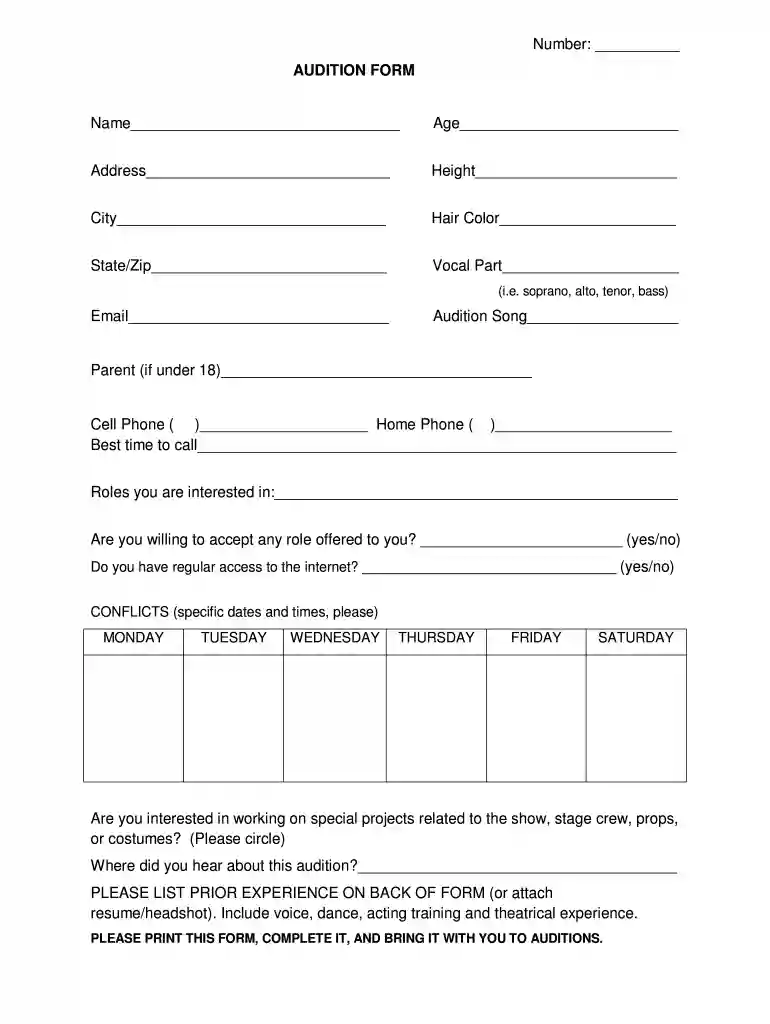
An audition form template is vital for casting directors and theater groups seeking to gather comprehensive information from applicants. This document serves as a foundational tool in the audition process, enabling organizers to streamline information collection and assess performers effectively. This section outlines the key components necessary for an effective audition form template.
This section collects basic personal details about the auditionee, which are crucial for identification and communication.
Understanding an applicant's availability helps casting directors organize rehearsal schedules and performance times effectively.
It is important to gauge an applicant's previous training and experiences to make informed decisions during casting.
Providing context about the applicant’s background can assist directors in selection.
Ensuring legal compliance and health considerations is important for both the organization and the applicant.
A signature line and date provide an attestation to the authenticity of the submitted information.
By incorporating these essential components into an audition form template, organizations can effectively streamline their audition processes, ensuring they collect all necessary information while providing a clear understanding of each applicant's capabilities and needs.
At DocHub, your data security is our priority. We follow HIPAA, SOC2, GDPR, and other standards, so you can work on your documents with confidence.

Learn about the requirements for high school audition programs, by discipline, as well as how to participate in the audition process.
Audition Form. Performances: October 29th November 2nd (Strike: November 3rd). Tuesday - Saturday, 6:00 PM 11:00 PM (Strike: Sunday TBD). Main Rehearsals


