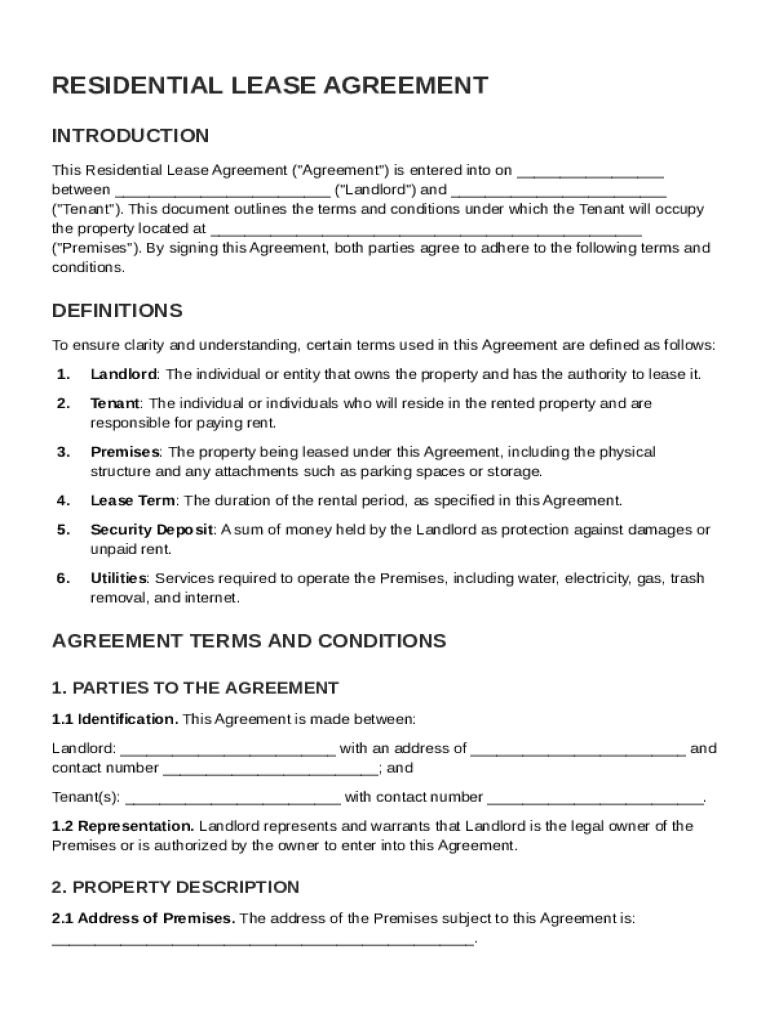







Definition and Purpose of the Landlord Rental Contract Template
The Landlord Rental Contract Template acts as a formal agreement detailing the terms and conditions under which a landlord rents their property to a tenant. This document serves to protect both parties by clearly outlining their rights and obligations. It includes essential terms such as lease duration, rent amount, payment schedule, and deposit requirements. In addition, the template specifies maintenance responsibilities, property rules, and the process for resolving disputes. This formalizes the relationship between landlord and tenant, reducing the risk of misunderstandings and potential conflicts.
Key Elements Included in the Template
- Property Details: Outlines the specific property, including its address and any furnishings or appliances provided.
- Lease Duration: Clearly defines the start and end date of the rental agreement.
- Rent and Payment Terms: Details the monthly rent amount, payment due date, and accepted payment methods.
- Security Deposit: Specifies the amount, use, and conditions for returning the deposit.
- Maintenance and Repairs: Details the party responsible for maintenance and repairs.
- Termination Conditions: Explains the conditions under which the lease can be terminated by either party.
Practical Example
Imagine a landlord in New York City renting out a studio apartment. By utilizing the Landlord Rental Contract Template, they can ensure the tenant is aware of their agreement on pet policies, smoking restrictions, and procedures for submitting maintenance requests. This clarity helps in preventing disputes that may arise during the lease period.
Steps to Complete the Landlord Rental Contract Template
- Enter Property Information: Fill in the property's address, unit details, and any inclusions or exclusions.
- Specify Lease Terms: Clearly state the lease start and end dates, ensuring mutual understanding.
- Detail Payment Obligations: Record monthly rent, security deposit amount, and payment instructions.
- Outline Tenant & Landlord Responsibilities: Discuss and note down responsibilities for maintenance, repairs, and any shared utilities.
- Sign the Agreement: Both landlord and tenant must sign the document, signifying their compliance with its terms.
Additional Considerations
- Ensure all fields are complete to avoid legal ambiguities.
- Engage in discussions with tenants to ensure mutual acceptance of terms.
- Consider consulting a legal expert to ensure all terms comply with state and local laws.
Legal Use of the Landlord Rental Contract Template
Legal compliance is critical when using a Landlord Rental Contract Template. This template requires adherence to state laws governing rental agreements. It ensures the contract is enforceable in court if any disputes arise. Key legal considerations include emergency entry protocols, tenant rights to privacy, and adherence to anti-discrimination laws. Landlords must ensure contracts are explicit about their legal obligations and those of the tenant.
Common Missteps
- Failing to update the template with current legislation, particularly new tenant protection laws.
- Overlooking state-specific clauses which could void certain elements of the contract.
Who Typically Uses the Landlord Rental Contract Template
Primarily used by property managers and landlords, the Landlord Rental Contract Template offers a streamlined method of creating binding rental agreements. It is particularly useful for:
- Individual Landlords: Those managing one or a few properties can rely on this template for consistent and thorough contracts.
- Property Management Companies: Utilize these templates to manage agreements across multiple properties in different regions.
- Real Estate Agents: Often involve this template when facilitating rental agreements on behalf of property owners.


Real-World Application
An independent landlord with several properties in California might use this template to provide clear rental terms that comply with California’s strict rental laws. By using a standardized document, they help ensure consistency and reduce errors across agreements.
Important Terms Related to the Landlord Rental Contract Template
Understanding the terminology within a rental contract is vital for both landlords and tenants. Here are several critical terms:
- Lease Term: The duration for which the tenant is allowed to live in the property.
- Lessee and Lessor: The tenant (lessee) and the landlord (lessor) involved in the rental agreement.
- Default: The failure to meet legal obligations of the contract, often leading to lease termination.
- Subletting: The act of a tenant renting the property to another party, often requiring landlord approval.
Variations and Exceptions
In some states, certain terms may have specific legal requirements, such as security deposit limits or grace periods for rent payment.
State-Specific Rules for the Landlord Rental Contract Template
Rental agreements across the U.S. must comply with state-specific regulations. Such laws affect maximum allowed security deposits, late fees, and notice periods for termination. For example, in Texas, landlords must return the security deposit within 30 days after lease termination, while in New York, certain rent-control rules might affect lease renewals.
Examples of State Variations
- California: Strict regulations on rent increases and tenant rights.
- Florida: No statutory limit on late fees, but they must be specified in the contract.
Examples of Using the Landlord Rental Contract Template
Landlords from various states can use this template to create rental agreements that suit their unique needs. For example, a Dallas-based landlord with multiple townhouses could utilize this contract to set specific guidelines for maintenance and renter insurance requirements. Conversely, a small business owner leasing residential spaces in Seattle might adapt the template to include clauses on waste management due to city ordinances.
Case Study
A landlord in Philadelphia faced frequent disputes over late payments. By utilizing a customized Landlord Rental Contract Template that specified penalties and protocols for late fees, future issues were significantly reduced.
Digital versus Paper Version
With digital documentation on the rise, landlords can choose between using a digital or paper version of the Landlord Rental Contract Template. Digital versions allow for easy storage and quicker sharing through platforms like DocHub, which facilitates electronic signatures for a seamless, legally binding agreement process. Paper versions, while traditional, may require more storage space and are susceptible to physical damage.
Considerations for Choosing a Format
- Digital: Ideal for landlords managing multiple properties or located in different cities.
- Paper: May be preferred by landlords who deal with tenants uncomfortable with digital processes.