






Definition & Purpose of a Joint Ownership Residential Property Agreement
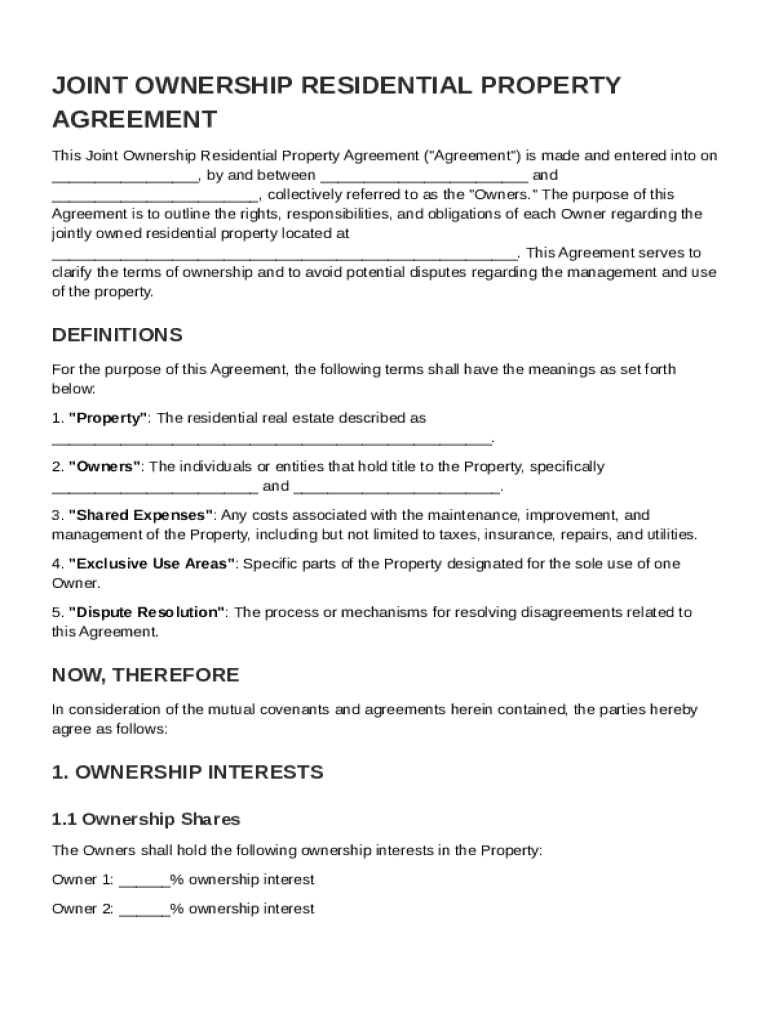
A Joint Ownership Residential Property Agreement is a detailed legal document that governs the shared ownership of residential property by two or more parties. Its primary aim is to clearly outline the rights, responsibilities, and obligations of each co-owner. The agreement helps prevent disputes by establishing clear terms for decision-making, financial contributions, and conflict resolution. This document typically includes definitions of key terms, specifics on ownership interests, and processes for managing shared expenses and making joint decisions.
How to Use the Joint Ownership Residential Property Agreement Template
To effectively use a Joint Ownership Residential Property Agreement template, follow these general steps:
-
Review the Template: Before completing the form, thoroughly read the template to understand its sections and requirements.
-
Fill in Personal and Property Details: Input personal information and property details, such as names of owners, property address, and ownership percentages.
-
Specify Financial Contributions: Clearly outline each party’s financial obligations, including mortgage payments, property taxes, and maintenance costs.
-
Define Decision-Making Procedures: Establish how decisions will be made, such as majority rule or unanimous consent required for major decisions.
-
Include a Dispute Resolution Process: Outline steps to resolve conflicts, including mediation or arbitration paths, to manage disagreements legally.
-
Review and Sign: After completing the document, review it thoroughly and have all parties sign in the presence of witnesses or a notary.
Steps to Complete the Joint Ownership Residential Property Agreement Template
Completing a Joint Ownership Residential Property Agreement involves several critical steps to ensure accuracy and clarity:
-
Collect Necessary Information: Gather all relevant personal data, property details, and financial contributions specific to each owner.
-
Customize the Template: Adjust the template to meet the specific needs and agreements of the co-owners, particularly in sections regarding expense management and decision protocols.
-
Insert Ownership Details: Clearly specify the ownership interests, how they are divided, and any conditions affecting these interests.
-
Outline Shared Responsibilities: Define responsibilities such as maintenance, repairs, and insurance obligations to prevent misunderstandings.
-
Address Sale or Transfer of Ownership: Include procedures for one owner buying out another, selling their share, or transferring ownership to a third party.
-
Finalize the Document: After drafting, review the document for errors or incomplete sections, and leave space for signatures and dates.
Legal Use of the Joint Ownership Residential Property Agreement
This agreement serves as a legally binding document when properly executed. Its enforcement can provide assurance and peace of mind that all parties have agreed to the established terms, thereby minimizing potential legal disputes. When disputes arise, the agreement can be used in court as evidence of the intentions and agreements made between owners.
Key Legal Provisions to Consider:
-
Sale and Transfer Rights: Define procedures for selling or transferring ownership shares, including any right of first refusal.
-
Dispute Resolution Clauses: Include methods such as arbitration, which can help quickly resolve disputes without a lengthy court process.
-
Legal Representation Acknowledgment: Consider including a clause suggesting each party has had the opportunity to consult with independent legal counsel.
Who Typically Uses the Joint Ownership Residential Property Agreement Template
This type of agreement is commonly used by:
-
Friends or Family Members: Individuals who wish to co-purchase a property for personal use or investment.
-
Business Partners: Investors who are jointly acquiring residential property for rental or resale purposes.
-
Unmarried Couples: Couples who prefer a more formal arrangement for the co-ownership of a property without marriage.
-
Real Estate Investors and Developers: Groups who invest in residential properties and require clear legal documentation to outline ownership and operational roles.


Important Terms Related to the Joint Ownership Residential Property Agreement
Certain terms are fundamental within a Joint Ownership Residential Property Agreement and provide essential context for the agreement's application:
-
Tenancy in Common: A common form of joint ownership where each owner holds an individual, divisible share of the property.
-
Joint Tenancy: A form of joint ownership that includes the right of survivorship, where the surviving owner(s) automatically inherit a deceased owner’s share.
-
Right of Survivorship: A legal provision that determines what happens to a person’s share upon their death.
-
Encumbrances: Financial and legal claims against the property which may affect ownership or property use.
Key Elements of the Joint Ownership Residential Property Agreement Template
This agreement typically includes the following critical components:
-
Introduction and Definitions: Establishes clear definitions of terms used throughout the agreement.
-
Ownership Interests: Details each party's ownership percentage and responsibilities.
-
Financial Contributions: Specifies who is responsible for mortgage payments, taxes, and other shared expenses.
-
Decision-Making Protocols: Sets guidelines for how decisions affecting the property will be made.
-
Conflict Resolution: Outlines methods for addressing and resolving disputes, including mediation or legal intervention.
-
Sale and Transfer Procedures: Provides guidelines for selling or transferring interests in the property, including buyout conditions.
Examples of Using the Joint Ownership Residential Property Agreement Template
To illustrate its practical application, consider the following scenarios:
-
Co-borrowers Securing a Mortgage: Siblings purchasing a vacation home agree on shared payments, use schedules, and a plan for selling the home if needed.
-
Investor Partnerships: Two individual investors purchase a duplex as joint tenants to renovate and rent, detailing investment and profit-sharing agreements.
-
Couples Sharing Property: A couple buys a house together, noting each partner’s investment and setting out a plan for either party leaving the agreement.
State-Specific Rules for the Joint Ownership Residential Property Agreement Template
State laws can significantly impact the structure and enforceability of these agreements:
-
Community Property States: States like California and Texas may have specific requirements regarding division and classification of property owned jointly by individuals.
-
Tenancy Variations: States may have different rules regarding tenancy types and the rights they confer, affecting estate planning or tax implications.
-
Recording Requirements: Some states require recording the property ownership agreement with the local county office to be enforceable.