






Definition & Meaning
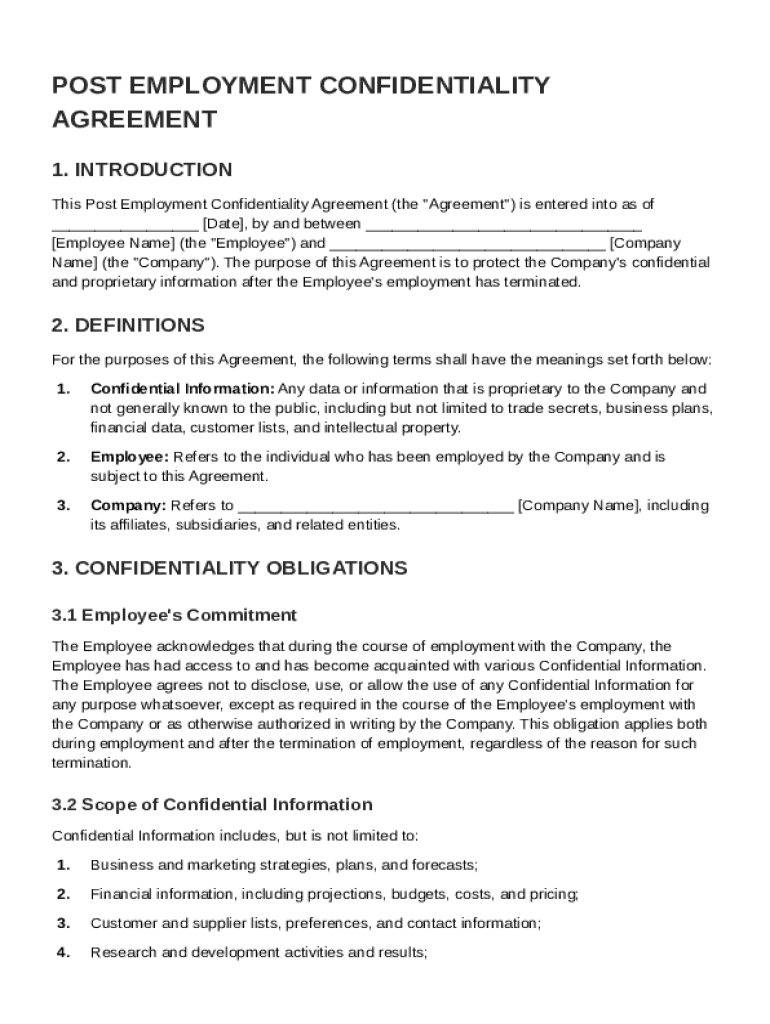
A Post Employment Confidentiality Agreement is a legal contract between an employer and an employee that outlines the responsibilities of the employee to maintain the confidentiality of the company’s proprietary information after their employment has ended. This agreement is crucial in safeguarding sensitive information such as trade secrets, client databases, and business strategies from being disclosed to competitors or the public. The document serves as an assurance to employers that their confidential information will remain protected even after an employee departs from the company.
Key Aspects of the Agreement
- Confidential Information: Specifies what constitutes confidential data, including intellectual property and business plans.
- Employee Commitment: Details the employee’s obligation to protect this information and not share it externally.
- Exclusions: Defines what information is not considered confidential, such as information in the public domain.
- Duration: Sets the time frame within which the employee is obligated to maintain confidentiality.
How to Use the Post Employment Confidentiality Agreement Template
The Post Employment Confidentiality Agreement Template is a structured document designed to streamline the process of creating a confidentiality agreement between an employer and a departing employee. By using a template, both parties can ensure that all necessary components of a confidentiality agreement are included and that it is legally sound.
Steps to Implement the Template
- Customize the Template: Modify the template to include your company’s specific details, such as names, dates, and information categories.
- Define Terms Clearly: Ensure that all terms, especially those concerning confidential information and exclusions, are clearly defined.
- Review with Legal Counsel: Have a legal expert review the agreement to ensure it complies with state-specific regulations.
- Obtain Signatures: Ensure both parties sign the agreement, confirming their understanding and acceptance of its terms.
Key Elements of the Post Employment Confidentiality Agreement Template
An effective Post Employment Confidentiality Agreement should include several key components to ensure its effectiveness and enforceability. These elements help protect the employer’s interests while clearly communicating the employee’s responsibilities.
Essential Components
- Introduction: Provides the context and purpose of the agreement.
- Definitions: Clearly defines what information is considered confidential and any exclusions.
- Obligations: Lists the employee’s duties in maintaining confidentiality.
- Permitted Disclosures: Circumstances under which disclosures are allowed, such as legal obligations.
- Return of Materials: Requires the return of any company property, documents, or data upon termination.
- Remedies for Breach: Outlines the consequences and legal actions possible if the agreement is violated.
Legal Use of the Post Employment Confidentiality Agreement Template
The legal enforceability of a Post Employment Confidentiality Agreement depends on its compliance with relevant laws and regulations. This agreement should align with state laws and federal statutes to be valid in the United States.
Compliance Considerations
- State Laws: Regulations can vary from state to state, so the agreement must adhere to local legal standards.
- ESIGN Act Compliance: To ensure the legality of electronic signatures, the agreement should comply with the ESIGN Act.
- Legal Consultation: Consulting with legal professionals can help tailor the agreement to specific state regulations and company needs.
Steps to Complete the Post Employment Confidentiality Agreement Template
Completing the Post Employment Confidentiality Agreement Template involves several steps, ensuring that all necessary information is included and that the document is accurately finalized.
Detailed Completion Process
- Initial Preparation: Gather all necessary details, such as parties involved, specific confidential information, and terms of confidentiality.
- Fill in the Template: Input the information into the template, making sure that each section is completed accurately.
- Clarify Exemptions: Clearly outline any exceptions to the confidentiality requirements, such as publicly available information.
- Legal Review: Allow legal advisers to review the document for accuracy and compliance.
- Finalize the Agreement: Have both parties sign the document to formalize the agreement.
State-Specific Rules for the Post Employment Confidentiality Agreement Template
Different states in the U.S. have varying regulations regarding post-employment confidentiality agreements. It is crucial to understand and incorporate these rules into the template to ensure its validity across different jurisdictions.
Important State Variations
- California: Known for more restrictive rules concerning non-compete clauses, although confidentiality agreements are typically upheld.
- Texas: Requires that confidentiality agreements are reasonable in their scope and duration to be enforceable.
- New York: Generally enforces confidentiality agreements but may scrutinize clauses that excessively restrict future employment opportunities.
Examples of Using the Post Employment Confidentiality Agreement Template
Real-world applications of the Post Employment Confidentiality Agreement Template illustrate its versatility and importance across various industries. By examining these examples, companies can better understand how to implement and benefit from such agreements.
Practical Scenarios
- Tech Industry: Protects proprietary technology and innovation details when employees move to competitor firms.
- Finance Sector: Secures sensitive financial data and strategic investment strategies.
- Healthcare: Safeguards patient data and confidential medical processes.
Who Typically Uses the Post Employment Confidentiality Agreement Template
A wide range of professionals and organizations benefit from utilizing Post Employment Confidentiality Agreements. These include small businesses, large corporations, and numerous different types of professionals who need to protect sensitive information.


Target Users
- Employers and Business Owners: Implement agreements to ensure the protection of trade secrets and proprietary information.
- HR Departments: Use agreements as part of the offboarding process to outline post-employment obligations.
- Legal Teams: Draft and enforce confidentiality agreements to safeguard client data and organizational information.