



Understanding the Authorization Letter to Sell Car
An Authorization Letter to Sell Car is a legal document that allows an individual, often referred to as the "agent" or "representative," to sell a vehicle on behalf of the owner. This letter serves as a formal declaration that gives the agent the power to complete transactions related to the sale, including signing necessary documents, transferring ownership, and collecting payments. It is particularly useful when the owner is unable to personally handle the sale due to geographical distance, time constraints, or other commitments.
How to Obtain the Authorization Letter to Sell Car
Obtaining an authorization letter involves several essential steps:
-
Determine the Need: Assess whether a representative is truly necessary for the sale. This is typically the case if the owner is unavailable or prefers someone else to handle the transaction.
-
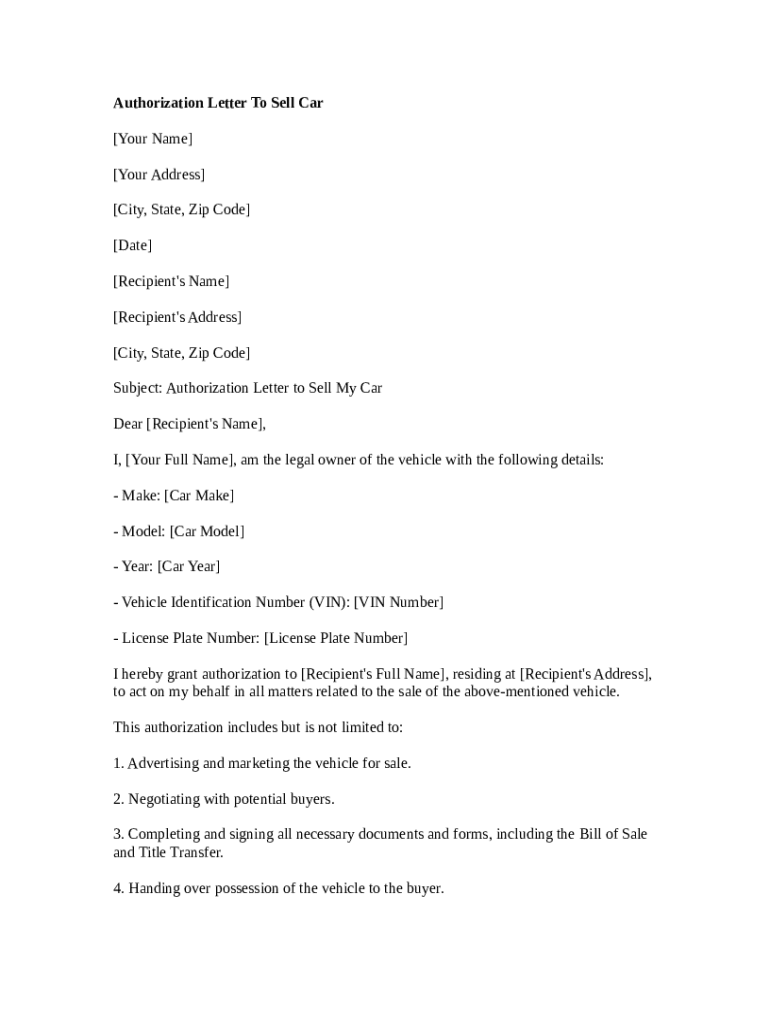
Draft the Letter: The letter should be comprehensive, covering all necessary details about the vehicle, the seller, the authorized agent, and the terms of the authorization. Templates can be found online or can be created from scratch to ensure specificity.
-
Notarization: For added legal binding authority, getting the letter notarized can be beneficial. This adds a layer of validation that can ease potential buyer concerns.
-
Provide Supporting Documents: Along with the authorization letter, you'll need to supply documents such as the vehicle's title, registration, and insurance details, which can confirm legitimacy and expedite the sale process.
Key Elements of the Authorization Letter to Sell Car
When drafting the letter, certain components are crucial for its effectiveness:
- Owner’s Information: Include full legal name, address, and contact details of the vehicle owner.
- Agent’s Information: Full legal name, address, and contact information of the person being authorized to sell the car.
- Vehicle Details: Provide specific details about the car, including make, model, year, VIN (Vehicle Identification Number), and current mileage.
- Scope of Authorization: Clearly state what the authorized person is allowed to do, such as negotiate the sale price, sign relevant documents, and collect payment.
- Time Frame: Specify the duration for which the authorization is valid, ensuring it aligns with the anticipated sale period.
- Signatures: Ensure both the owner and the authorized agent sign the document for it to be legally binding.
Legal Use of the Authorization Letter to Sell Car
The legal use of an authorization letter hinges on adherence to certain protocols:
- Jurisdiction Compliance: Understand local laws governing vehicle sales and ensure the letter complies with these requirements.
- Notarization Requirement: While not always legally required, notarizing the letter can prevent disputes and confirm authenticity.
- Binding Power: The letter must unambiguously convey the authority granted, ensuring that both parties and any potential buyers understand its scope.
Common Users of the Authorization Letter to Sell Car
Several individuals and scenarios typically necessitate the use of this authorization letter:
- Busy Professionals: Owners engaged in demanding careers may delegate the sale process to trusted individuals.
- Military Personnel: Those stationed away from home may rely on family or friends to manage vehicle sales.
- Elderly Owners: Individuals with mobility or health issues might prefer a representative to handle potentially complex transactions.
- International Sellers: Owners living abroad can authorize a local representative to manage the sale to avoid international travel.


Steps to Complete the Authorization Letter to Sell Car
Completing the authorization letter involves a few structured steps:
-
Template Selection: Choose an appropriate template or format that fits your specific circumstances.
-
Research Regulations: Investigate state-specific regulations to ensure compliance and avoid potential legal pitfalls.
-
Detail Inclusion: Accurately fill out required fields concerning personal and vehicle information.
-
Review and Revise: Carefully review the letter to correct any errors or ambiguities that might complicate the sale process.
-
Execute Documentation: Sign the document and, if needed, proceed with notarization.
-
Distribution: Provide copies to all relevant parties, retaining the original document with the vehicle's legal paperwork.
State-specific Rules for the Authorization Letter to Sell Car
Each state in the U.S. has different regulations concerning the sale of vehicles and the use of authorization letters:
- Title Transfer Laws: Some states require specific forms or additional steps in the title transfer process.
- Sales Tax Requirements: Understanding the tax implications in your state is crucial, as these can affect the final sale price and paperwork needed.
- Notarization Rules: Verify whether your state mandates notarization of authorization letters for legal validity.
Examples of Using the Authorization Letter to Sell Car
- Case Study #1: A business executive moving overseas temporarily authorizes a family member to sell their car. They outlined precise sale terms, including minimum acceptable price and preferred payment method.
- Case Study #2: A college student whose study program was extended allows a sibling to handle the vehicle sale, specifying the sibling's power to negotiate offers on their behalf.
- Scenario Analysis: A servicemember deployed abroad uses the letter to authorize a spouse to manage the vehicle sale, detailing steps for notifying the owner about prospective buyer inquiries and final offers.