Definition and Purpose of Formulario 433-A (OIC)
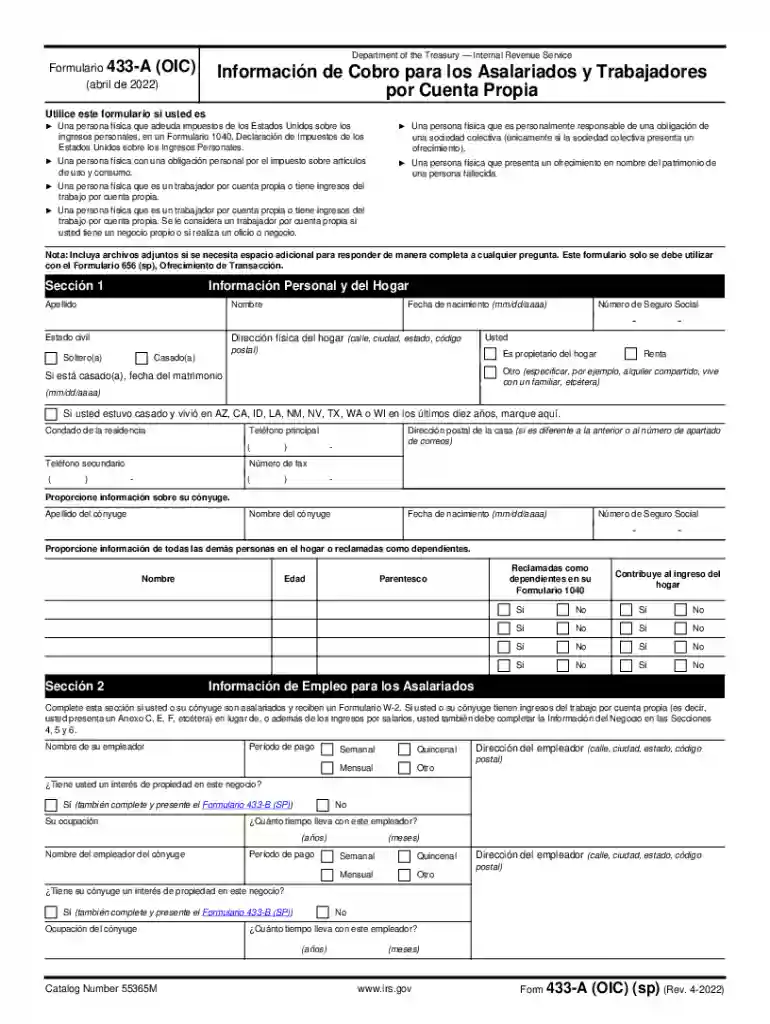
"Formulario 433-A (OIC) Información de Cobro para los Asalariados y Trabajadores por Cuenta Propia" is a form used by individuals to provide detailed financial information to the Internal Revenue Service (IRS) when they are submitting an Offer in Compromise. This offer allows taxpayers to settle their tax liabilities for less than the full amount owed, and the form is essential in evaluating the taxpayer's ability to pay.
Importance of Financial Disclosure
- The form requires a comprehensive disclosure of income, expenses, assets, and liabilities.
- It helps the IRS assess the taxpayer’s financial circumstances.
- Accurate information is crucial to avoid penalties or rejection of the offer.
Categories of Individuals
- Employees who receive regular wages.
- Self-employed individuals with variable income and expenses.
- Ensures equitable assessment across different income types.
How to Use Formulario 433-A (OIC)
This form is a critical step in submitting an Offer in Compromise to the IRS. Understanding how to fill it out correctly ensures processed applications do not encounter unnecessary delays or rejections.
Step-by-Step Guide
- Collect Financial Documents: Gather bank statements, pay stubs, expense records, and asset valuations.
- Complete the Income Section: Provide detailed entries for wages, business income, and other income sources.
- List Expenses Accurately: Include necessary living expenses like housing, transportation, and medical costs.
- Document Assets and Liabilities: Report all bank accounts, investment accounts, real estate, and debts.
- Review for Accuracy: Verify all information to ensure consistency and accuracy before submission.
Common Mistakes
- Omitting necessary documents or leaving sections incomplete.
- Underreporting income or overreporting expenses to skew results.
Obtaining Formulario 433-A (OIC)
You can access Formulario 433-A (OIC) via several methods, making it convenient for a variety of users.
Access Points
- IRS Website: Download directly from the IRS forms webpage.
- Tax Professionals: Obtain through accountants or tax attorneys who handle tax settlements.
- IRS Offices: Available in person at IRS taxpayer assistance centers.
Digital vs. Paper Version
- Digital: Easily downloadable and fillable online, ideal for electronic submissions.
- Paper: Suitable for traditional mail submission, must ensure legibility and timely delivery.
Steps to Complete Formulario 433-A (OIC)
Completing the form involves multiple sections that necessitate accuracy and thorough detail to properly represent your financial situation.
Detailed Steps
- Personal and Employment Information: Fill in personal identification and employment details.
- Income Details: Break down all sources of income, including secondary earnings and freelance work.
- Living Expenses: Detailed month-by-month breakdowns required for expenses to provide a clear financial picture.
- Assets and Liabilities Calculation: Assess all assets compared to commitments to show net worth.
- Review and Signature: Ensure all entries are true to the best of your knowledge before signing.
Review Checklist
- Verify all numbers are correct and complete.
- Double-check personal identification numbers, such as Social Security numbers.
Key Elements of Completing Formulario 433-A (OIC)
Comprehension of key components of the form can make a significant difference in the assessment process.
Necessary Financial Categories
- Cash and Bank Accounts: Must disclose all household cash holdings.
- Real Property: Include market values of owned property.
- Credit Cards and Loans: Show all liabilities that could affect payment capabilities.
Asset Valuation
- Fair market value should be used for all listed items.
- Supporting documentation may include appraisals for higher-priced assets.
IRS Guidelines for Formulario 433-A (OIC)
IRS guidelines provide precise instructions and expectations for filling out this form properly.
Compliance Requirements
- Submission of current financial documentation for verification.
- Updated form versions are used to ensure compliance with IRS standards.
Financial Ratio Considerations
- IRS uses income-to-expense and asset-to-liability ratios to evaluate offers.
- Ensuring your ratios reflect realistic living scenarios supports successful offers.
Filing Deadlines and Important Dates
Knowing when to submit your form can prevent unwanted delays.
Critical Timelines
- Initial Submission Date: Ensures timely processing of your Offer in Compromise.
- Response Time: Includes specific periods to respond to IRS follow-up inquiries or requests for additional information.
Extensions and Late Submissions
- IRS may grant extensions for compelling reasons evidenced by documentation.
- Discuss with a tax professional if issues with meeting deadlines arise.
Requirements
- Prove that full payment would cause financial hardship.
- Show no realistic way to pay the full tax liability before expiration of the statute of limitations.
Ineligible Scenarios
- Active bankruptcy proceedings exclude taxpayers from filing.
- If previous offers were made without hardship considerations or financial changes.
These structured content blocks provide an extensive guide to understanding, completing, and processing Formulario 433-A (OIC), ensuring that users can effectively manage their IRS interactions concerning Offers in Compromise.