






Definition and Purpose of Formulario 433-A (OIC)
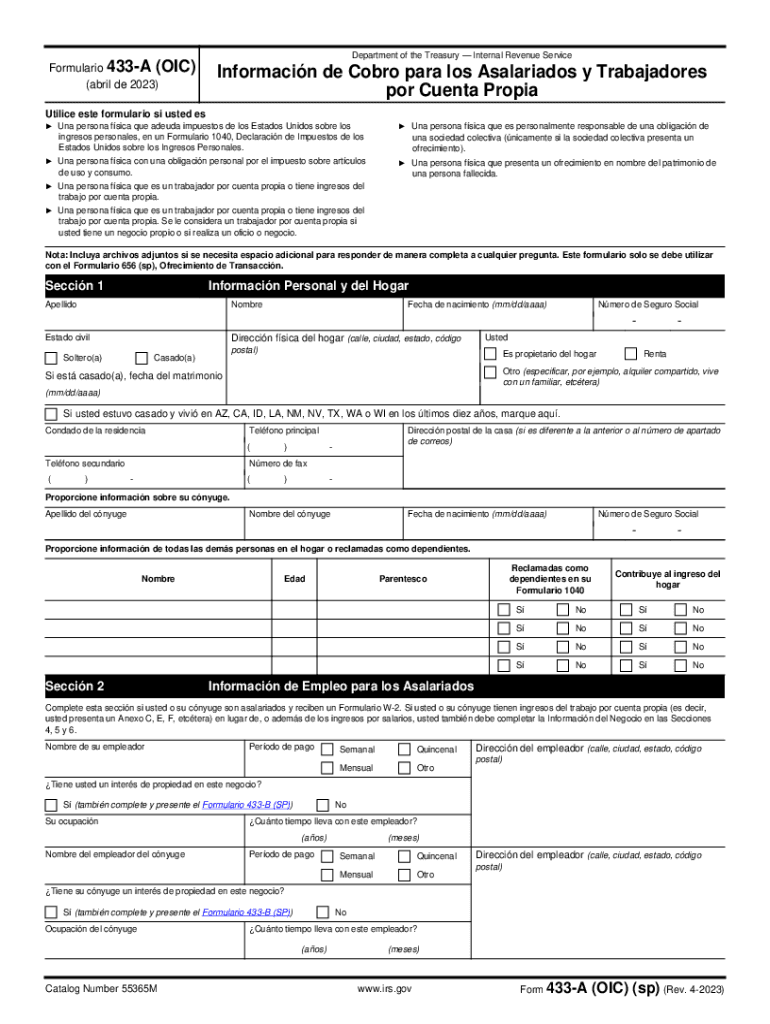
The Formulario 433-A (OIC), also known as the Collection Information Statement for Wage Earners and Self-Employed Individuals, is a document used by individuals who are submitting an Offer in Compromise (OIC) to the Internal Revenue Service (IRS). Its primary purpose is to gather detailed financial information to assess a taxpayer's ability to pay their owed tax liabilities. The form is crucial for the IRS to evaluate whether an OIC can be accepted, which may allow the taxpayer to settle their tax debts for less than the full amount owed.
Key Elements of the Form
- Income Details: Taxpayers must provide comprehensive information about all sources of income, including wages, salaries, and self-employed earnings.
- Asset Declaration: Disclosure of assets, including real estate, vehicles, and personal property, is mandatory.
- Monthly Expenses: The form requires detailed reporting of living expenses to evaluate overall financial health.
- Debt Obligations: Information about outstanding loans and other financial obligations is necessary to assess payment capacity.
How to Use the Formulario 433-A (OIC)
To effectively use the Formulario 433-A (OIC), taxpayers must accurately fill it out with all requested financial details. The process involves several steps:
- Gather Information: Collect documentation for all income, assets, liabilities, and expenses.
- Complete Each Section: Ensure all fields are filled, especially those detailing financial transactions.
- Review for Accuracy: Double-check entries to prevent errors that may result in rejection.
- Attach Supporting Documents: Include necessary documents like tax returns, bank statements, and pay stubs to substantiate claims.
Examples of Application
- Wage Earners: Use the form to consolidate monthly payslips and yearly deductions.
- Self-Employed Individuals: Provide information from business income and expense ledgers.
Steps to Complete the Formulario 433-A (OIC)
Completing the Formulario 433-A (OIC) systematically is crucial for acceptance:
- Fill Personal Information: Begin with basic details, including name, address, and Social Security Number.
- Report Income and Assets: Carefully input all income types and attach relevant income statements.
- Outline Expenses: Detail monthly expenses, ensuring they reflect actual living costs.
- Verify Asset Lists: Ensure all owned assets are listed, with proper valuations if required.
- Submit Form: Once completed, the form should be signed and dated before submission.
Considerations for Submission
- Accuracy and Completeness: Incomplete or inaccurate forms can delay processing or cause outright rejection.
- Supporting Documents: Ensure all attached documents are consistent with the information provided.
Important Terms Related to Formulario 433-A (OIC)
To fully understand the Formulario 433-A (OIC), familiarity with certain terms is necessary:
- Offer in Compromise (OIC): A proposal to pay less than the full tax debt.
- Current Ability to Pay: A taxpayer's financial capacity evaluated over a specific period.
Nuanced Definitions
- Disposable Income: Income remaining after expenses that could contribute to settling debts.
- Realizable Value: The cash value of assets, considering the reasonable cost of sale.
Legal Use of the Formulario 433-A (OIC)
The legal utility of the Formulario 433-A (OIC) lies in its capacity to represent a truthful financial snapshot to the IRS. This form:
- Supports OIC Proposal: It justifies the taxpayer's financial hardship or inability to pay full debts.
- Regulatory Compliance: Ensures compliance with IRS protocols during OIC evaluations.
Potential Legal Consequences
- Penalties for Falsification: Misrepresenting financial situations can lead to legal repercussions including penalties or criminal charges.
- Impact on Future Settlements: Accurate, truthful submissions enhance the likelihood of favorable consideration.
IRS Guidelines for Formulario 433-A (OIC)
The IRS provides specific guidelines on completing and submitting the Formulario 433-A (OIC):
- Eligibility Criteria: Taxpayers must meet all requirements to be considered for an OIC.
- Review Process: The IRS reviews the submitted form, potentially requesting additional information or clarification.
Compliance Standards
- Documentation Verification: All claims made within the form must be substantiated with verifiable documentation.
- Adherence to Deadlines: Ensure the form is submitted within IRS timelines to avoid complications.
Who Typically Uses the Formulario 433-A (OIC)
This form is generally used by:
- Individuals with Past-Due Taxes: Taxpayers unable to pay the full tax liabilities may seek relief through an OIC.
- Self-Employed Individuals: Those whose business income fluctuates significantly often need to demonstrate variable income levels.
- Wage Earners: Employees contending with financial hardships impacting their tax-paying ability.


Utilization Scenarios
- Retired Taxpayers: May use the form to adjust tax responsibilities due to reduced income.
- Low-Income Earners: Can illustrate financial constraints that restrict full tax payment.
Penalties for Non-Compliance
Failure to properly file the Formulario 433-A (OIC) can lead to serious consequences:
- Rejected OIC Proposals: Improperly filled forms result in immediate rejection, necessitating correction and re-filing.
- Potential Legal Action: Failure to file accurately may result in penalties or legal action by the IRS.
Avoiding Non-Compliance
- Ensure Complete Submission: Painstakingly verify for omissions or inaccuracies before submitting.
- Seek Professional Help: When unsure, consider consulting with tax professionals to ensure compliance.
This comprehensive approach to understanding and completing the Formulario 433-A (OIC) maximizes its effectiveness for individuals seeking to address outstanding tax obligations.