
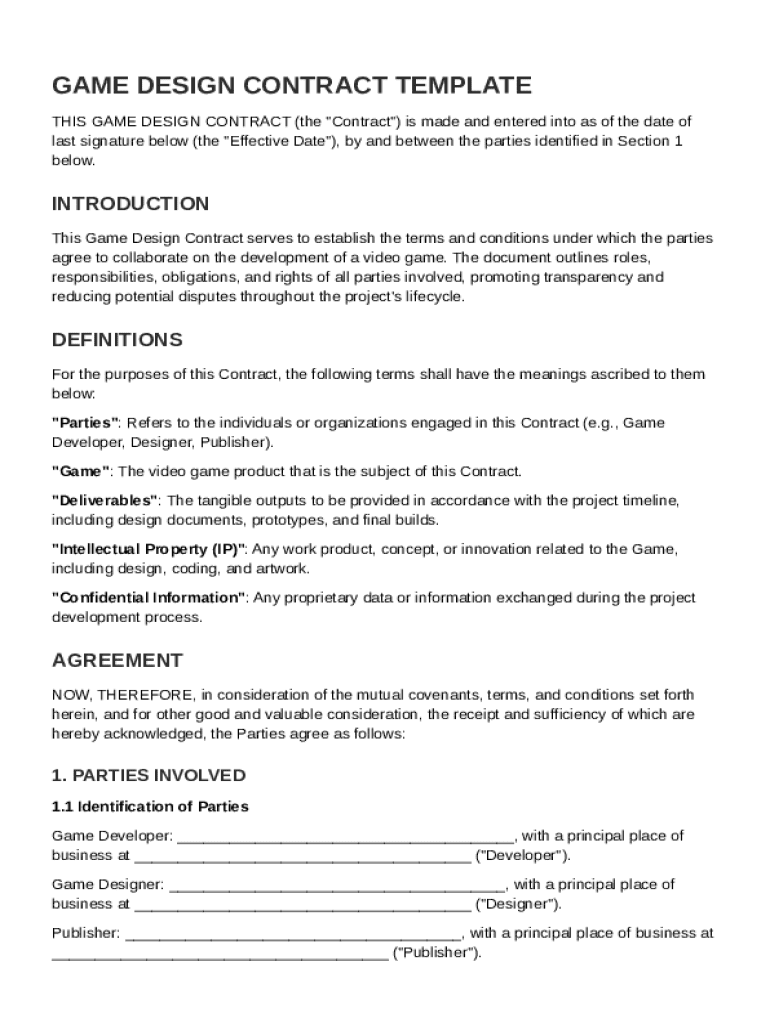







Definition & Meaning
The Game Design Contract Template serves as a formal agreement outlining the terms and conditions for collaboration among a game developer, designer, and publisher during the creation of a video game. It establishes clear guidelines for roles and responsibilities, ensuring all parties understand their obligations throughout the project lifecycle. By delineating key terms like intellectual property rights and confidentiality obligations, the template aims to reduce potential conflicts and miscommunication among stakeholders. The document also sets expectations for deliverables, compensation, and other critical aspects necessary for a smooth collaboration.
Key Elements of the Game Design Contract Template
A comprehensive Game Design Contract Template includes several crucial components that ensure thorough and effective collaboration. Some of the most important sections typically cover:
- Roles and Responsibilities: Defining the specific duties of each party involved in the project.
- Deliverables: Listing all products, services, or materials that must be delivered, along with deadlines.
- Compensation: Detailing payment terms, including rates, payment schedules, and incentives.
- Intellectual Property Rights: Clarifying ownership of the game assets, characters, and other creative content.
- Confidentiality Obligations: Ensuring sensitive information remains secure and undisclosed to third parties.
- Dispute Resolution Mechanisms: Establishing processes for resolving conflicts that may arise during the collaboration.
These elements work together to create a solid foundation for any game development project, fostering mutual trust and accountability among all parties.
How to Use the Game Design Contract Template
To maximize efficiency and clarity, the Game Design Contract Template should be carefully tailored to suit the unique requirements of each project. Follow these steps to utilize the template effectively:
- Review the Template: Familiarize yourself with all sections of the contract to understand its structure and content.
- Personalize the Information: Fill in specific details like names of involved parties, project scope, and timelines.
- Detail Compensation Terms: Clearly outline payment structures and schedules to avoid disputes.
- Specify Deliverables: Include comprehensive lists of expected deliverables, along with deadlines.
- Clarify Intellectual Property and Confidentiality Terms: Ensure precise language for these critical components.
By following these steps, users can create a comprehensive contract that meets the needs of all involved parties.
Who Typically Uses the Game Design Contract Template
The Game Design Contract Template is primarily used by professionals across the gaming industry. Key users include:
- Game Developers: Those responsible for creating the software and ensuring its functionality.
- Game Designers: Individuals crafting the visual and narrative elements of the game.
- Publishers: Companies or entities funding and distributing the finished game.
Additionally, other stakeholders like audio designers, marketers, and business development teams may find the template useful to define their roles and contributions.


Examples of Using the Game Design Contract Template
Several scenarios exemplify the practical application of the Game Design Contract Template:
- Independent Developers Collab: Small indie game developers collaborate with artists and sound designers, using the template to establish shared expectations and deliverables.
- Publisher Agreements: Larger gaming studios engaging with publishers to outline specific terms and responsibilities regarding game distribution.
- Freelancer Engagements: Hiring external designers or coders for a specific project phase, with the contract capturing detailed input expectations and payment schedules.
These examples show how the template can be adapted to different working arrangements within the game development field.
Steps to Complete the Game Design Contract Template
Completing the Game Design Contract Template involves a systematic approach to ensure all essential aspects are covered:
- Gather Information: Collect necessary data from all parties, including contact details and project specifics.
- Input Definitions: Insert clear definitions for roles, responsibilities, and other critical elements.
- Detail Deliverables and Timelines: Clearly specify what each party must deliver and the associated deadlines.
- Outline Financial Terms: Define payment methods, amounts, and schedules tailored to the project’s scope.
- Add Legal Provisions: Include clauses for intellectual property rights and confidentiality.
- Review the Document: All parties must carefully review the contract to final adjustments and agreement.
- Sign the Contract: Finalize the agreement with electronic signatures, ensuring each party has access to the signed document.
This step-by-step process helps maintain project clarity and prevent misunderstandings.
Legal Use of the Game Design Contract Template
In the United States, using a contract template like the Game Design Contract Template provides a legally binding framework when executed properly by all parties involved. With adherence to the ESIGN Act, electronic signatures used within the template confirm authenticity and commitment. It’s crucial to remember that while the contract provides legally enforceable agreements, consulting with a legal professional may be necessary to address state-specific legalities and ensure compliance with applicable laws and regulations. This prevents any unforeseeable legal issues and maintains a strong contractual relationship.
Why Use the Game Design Contract Template
The Game Design Contract Template offers numerous benefits, primarily by establishing a strong foundation for collaborations:
- Clarity and Transparency: By outlining detailed roles and expectations, misunderstandings are minimized.
- Legal Safeguards: Protects all parties with legal provisions concerning intellectual property and confidentiality.
- Improved Collaboration: Defines workflows and responsibilities, enhancing cooperation and efficiency.
- Avoidance of Disputes: Clearly defined terms reduce the chance of disagreements, fostering a smoother project execution.
Using the template ensures that projects are initiated on the right track, with all parties sharing a mutual understanding of their obligations and contributions.




