




01. Edit your form online
Type text, add images, blackout confidential details, add comments, highlights and more.

Type text, add images, blackout confidential details, add comments, highlights and more.

Draw your signature, type it, upload its image, or use your mobile device as a signature pad.

Send it via email, link, or fax. You can also download it, export it or print it out.
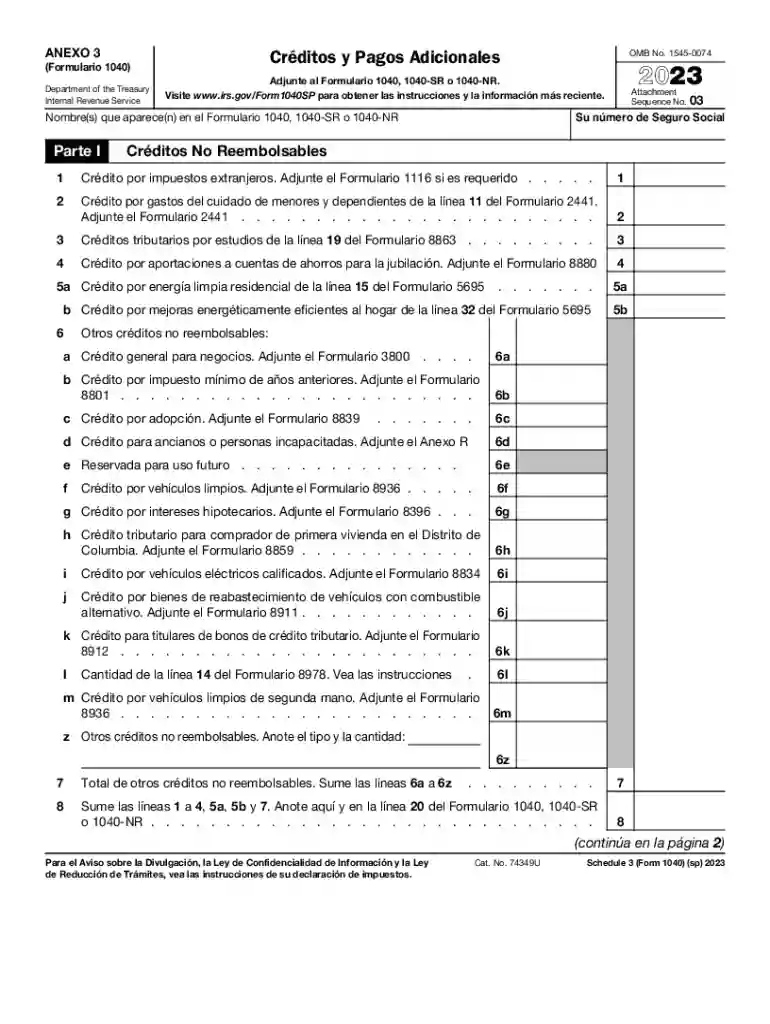
Anexo 3, officially known as "Créditos y Pagos Adicionales," is an essential component of the U.S. tax filing system, linked with IRS Form 1040. It operates as a supplementary form used to detail additional credits and payments that taxpayers may be eligible for or have made throughout the fiscal year. This form helps ensure that all qualifying credits are claimed, thereby potentially reducing the overall tax liability or increasing the potential for a refund. By comprehensively listing all applicable credits and additional payment information, Anexo 3 plays a crucial role in the accurate filing of a taxpayer's return.
When filling out the Anexo 3 form, it is crucial to identify all potential credits and payments that can influence your final tax responsibility. The form consists of various lines categorized by specific credits, such as residential energy credits or foreign tax credits. To complete the form:
Using tax preparation software can simplify the process, as these programs usually integrate IRS forms and instructions to guide users through each step seamlessly.
Completing the Anexo 3 requires meticulous attention to the IRS guidelines and the specifics of each credit. Here’s a step-by-step guide:
The IRS offers detailed guidelines on how to accurately complete and file Anexo 3. Following these guidelines can help avoid penalties and ensure acceptance:
Understanding the terminology associated with Anexo 3 is vital for accurate completion:
Anexo 3 is legally used to report additional credits and payments on U.S. tax returns. As part of compliance with tax laws:
Understanding critical deadlines is key to avoiding penalties:
There are multiple ways to submit Anexo 3:
Choosing the appropriate method depends on personal preference and confidence in electronic systems.
We've got more versions of the Anexo 3 Cr ditos y Pagos Adicionales form. Select the right Anexo 3 Cr ditos y Pagos Adicionales version from the list and start editing it straight away!
At DocHub, your data security is our priority. We follow HIPAA, SOC2, GDPR, and other standards, so you can work on your documents with confidence.




Los anexos son los siguientes: Anexo 1: Ingreso Adicional y Ajustes a los Ingresos; Anexo 2: Impuestos adicionales; Anexo 3: Crditos y pagos adicionales.Read more
PROPSITO: Describir los requisitos de elegibilidad para los programas de ayuda financiera del estado de Nueva York.


