






Definition & Meaning
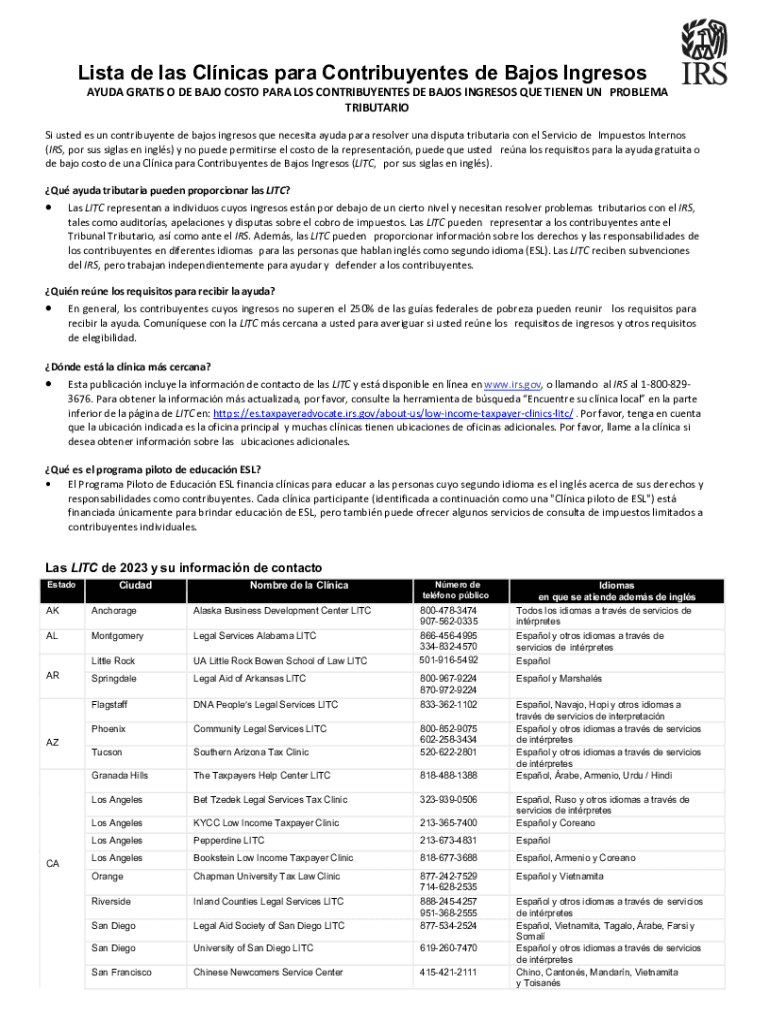
The "Lista de las Cl nicas para Contribuyentes de Bajos Ingresos" is a crucial resource for U.S. taxpayers with limited financial means. It serves as a directory of clinics that provide free or reduced-cost assistance for low-income taxpayers facing tax-related issues. This list empowers individuals by connecting them with legal professionals and resources required to navigate tax challenges effectively.
How to Use the Lista de las Clínicas para Contribuyentes de Bajos Ingresos
Understanding how to utilize this list can streamline the process of seeking assistance. Generally, taxpayers can search through the list to find contact information for clinics nearest to their location. When contacting a clinic, it is beneficial to have all relevant documentation ready, including past tax returns, notices from the IRS, and any correspondence related to tax disputes or inquiries.
Steps in Using the List
- Identify your specific tax needs.
- Search for clinics within your geographical area.
- Contact the clinic directly to inquire about available services.
- Schedule an appointment or consultation.
- Gather all necessary documents before your meeting.
How to Obtain the Lista de las Clínicas para Contribuyentes de Bajos Ingresos
The list can be obtained through various outlets, including online searches or through direct contact with local IRS offices. Some nonprofit organizations and community centers also distribute this list to ensure accessibility.
Obtaining the List
- Online Search: Access the IRS website for downloadable versions.
- IRS Offices: Inquire about the list during visits or calls to local offices.
- Community Centers: Many centers provide informational resources for local taxpayers.
Steps to Complete the Lista de las Clínicas para Contribuyentes de Bajos Ingresos
Completing the process of engaging with a clinic involves several steps to ensure eligibility and proper documentation.
Steps
- Initial Contact: Call or email the clinic for preliminary questions.
- Eligibility Verification: Determine if you meet any criteria set by the clinic for assistance.
- Appointment Scheduling: Set up a time for your initial consultation.
- Document Preparation: Collect all relevant financial and tax documents.
- Consultation: Attend the meeting to discuss your tax situation and receive guidance.
Key Elements of the Lista de las Clínicas para Contribuyentes de Bajos Ingresos
The list typically includes important aspects such as the address, contact number, and services offered by each clinic. Understanding these elements is crucial for efficient utilization.
Important Features
- Clinic Location: Proximity may influence your choice.
- Services Offered: Specific tax resolution services, including representation during audits.
- Contact Information: Enables direct communication for inquiries and appointments.
Examples of Using the Lista de las Clínicas para Contribuyentes de Bajos Ingresos
Real-life scenarios help illustrate the usefulness of the list. For instance, a single parent with a notice of tax underpayment could use the list to find a clinic offering legal advice and possible representation.
Practical Scenarios
- Example 1: A retiree receives a confusing audit notice and seeks help from a clinic experienced in IRS negotiations.
- Example 2: A student discovers an error in a prior tax filing and contacts a clinic specializing in tax corrections for low-income earners.
Required Documents
When approaching a clinic, having the correct documents ready is essential for efficient service.
Commonly Needed Documents
- Previous Tax Returns: To provide context for your situation.
- IRS Correspondence: Any letters or notices received.
- Identification Forms: Valid IDs for identification and verification.
- Financial Records: Relevant income, expense, and deduction information.
Eligibility Criteria
Understanding who qualifies for assistance is important for setting expectations.


Generally Required Criteria
- Income Threshold: Many clinics serve individuals below a specific income level.
- Type of Tax Issue: Some clinics specialize in particular areas, like audits or tax credits.
- Residency: Proof of residency in the clinic’s service area may be needed.
Penalties for Non-Compliance
Not addressing tax issues can result in significant repercussions. Utilizing clinics from this list can help mitigate these risks by providing professional guidance.
Potential Penalties
- Fines and Interest: Failure to file or incorrect filings can result in financial penalties.
- Legal Action: Unresolved tax debts may lead to more severe legal consequences.
- Credit Score Impact: Tax-related judgments can affect credit ratings.