






Definition & Meaning of Lista de las Cl nicas para Contribuyentes de Bajos Ingresos
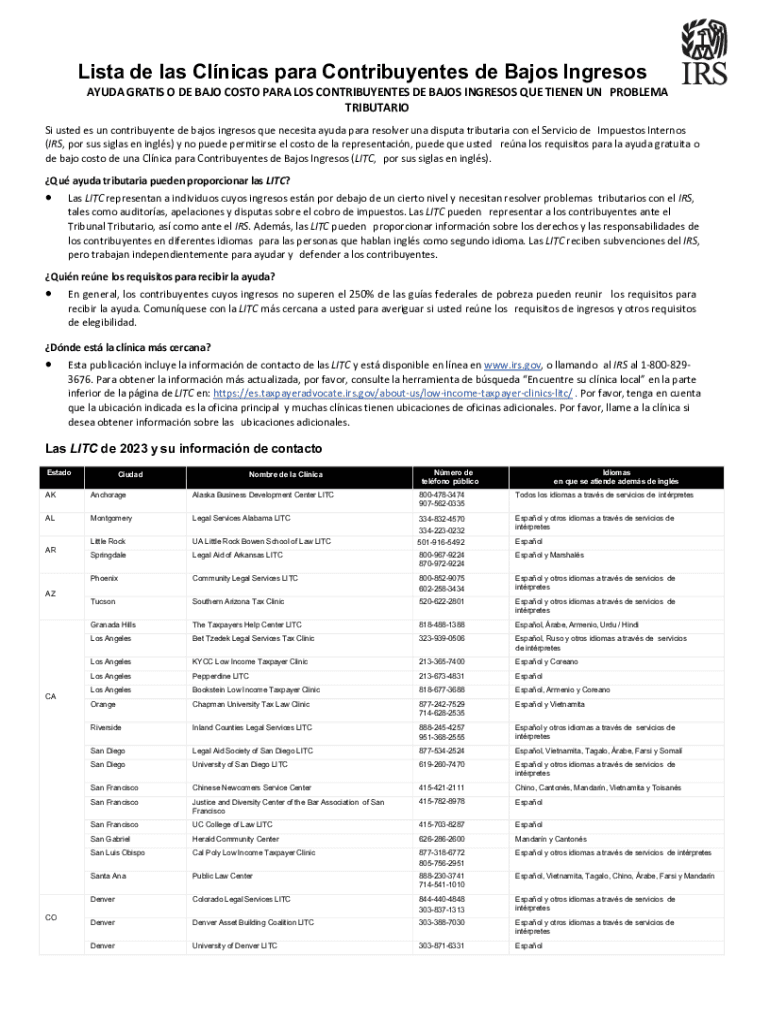
The "Lista de las Clínicas para Contribuyentes de Bajos Ingresos" is an essential reference guide for taxpayers with low incomes seeking assistance with tax-related issues. This list typically includes clinics or organizations that offer free or low-cost services to individuals who may not have the financial resources to procure professional tax services. These entities are often non-profit organizations or government-sponsored clinics designed to provide support and advocacy to ensure that taxpayers are not unduly burdened by complex tax requirements.
Key Services Provided
- Tax Preparation Assistance: Clinics help taxpayers prepare their annual tax returns accurately.
- Tax Dispute Resolution: Support is offered for resolving disputes with the IRS or state tax authorities.
- Financial Counseling: Guidance on financial planning and debt management may also be available.
How to Use the Lista de las Clínicas para Contribuyentes de Bajos Ingresos
To effectively utilize this resource, taxpayers should:
- Determine Eligibility: Confirm whether you qualify for services as a low-income taxpayer according to the clinic's criteria.
- Identify Suitable Clinics: Use geographic location, accessibility, and specific services as criteria when selecting a clinic.
- Contact and Schedule an Appointment: Reach out to the clinic directly to learn about available services and schedule an appointment.
- Prepare Required Information: Gather necessary documentation such as previous tax returns, current financial records, and identification.
Navigational Tips
- Online Resources: Many clinics provide an online menu of services that can be accessed directly via their websites.
- Phone Assistance: Direct calls to clinics can help clarify service offerings and booking procedures.
Steps to Complete the Lista de las Clínicas para Contribuyentes de Bajos Ingresos
Completing the list efficiently requires the following steps:
- Research Available Clinics: Use databases and online searches to generate a comprehensive list of eligible clinics.
- Prioritize Listings: Rank clinics based on factors like reputation, service offering, and proximity.
- Verification and Documentation: Confirm credentials and gather necessary documentation required by the clinic.
- Appointment Setup: Schedule appointments by contacting clinics directly and noting any pre-appointment requirements.
Documentation Needed
- Proof of income, such as pay stubs or bank statements
- Identification such as government-issued ID
- Prior year’s tax return if applicable
Who Typically Uses the Lista de las Clínicas para Contribuyentes de Bajos Ingresos
This resource is primarily utilized by:
- Low-income Individuals: Those unable to afford standard tax preparation services.
- Elderly or Disabled Persons: Often in need of additional assistance due to physical limitations or fixed incomes.
- Non-English Speakers: Individuals who require help navigating tax documents and requirements in languages other than English.


Typical User Profiles
- Recent immigrants unfamiliar with U.S. tax systems
- Single-parent households utilizing government aid
- Part-time or seasonal workers requiring tax adjustments
Key Elements of the Lista de las Clínicas para Contribuyentes de Bajos Ingresos
Several core components characterize this list:
- Eligibility Requirements: Essential criteria to qualify for offered services, typically based on income thresholds.
- Service Offerings: A comprehensive list of services provided, such as tax preparation and financial advocacy.
- Operational Details: Information on business hours, appointment procedures, and contact methods.
Features to Note
- Many clinics operate on a first-come, first-serve basis
- Some may offer additional services like legal aid for tax disputes
IRS Guidelines and Compliance
Understanding IRS guidelines is crucial for compliance and effective use of clinic services:
- Regulatory Framework: Clinics must adhere to specific IRS regulations regarding confidentiality and service delivery.
- Advisory Compliance: Ensure that all tax filings conform to IRS standards as guided by the assisting clinic.
Important Compliance Notes
- Unfiled taxes can accrue penalties; clinics help mitigate these when possible
- Clinics often have resources to assist with filing corrections, if needed
Filing Deadlines and Important Dates
Being aware of critical filing timelines is essential:
- Tax Filing Season: Generally runs from January to April, with specific dates published annually by the IRS.
- Extension Deadlines: Know key dates for requesting extensions should more time be needed.
Strategic Planning
- Utilize clinic services well before deadlines to ensure ample time for corrections or adjustments
- Verify all filing requirements ahead of major tax deadlines to avoid last-minute issues
Form Submission Methods: Online, Mail, or In-Person
Exploring the methods available for form submission:
- Online Submissions: Most efficient and immediate, typically using IRS-sponsored software or the clinic's online capabilities.
- Mail Submissions: Traditional method; ensure all forms are postmarked before tax deadlines.
- In-Person Submissions: Some clinics offer in-person drop-off services, guaranteeing that forms are reviewed thoroughly.
Best Practice Tips
- Digital submissions often ensure more rapid processing
- Retain copies of all submissions and any confirmation receipts as proof of compliance