



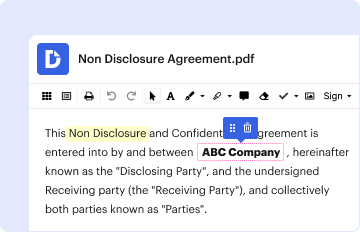
01. Edit your form online
Type text, add images, blackout confidential details, add comments, highlights and more.

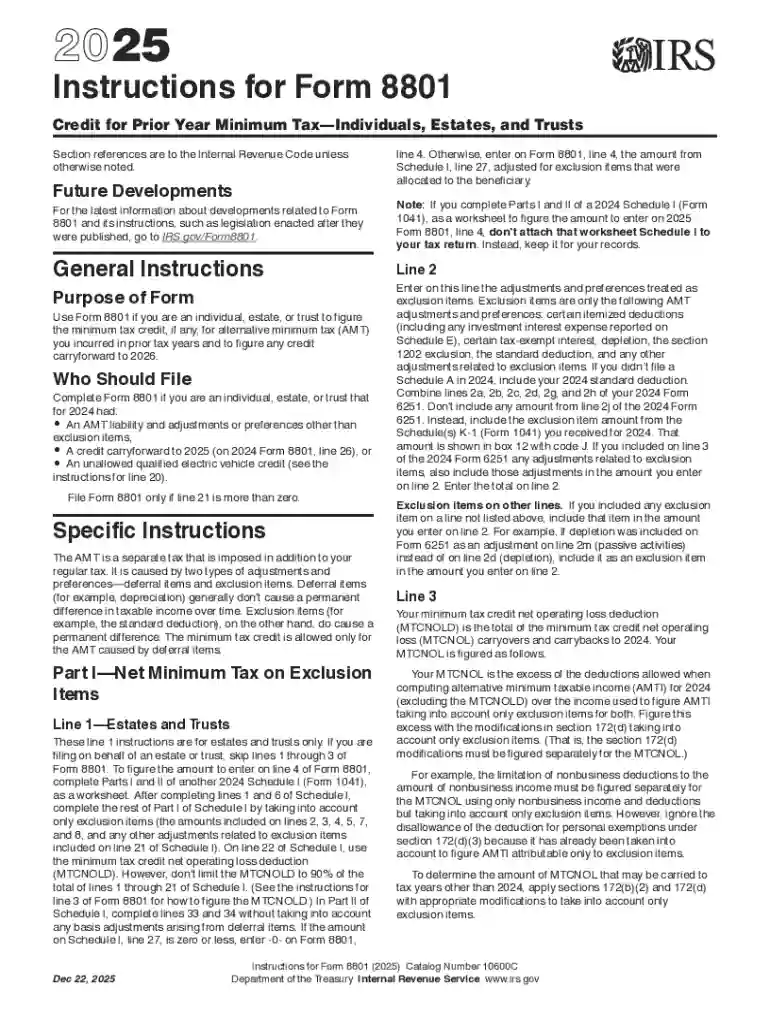
Type text, add images, blackout confidential details, add comments, highlights and more.

Draw your signature, type it, upload its image, or use your mobile device as a signature pad.

Send it via email, link, or fax. You can also download it, export it or print it out.
IRS Form 8801 is utilized to calculate the Credit for Prior Year Minimum Tax for individuals, estates, and trusts. This form is part of the federal tax code, specifically designed to rectify situations where taxpayers might otherwise be unfairly taxed under the Alternative Minimum Tax (AMT) system. By leveraging Form 8801, eligible taxpayers can determine the amount of credit they can claim on their tax return, which may help lower their tax liability.
Taxpayers who were subject to AMT in a previous year should consider using Form 8801. This includes but is not limited to:
Eligible users should review their past tax filings to ascertain whether AMT was previously applied. In such cases, they may apply for a credit to potentially reduce current or future tax responsibilities.
When completing IRS Form 8801, follow this structured process:
The due date for submitting IRS Form 8801 aligns with the federal tax filing deadline, typically April 15. It is critical to meet this deadline as late submissions can result in interest and penalties. Taxpayers should also stay informed of any extensions or changes announced by the IRS.
Form 8801 can be filed electronically through tax preparation software such as TurboTax or QuickBooks, which offers built-in calculators for AMT credits. Alternatively, taxpayers can submit paper filings, though digital methods are more efficient and reduce error potential. Choose the method that aligns with your comfort and software access.
IRS Form 8801 and its instructions are readily available through several sources:
Having a thorough understanding of where to access these instructions and forms can streamline the filling process.
The IRS provides comprehensive guidelines to ensure taxpayers correctly apply AMT credits:
Errors or omissions on Form 8801 can result in penalties:
Ensuring completeness and accuracy is paramount to avoid these pitfalls.
We've got more versions of the IRS Form 8801 Instructions form. Select the right IRS Form 8801 Instructions version from the list and start editing it straight away!
| Versions | Form popularity | Fillable & printable |
|---|---|---|
| 2025 | 4.5 Satisfied (59 Votes) | |
| 2024 | 4.3 Satisfied (57 Votes) | |
| 2023 | 4.8 Satisfied (41 Votes) | |
| 2022 | 4.9 Satisfied (27 Votes) | |
| 2021 | 4.8 Satisfied (31 Votes) | |
| 2020 | 4.3 Satisfied (64 Votes) | |
| 2019 | 3.9 Satisfied (36 Votes) | |
| 2018 | 4.4 Satisfied (70 Votes) | |
| 2017 | 4.3 Satisfied (113 Votes) | |
| 2016 | 4.2 Satisfied (126 Votes) | |
| 2015 | 4 Satisfied (45 Votes) | |
| 2013 | 4 Satisfied (27 Votes) |
At DocHub, your data security is our priority. We follow HIPAA, SOC2, GDPR, and other standards, so you can work on your documents with confidence.



Use Form 8801 if you are an individual, estate, or trust to figure Schedule(s) K-1 (Form 1041) you received for 2009. File Form 8801 only if line 21 is more
Form 8801, credit for prior year minimum tax--individuals, estates, and trusts.-journal.


