



Definition & Meaning
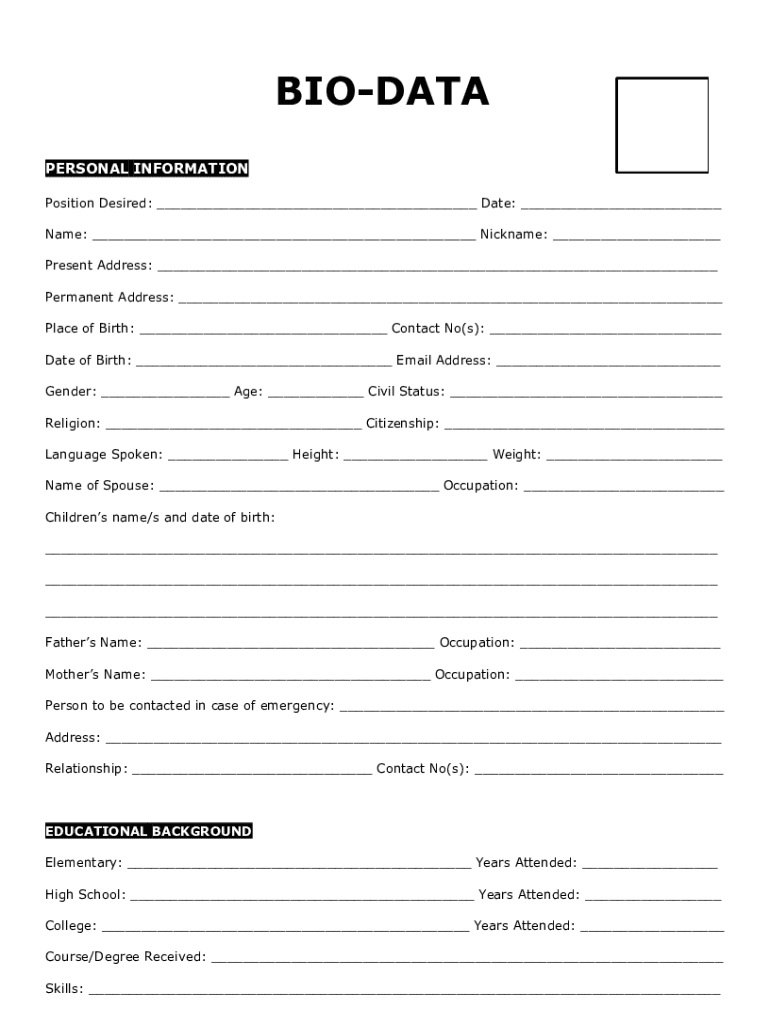
The Bio-Data Form is a document designed to gather personal and professional information about an individual. This form is generally used in recruitment processes, academic applications, and some government records to capture essential details, often serving as a modern equivalent to a resume or curriculum vitae.
- Purpose: Primarily serves to collect comprehensive details about an individual’s background and qualifications.
- Common Elements: Typically includes sections for personal information, educational background, professional experience, and skills.
- Usage Areas: Widely used in job applications, educational institutions, and sometimes in legal and official documentation processes.
Key Elements of the Bio-Data Form
The Bio-Data Form includes several critical components that ensure the comprehensive capture of an individual’s information.
- Personal Information: Captures essential details like full name, contact information, date of birth, and nationality.
- Examples: Address for correspondence, personal phone number, and emergency contact.
- Educational Background: Details the individual's academic history, including institutions attended and degrees earned.
- Examples: High school diploma, bachelor’s degree in a specific field, or relevant certifications.
- Professional Experience: Encompasses previous employment history, roles held, and durations.
- Examples: Past job titles, responsibilities, and significant projects or achievements.
- Skills and Competencies: A section to highlight specific skills or expertise that may relate to the job or purpose of the application.
- Examples: Language proficiency, technical skills, or other relevant talents.
- References: Usually optional but can be included to provide further credibility through professional and personal testimonials.
How to Obtain the Bio-Data Form
Obtaining a Bio-Data Form can vary depending on the source or the specific requirements of the intended institution or employer.
- Online Platforms: Many websites offer downloadable and fillable versions of Bio-Data Forms.
- Example: Websites that specialize in resume and application templates.
- Organization-Specific Distribution: Some institutions may provide their unique format.
- Example: Company HR departments or academic institutions might supply this directly to applicants.
- DIY Approach: Individuals can create their own Bio-Data Form by following standard templates available in word processing software.
Steps to Complete the Bio-Data Form
Filling out a Bio-Data Form requires attention to detail to ensure accuracy and completeness.
- Gather Information: Collect all necessary personal, educational, and professional details.
- Start with Personal Details: Fill in name, contact details, date of birth, and other introductory information.
- Document Educational Background: List down schools attended, with relevant dates and qualifications earned.
- Detail Professional Experience: Include job titles, employer names, and key responsibilities.
- Highlight Skills: List skills that are relevant to the position or opportunity being applied for.
- Review and Refine: Double-check all entries for accuracy and completeness before submission.
Why Should You Use a Bio-Data Form
Bio-Data Forms offer several advantages and can play a crucial role in various processes.
- Standardization: Provides a structured format to present personal and professional information systematically.
- Comprehensive Coverage: Ensures that all relevant details are included, reducing the risk of omitting crucial information.
- Versatility: Can be tailored for use in job applications, academic records, and sometimes even legal proceedings.
- Legitimacy: Often considered more official than a simple resume, lending additional credibility to the information provided.
Important Terms Related to Bio-Data Form
Understanding key terms can aid in correctly completing and utilizing a Bio-Data Form.
- Curriculum Vitae (CV): Similar in purpose to a Bio-Data Form but often more detailed and used in academic and professional settings.
- Resume: Generally shorter than a Bio-Data Form and focused on skills and experiences directly related to a job application.
- Cover Letter: A complementary document that provides a personal introduction and context for the Bio-Data.
Who Typically Uses the Bio-Data Form
Various individuals and organizations may employ Bio-Data Forms for different purposes.
- Job Seekers: To apply for employment opportunities by presenting qualifications and personal history.
- Students: When applying to educational programs or internships that require detailed background information.
- Legal Entities: Sometimes requested during official processes that require detailed personal documentation.

Digital vs. Paper Version
The form is available in both digital and paper formats, each with its advantages.
- Digital Version:
- Pros: Allows for easy editing, duplication, and electronic submission.
- Cons: Requires accessibility to digital devices and knowledge of editing software.
- Paper Version:
- Pros: Useful for submission in settings preferring physical documentation.
- Cons: Needs to be printed, filled manually, and does not offer the ease of editing.
These sections provide a detailed understanding of the Bio-Data Form, exploring its definition, key elements, various uses, and practical guidance on how it can be effectively managed and utilized.