






Definition & Purpose of a Company Operating Agreement Template
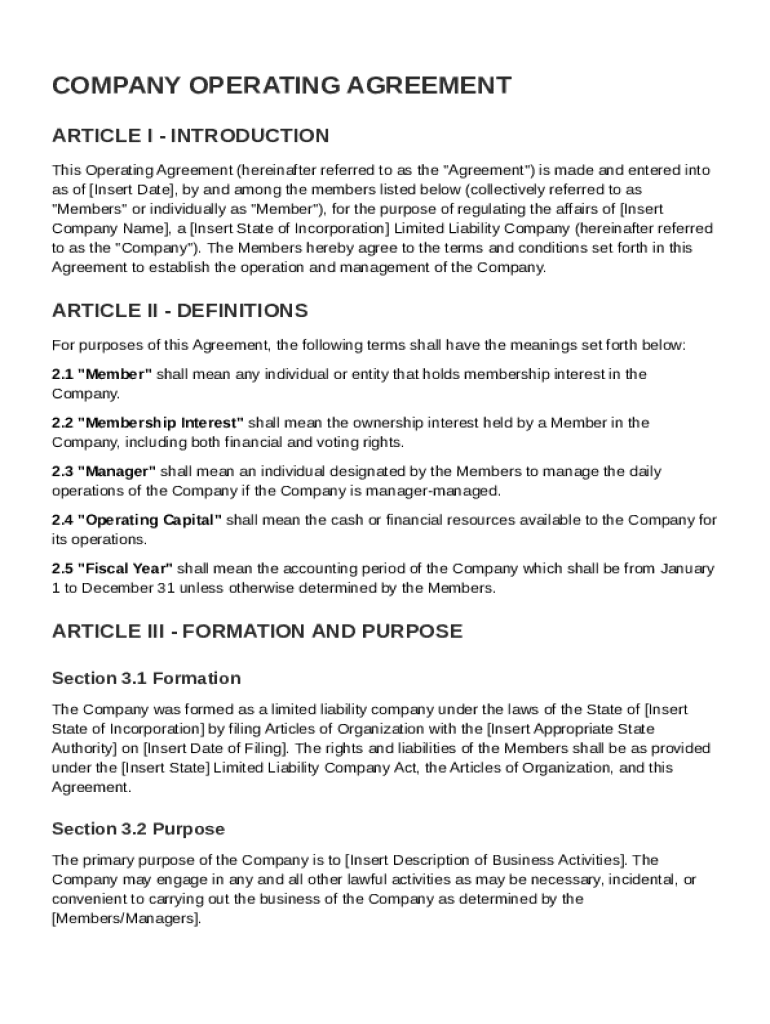
A Company Operating Agreement Template is a foundational document that outlines the structure, management, and operational protocols for a Limited Liability Company (LLC). This template is essential for setting clear guidelines on how the company will function, detailing the roles and responsibilities of its members and managers. It includes critical sections such as member definitions, company formation processes, management structure, financial agreements, and procedures for resolving disputes or dissolving the company. Essentially, the template serves as a blueprint for navigating the company’s business operations, ensuring legal compliance, and protecting the interests of all parties involved.
- Member Definitions: Clarifies roles within the LLC, distinguishing responsibilities.
- Company Formation: Details the steps involved in setting up the LLC structure.
- Management Structure: Explains how the company will be managed, whether by members or appointed managers.
How to Use the Company Operating Agreement Template
To effectively use a Company Operating Agreement Template, it's important to customize it according to your LLC's specific requirements. Follow these steps for optimal utilization:
- Review Standard Provisions: Familiarize yourself with the default clauses to understand standard practices.
- Customize Sections: Modify the template to reflect the unique operational needs and goals of your LLC.
- Consult Legal Expertise: Engage with a legal expert to ensure compliance with state laws and accuracy.
- Finalize and Distribute: Once reviewed, distribute the final agreement among all members for signing.
By tailoring the template to your company's objectives, you establish a clear operational framework that can prevent future disputes and guide everyday business decisions.
Key Elements of the Company Operating Agreement Template
An effective Company Operating Agreement Template incorporates several critical components that collectively ensure comprehensive coverage of the operational framework. These elements include:
- Management and Voting Rights: Defines how decisions will be made and the voting power of each member.
- Capital Contributions: Details the initial financial investment required from each member.
- Profit Distribution: Outlines how profits and losses will be shared among members.
- Membership Changes: Provides procedures for adding or removing members.
Including these elements helps maintain transparency and ensures that all members are aware of their rights and obligations within the LLC.
State-Specific Rules for the Company Operating Agreement Template
While a basic template provides a solid foundation, it's crucial to tailor the Company Operating Agreement to align with specific state regulations. Key considerations include:
- State-Specific Registration Requirements: Different states may have unique registration requirements for LLCs.
- Filing Fees and Annual Reports: Variations in fees and the necessity of annual reporting.
- Member Liability Protection: Some states may offer different levels of personal liability protection for LLC members.
Adapting the agreement to accommodate these state-specific regulations ensures legal compliance and safeguards the LLC's operational integrity.
Steps to Complete the Company Operating Agreement Template
Completing a Company Operating Agreement Template involves a series of detailed steps. These steps ensure that all necessary information is accurately captured and agreed upon by all involved parties:
- Identify LLC Members and Managers: List all members and managers involved in the LLC.
- Fill in Membership Contributions: Specify initial contributions from each member.
- Define Management Structure: Determine whether the LLC will be member-managed or manager-managed.
- Set Profit Distribution Methodology: Establish how and when profits will be distributed among members.
- Address Dispute Resolution: Clearly outline procedures for resolving disputes.
- Incorporate State Regulations: Ensure the agreement meets the legal requirements of the state of registration.
These carefully structured steps provide a systematic approach to drafting an effective operating agreement.
Legal Use and Compliance of the Company Operating Agreement Template
Adhering to legal requirements and ensuring compliance is crucial when using a Company Operating Agreement Template. Key factors include:
- Understanding the ESIGN Act: Ensures electronic signatures used in the agreement are legally binding.
- Compliance with State Laws: Verifying the document adheres to local state laws for LLCs.
- Mandatory Clauses: Ensuring inclusion of legally required clauses, such as liability disclaimers and dispute resolution processes.
By focusing on legal use and compliance, the LLC can avoid potential legal pitfalls and operate smoothly.
Who Typically Uses the Company Operating Agreement Template
The Company Operating Agreement Template is versatile and used by a variety of entities:
- Small Business Owners: Establish a structured operational framework for new or growing businesses.
- Entrepreneurs: Clear guidelines for partnerships, ensuring mutual understanding among co-founders.
- Real Estate Investment Groups: Prioritize structured financial agreements among investors.
Each of these users applies the template to ensure an organized and legally compliant approach to business operations.


Practical Examples of Using the Company Operating Agreement Template
Various scenarios illustrate the practical application of a Company Operating Agreement Template:
- Startup Launch: Helps a newly formed tech startup in Silicon Valley to organize their management hierarchy and profit-sharing model.
- Family Business Transfer: A family-owned restaurant uses the template to outline succession plans for transferring ownership to the next generation.
- Real Estate Consortium: Real estate investors clarify investment returns and decision-making processes for a joint venture.
In each real-world scenario, the Company Operating Agreement Template is instrumental in creating clear, enforceable guidelines, promoting transparency, and facilitating smooth business operations.