Definition & Meaning
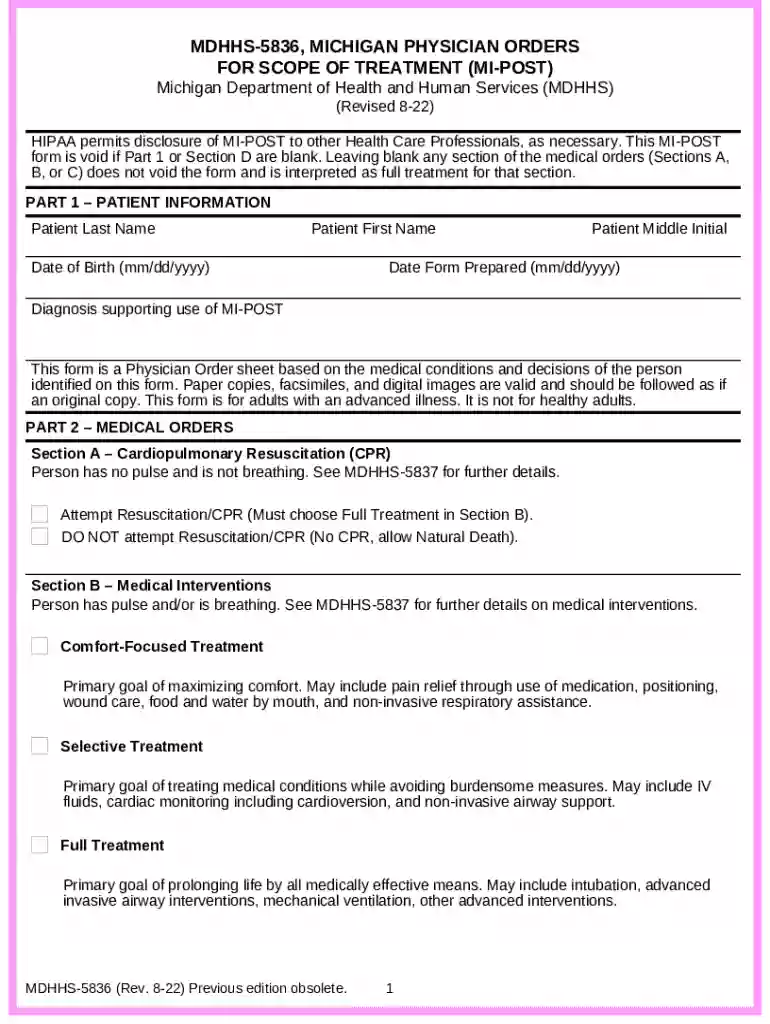
The MDHHS-5836, Michigan Physician Order for Scope of Treatment (MI POST) form, is a critical document used within the healthcare system to outline a patient's medical treatment preferences. It serves as a standardized medical order that guides healthcare providers in honoring a patient's wishes regarding life-sustaining treatments. The form is particularly useful for individuals with severe illnesses or those nearing the end stages of life, allowing them to communicate their treatment choices clearly.
Key Components
- Patient Preferences: Documents the patient's choices for medical interventions, such as resuscitation, intubation, and other life-sustaining procedures.
- Physician Orders: Includes specific orders from the attending physician to ensure adherence to the patient's preferences.
- Comprehensive Scope: Covers a wide range of medical scenarios, ensuring holistic planning for patient care.
How to Use the MDHHS-5836 Form
The MI POST form is utilized by patients and healthcare providers to ensure that treatment aligns with the patient's values and goals. It acts as a bridge of communication between the patient and healthcare professionals, safeguarding patient autonomy.
Steps for Use
- Consultation with Physician: Engage in a thorough discussion with the attending physician to understand all medical options and outcomes.
- Complete the Form: Fill out sections detailing preferences for various medical treatments and interventions.
- Review and Sign: Ensure that the form is signed by both the patient and physician, validating the orders.
Practical Example
A patient diagnosed with a terminal illness may specify they do not wish to be resuscitated if their heart stops, allowing healthcare providers to respect this decision.
How to Obtain the MDHHS-5836 Form
Acquiring the MI POST form involves a straightforward process, ensuring easy access for those in need. The form is made available through various channels to facilitate prompt action.
Sources for Access
- Healthcare Facilities: Available at hospitals, clinics, and physician offices.
- Online Resources: Downloadable from official Michigan Department of Health and Human Services websites.
Instructions for Request
- Visit a local healthcare provider or the Michigan Department of Health and Human Services webpage.
- Request a copy from hospital administrative offices for immediate availability.
Steps to Complete the MDHHS-5836 Form
Filling out the MI POST form accurately is crucial to ensure it serves its intended purpose. Each step involves careful consideration and precise documentation.
Detailed Steps
- Patient Information: Start by recording identifiable details of the patient to maintain accuracy.
- Treatment Preferences: Clearly indicate choices concerning resuscitation and other medical treatments.
- Verification: Physician reviews and validates the preferences, ensuring they are medically appropriate.
- Signatures: Secure signatures from both the patient and the physician for the form to be considered legally binding.
Subsections
- Treatment Categories: Include sections for cardiopulmonary resuscitation (CPR), mechanical ventilation, and other interventions.
- Additional Instructions: Space for additional notes on patient wishes not covered in standard questions.
Why You Should Use the MDHHS-5836 Form
Utilizing the MI POST form solidifies patient wishes regarding care, particularly in critical scenarios where immediate decisions need to be made.
Benefits
- Clarity: Provides clear directions to healthcare providers.
- Peace of Mind: Ensures patient preferences are respected, reducing anxiety for both patients and families.
- Legal Security: Acts as a formal medical order, protecting both the patient and healthcare providers legally.
Who Typically Uses the MDHHS-5836 Form
The MI POST form is primarily used by individuals who are confronting severe, life-limiting conditions and those involved in their care.

Typical Users
- Patients with Terminal Illness: Individuals diagnosed with life-threatening conditions benefit significantly from the form.
- Healthcare Providers: Physicians and other medical staff use the form to guide treatment consistent with the patient’s desires.
Contextual Examples
Patients with advanced cancer or late-stage chronic illness often use the form to specify non-resuscitative measures, ensuring comfort-focused care.
Key Elements of the MDHHS-5836 Form
The form comprises several crucial components that safeguard the execution of a patient's treatment wishes comprehensively.
Major Elements
- Resuscitation Status: Options are documented concerning whether or not CPR should be performed.
- Medical Interventions: Includes preferences for mechanical ventilation, feeding tubes, and other supportive treatments.
- Goals of Care: Explains the overall goals of medical care, whether curative or palliative, to guide decision-making in emergency situations.
Legal Use of the MDHHS-5836 Form
The MI POST form holds legal significance when making healthcare decisions, offering protection for patients and providers.
Legal Framework
- State Recognition: Recognized throughout Michigan, ensuring compliance within healthcare facilities across the state.
- Binding Document: When duly signed, serves as a legally binding order that healthcare providers must follow.
- Variances and Exceptions: Outlines specific instances, such as power of attorney situations, where the form's instructions might be overridden by legally appointed decision-makers.
This comprehensive exploration of the MDHHS-5836, Michigan Physician Order for Scope of Treatment (MI POST) form highlights its importance in managing end-of-life healthcare preferences, ensuring that patients' treatment choices are honored through structured legal means.