






Definition and Meaning
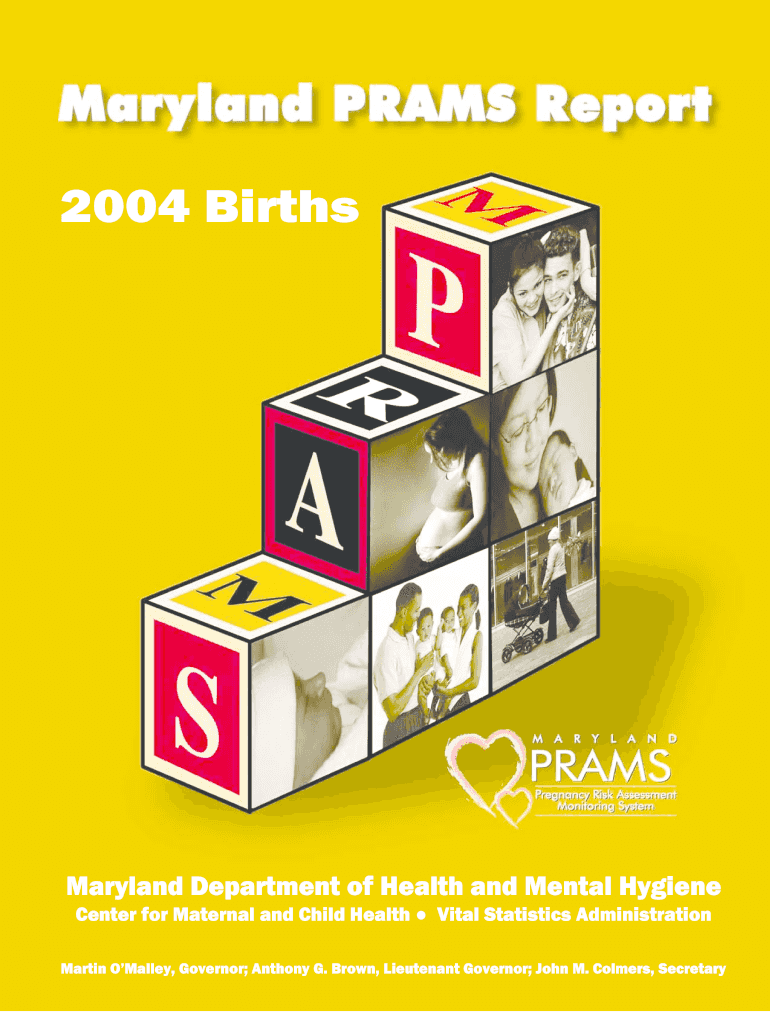
The Maryland PRAMS Report 2004 Births - FHA - Fha DhMH Maryland analyzes data related to maternal and infant health collected through the Pregnancy Risk Assessment Monitoring System (PRAMS). This report is vital for understanding preconception, prenatal, and postpartum factors influencing pregnancy outcomes. It highlights critical areas like unintended pregnancies, prenatal care initiation, health insurance coverage, maternal mental health, and substance use during pregnancy. By providing a data-driven perspective, it aids healthcare providers, policymakers, and researchers in identifying and addressing key health issues impacting mothers and infants within Maryland.
How to Use the Maryland PRAMS Report 2004 Births
The report serves as a comprehensive resource for health professionals, researchers, and policymakers. Here's how you can utilize it:
- Data Analysis: Examine the statistics within the report to understand trends and patterns in maternal and infant health.
- Policy Development: Use the findings to formulate or enhance health policies aimed at improving pregnancy outcomes in Maryland.
- Health Campaigns: Design targeted public health campaigns that address identified risk factors such as smoking or lack of prenatal care.
- Research Purposes: Employ the data for academic or clinical research projects focused on maternal and child health.
- Program Development: Develop support programs for at-risk populations identified in the report, such as mothers experiencing postpartum depression.
How to Obtain the Maryland PRAMS Report 2004 Births
Obtaining the Maryland PRAMS Report 2004 is a straightforward process:
- Online Through Official Channels: Access the report via the Maryland Department of Health's website, where it might be available as a downloadable PDF.
- Direct Request: Contact the Maryland Department of Health's Family Health Administration to request a printed copy.
- Libraries and Health Institutions: Check with local libraries or university health departments, as they may have copies or access to the report.
Steps to Complete the Maryland PRAMS Report
The Maryland PRAMS Report is primarily an analysis, not a form to be completed by individuals. However, if referring to the completion of data collection for the report:
- Data Gathering: Collect information through surveys administered to new mothers in Maryland.
- Validation: Ensure accuracy through cross-verification with hospital records and birth certificates.
- Analysis: Analyze the data using statistical methods to extract meaningful insights about maternal and infant health.
- Compiling the Report: Summarize findings, create detailed charts, and draft sections to compile the final report.
- Review and Publication: Have the document reviewed by experts before publishing and distributing it to stakeholders.
Who Typically Uses the Maryland PRAMS Report
The primary users of this report include:
- Healthcare Providers: Utilize the findings to enhance patient care practices and identify areas needing intervention.
- Public Health Officials: Formulate strategies and programs to improve maternal and child health outcomes based on the data.
- Researchers and Academics: Conduct studies or projects related to public health, using the report as a reference point for background and context.
- Policy Makers: Develop laws and policies that reflect the insights gathered from the report to better support maternal and child health.


Key Elements of the Maryland PRAMS Report
The report encompasses several critical sections:
- Preconception and Prenatal Factors: Details access to and timing of prenatal care.
- Maternal Health Behaviors: Examines lifestyle factors such as smoking, alcohol use, and mental health issues.
- Birth Outcomes: Investigates factors related to birth weight, preterm births, and infant health complications.
- Insurance and Economic Factors: Discusses insurance coverage and economic variables impacting health care access.
- Support Systems: Reviews the availability and impact of family and community support for new mothers.
Legal Use of the Maryland PRAMS Report
The Maryland PRAMS Report is a crucial tool for legal and ethical health care planning and policy-making. It's used within a lawful context to:
- Develop Informed Health Policies: Based on factual data, the report guides state-level decision-making.
- Support Grant Applications: Provides supporting evidence for obtaining funding for health programs.
- Inform Public Health Guidelines: Data from the report aids in shaping guidelines that impact prenatal and maternal health care standards.
State-Specific Rules for the Maryland PRAMS Report
The Maryland PRAMS Report, while specific to Maryland, aligns with federal standards for maternal and infant health monitoring. The report:
- Follows CDC Guidelines: Utilizes methods and surveys adherence to CDC's PRAMS protocol facilitating data consistency across states.
- Adapts to State Health Policies: Tailors findings to comply with and inform Maryland's unique health mandates.
- Reflects Local Health Challenges: Provides tailored data and recommendations pertinent to Maryland's diverse population and health care infrastructure.