






Definition & Purpose of The Maryland Mediation and ADR Resource Guide
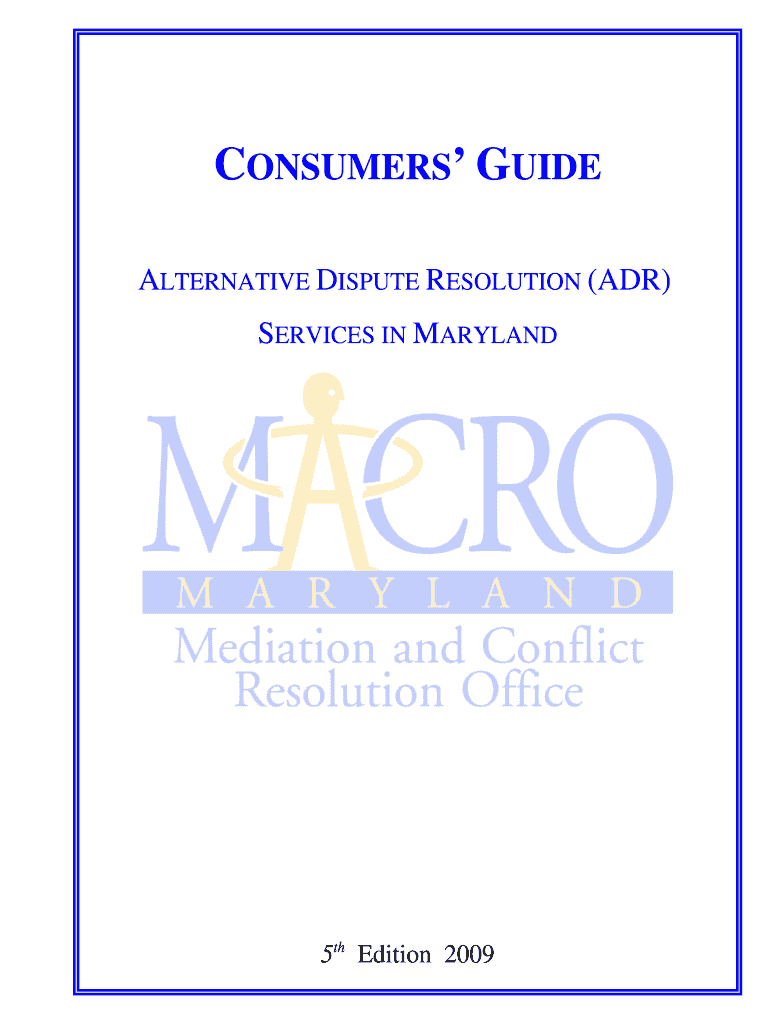
The Maryland Mediation and ADR Resource Guide provides comprehensive information about alternative dispute resolution (ADR) processes available in Maryland. ADR encompasses a variety of methods used to resolve conflicts outside traditional court proceedings, including mediation and arbitration. This guide's primary goal is to assist individuals and organizations in understanding and accessing these resources within Maryland. By offering detailed explanations of mediation processes and other ADR methods, the guide highlights their effectiveness in reducing costs, minimizing stress, and promoting creative solutions, ultimately presenting them as viable alternatives to litigation.
How to Use The Maryland Mediation and ADR Resource Guide
Using the Maryland Mediation and ADR Resource Guide effectively involves several steps to familiarize yourself with its contents and take full advantage of the information it offers.
- Scan the Table of Contents: Quickly identify sections relevant to your needs, whether you're looking for state-wide resources, private mediators, or county-specific services.
- Understand ADR Processes: Read through sections explaining different ADR methods, such as mediation, arbitration, and negotiation, to determine which might best suit your needs.
- Identify Resources: Utilize the guide’s list of statewide ADR resources and private mediators, which can be categorized by specialties and regional availability.
- Contact Local Services: For more personalized assistance, consult the county-specific services section to identify and reach out to local mediation providers.
Steps to Complete the ADR Process Using the Guide
Completing an ADR process involves several key steps, which the guide helps navigate.
- Identify the Conflict: Clearly define the nature of your dispute and whether it's suitable for ADR.
- Choose an ADR Method: Use the guide to understand the specifics of mediation, arbitration, and other methods to decide which is best suited for your conflict.
- Select a Mediator or ADR Professional: Refer to the guide's listings to select a mediator or ADR professional with the appropriate expertise for your case.
- Prepare for the ADR Session: Gather relevant documents and evidence needed for the process and prepare any questions you may have for the mediator.
- Participate in ADR Sessions: Engage in the process as detailed in the guide, actively participating to reach a resolution.
Key Elements Covered in the Guide
The Maryland Mediation and ADR Resource Guide covers several key elements critical for effectively navigating ADR options within Maryland.
- Definitions of ADR Processes: Clear explanations of different ADR processes are essential for choosing the right one for your dispute.
- Regional Resources: A comprehensive list of resources available across Maryland to cater to various needs.
- Private Mediator Listings: Access to a network of professionals who can facilitate dispute resolution.
- County-Specific Information: Detailed descriptions of services available in each county.
Legal Use and Compliance with the Guide
Understanding the legal implications and compliance requirements when using ADR solutions is crucial.
- Adherence to State Regulations: The guide outlines the legal framework that governs mediation and ADR processes in Maryland, ensuring compliance with state laws.
- Confidentiality Protocols: Information on maintaining confidentiality during ADR proceedings, in accordance with Maryland statutes, ensures legal protection for involved parties.
State-Specific Guidelines and Variations
Maryland-specific guidelines and practices related to ADR are important for those engaging with the guide.
- State-Sponsored Programs: Information about state-sponsored ADR programs specific to Maryland.
- Variations in County Practices: Each county may have unique practices or protocols regarding mediation services, which are detailed in the county-focused sections.
Real-World Applications and Examples
Understanding how the guide applies to real-world scenarios allows users to see practical outcomes of ADR processes.
- Case Studies: Examples of past disputes successfully resolved through mediation in Maryland provide valuable insights.
- Success Stories: Real-world applications showcasing the cost-saving and stress-reducing benefits of using ADR compared to litigation.
Important Terminology Explained
The guide provides a glossary of important terms associated with mediation and ADR, aiding comprehension.
- Mediator vs. Arbitrator: Definitions distinguish these roles and their functions.
- Binding vs. Non-Binding: Clarification of binding agreements resulting from arbitration and the implications for enforcement.
Accessing the Maryland Mediation and ADR Resource Guide
Instructions on obtaining the guide are essential for potential users.
- Online Access: Details on where and how the guide can be accessed or downloaded online.
- Physical Copies: Information on locations where physical copies may be available, such as public libraries and community centers within Maryland.
The Audience for the Maryland Mediation and ADR Resource Guide
Identifying the target audience for the guide can help potential users understand its applicability to different contexts.
- Individuals: Those personally involved in disputes looking for resolution methods.
- Businesses: Companies seeking efficient ways to resolve conflicts internally or with external parties.
- Legal Professionals: Lawyers and legal advisors using the guide as a resource for clients interested in ADR.