







Definition & Meaning
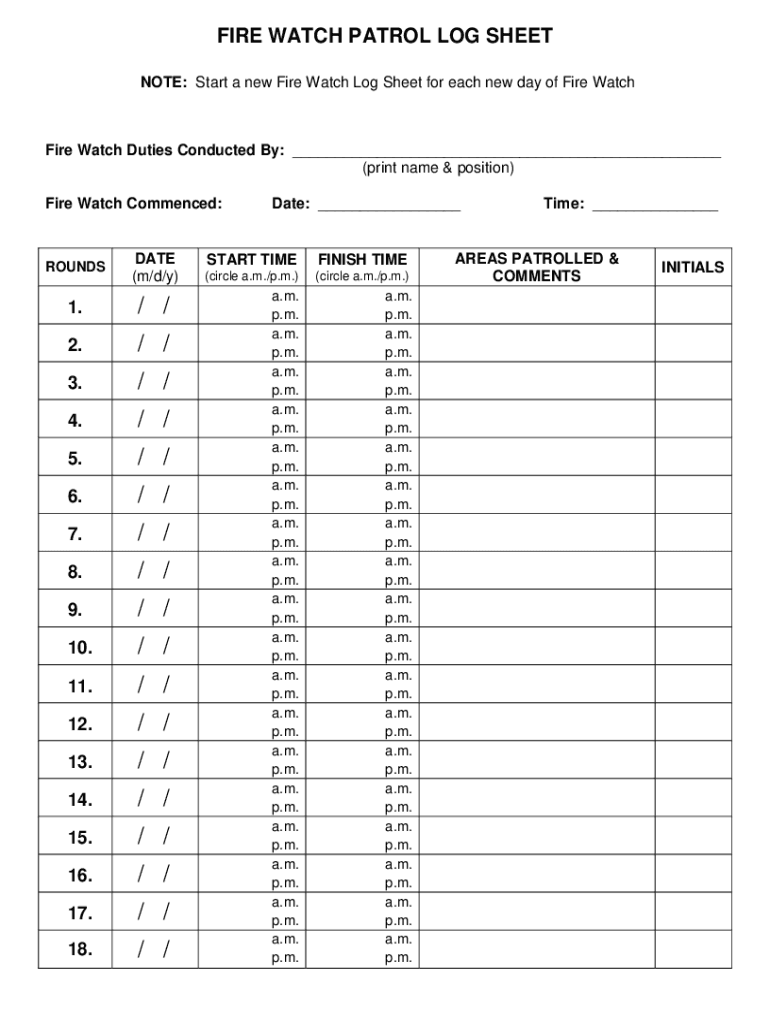
The "Fire Watch Patrol Log Sheet - doa la" is an essential document designed for recording activities related to fire watch patrols. Fire watch patrols are typically mandated by fire codes, especially when fire protection systems are compromised or during hot work activities. This form logs the personnel conducting the patrol, the time the patrol commenced, and the details of the rounds made. Its primary purpose is to ensure safety by maintaining proper oversight and documentation in case of a fire outbreak.
How to Use the Fire Watch Patrol Log Sheet - doa la
To effectively use the "Fire Watch Patrol Log Sheet - doa la," personnel responsible for conducting fire watch patrols should maintain detailed records during their shifts. This includes noting the start and end times of each patrol, documenting any observed hazards, and recording any corrective actions taken. Users should also ensure that the form is completed accurately and reviewed regularly for any overlooked issues. All entries should be legible and performed in real-time to prevent omissions or inaccuracies.
Steps to Complete the Fire Watch Patrol Log Sheet - doa la
-
Identify Initial Information:
- Fill in the date and the starting time for the fire watch.
- Clearly write your name and position.
-
Conducting the Patrol:
- As you patrol, note the areas covered and any observed hazardous conditions.
- Utilize provided sections to record specific incidents or potential fire risks.
-
Post-Patrol Documentation:
- Complete the section detailing the end time of the patrol.
- Review your entries for accuracy, and ensure all fields are completed.
-
Submission of the Log:
- Submit the completed log sheet to your supervisor at the end of your shift.
- Ensure it is stored in an accessible location for reference and compliance audits.
Key Elements of the Fire Watch Patrol Log Sheet - doa la
-
Patrol Personnel Information:
- Details of the individual conducting the patrol, including name and position.
-
Timing Details:
- Start and end times for each patrol session.
-
Patrol Area & Observations:
- Specific areas monitored and observations noted during the patrol.
-
Incident Reporting:
- Any fire hazards or incidents should be recorded concisely, including actions taken.
Who Typically Uses the Fire Watch Patrol Log Sheet - doa la
Typically, the "Fire Watch Patrol Log Sheet - doa la" is utilized by safety officers, security personnel, and other designated staff responsible for fire watch duties. This often includes employees in industrial environments, construction sites, or facilities undergoing maintenance where fire alarm systems might be inactive.


Legal Use of the Fire Watch Patrol Log Sheet - doa la
The legal use of the "Fire Watch Patrol Log Sheet - doa la" is governed by local fire safety regulations and building codes. Organizations must use this log sheet to ensure compliance with safety standards, and completion of the form provides a documented trail that can be critical during legal inquiries or fire safety audits. It confirms that regulatory requirements have been met during times when the facility’s fire detection or protection systems are compromised.
Examples of Using the Fire Watch Patrol Log Sheet - doa la
-
Operational Downtime:
- During periods when a building’s automatic sprinkler system is down for maintenance, a fire watch is necessary. Using the log sheet ensures continuous monitoring and provides documentation of compliance.
-
Hot Work Activities:
- For activities such as welding or cutting that produce heat, documenting observations and precautionary steps using the patrol log sheet helps manage fire risks.
State-Specific Rules for the Fire Watch Patrol Log Sheet - doa la
Different states may have specific rules and amendments to the general requirements for fire watch logs. It is crucial that facilities familiarize themselves with these rules to ensure full compliance. Generally, most states require that fire watch personnel are familiar with the location of all hazardous materials and potential fire sources, which should also be reflected in the patrol log documentation.




