




01. Edit your form online
Type text, add images, blackout confidential details, add comments, highlights and more.

Type text, add images, blackout confidential details, add comments, highlights and more.

Draw your signature, type it, upload its image, or use your mobile device as a signature pad.

Send it via email, link, or fax. You can also download it, export it or print it out.
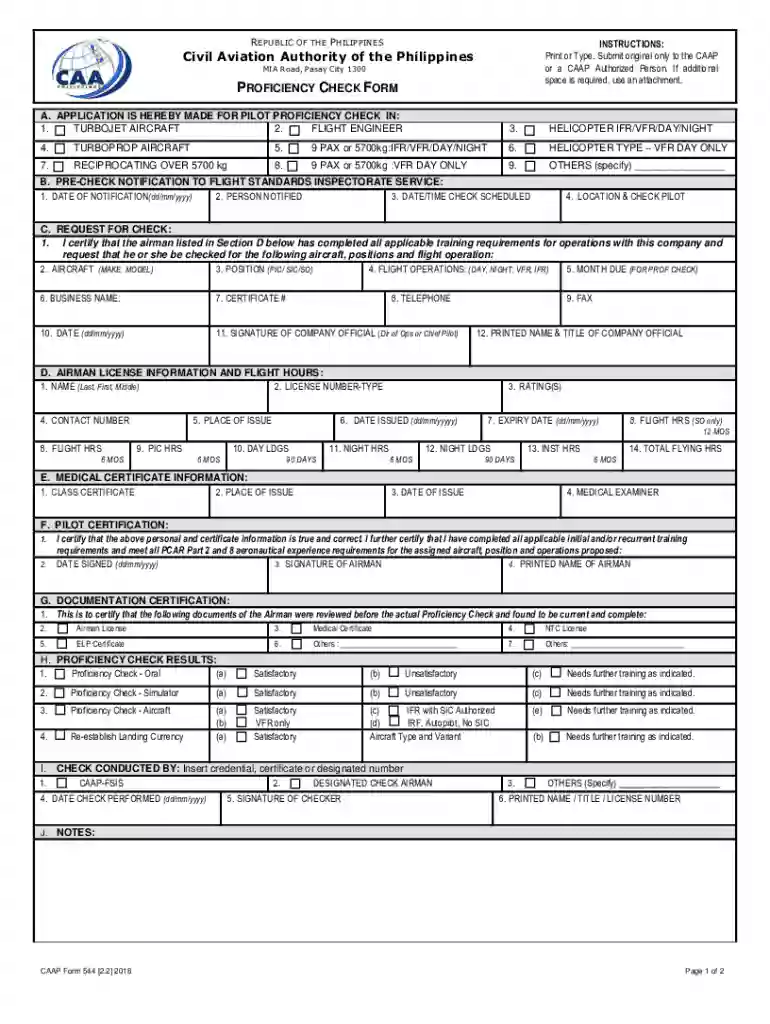
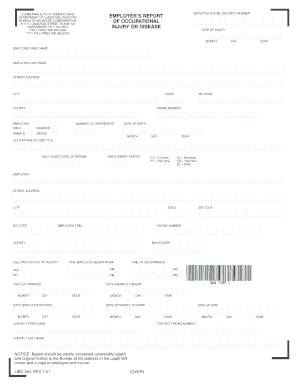
The CAAP Proficiency Check Form is a crucial document issued by the Civil Aviation Authority of the Philippines (CAAP). It is designed specifically for pilots and flight engineers to ensure they meet comprehensive proficiency standards across various aircraft, including turbojet, turboprop, and helicopters. This form serves as a detailed record of an airman's competencies, documenting necessary training, medical certifications, and flight hours. By capturing this information, the CAAP form supports adherence to aviation safety regulations, providing a standardized method for assessing the technical and operational proficiency of aviation personnel.
Effectively using the "Submit original only to the CAAP" form involves several important steps to ensure successful submission. First, gather all necessary documents and information prior to beginning the form. This includes training records, medical certifications, and valid identification. The form's completion must follow a precise process:
The careful and accurate completion of this form not only verifies your compliance with aviation regulations but also facilitates your application process.
Gather Necessary Information: Before you start completing the CAAP form, collect all relevant documents such as medical certifications, flight logbooks, and any applicable training completion records.
Enter Personal Details: Fill in your personal information, including your name, contact information, and aviation credentials. Make sure each entry reflects the current and accurate information.
Document Flight Proficiency: List the aircraft types on which you are seeking proficiency check approval. Detail your experience and total flight hours with respect to each type, ensuring they correspond with CAAP requirements.
Medical Certification Details: Include the specifics of your medical certificate, confirming you meet the necessary health standards for aviation duties.
Proof of Training and Competency: Attach records of your completed training courses and any additional endorsements you have received, as required by the type of aircraft and operations you are qualified to undertake.
Review and Sign: After all sections are completed, review your form carefully to ensure no detail has been omitted. Sign and date the document to affirm the accuracy of the provided information.
Submit the Original Form: Once completed, ensure the original form is submitted to CAAP, either in person or through a secure and approved mailing process.
Airman Information: This section requires detailed personal information including your aviation license number, current ratings, and addresses.
Training Records: Documentation of educational background and completed training programs relevant to aviation proficiency.
Aircraft Types: Specification of the aircraft types for which the proficiency evaluation is being conducted. This should include both the make and model.
Medical Certification: Details of valid medical certificates that affirm compliance with health standards required for active duty.
Proficiency Check Results: This section is for the recording of results from proficiency tests or simulations, as assessed by a certified training officer or an equivalent authority.
Documentation and Compliance Verification: Areas for a narrative or checklist format to confirm adherence to all compliance and regulatory standards set forth by the CAAP.
Primarily, this form is utilized by professional pilots and flight engineers who operate within, or plan to operate within, the jurisdiction of the Philippines. These include:


To fully comprehend the requirements of the CAAP form, it is advantageous to understand commonly used terms in the context of aviation proficiency:
Compliance with legal requirements is fundamental when submitting the CAAP form. This involves:
Ensuring that the form is filled out accurately and in compliance with these standards helps prevent any legal or regulatory issues.
Failing to submit an accurate form or not adhering to CAAP standards can result in several penalties, including:
Understanding these risks underscores the importance of diligently preparing and accurately submitting the CAAP proficiency check form to ensure adherence to all regulations and requirements.
At DocHub, your data security is our priority. We follow HIPAA, SOC2, GDPR, and other standards, so you can work on your documents with confidence.



Program modifications include anything that changes CAAP data fields as well as establishments/changes to academic arrangements between institutions.
Apr 5, 2021 The original implementation dates for the Final Rule were delayed due to COVID-19. Below are the timeframes for compliance. Dec. 31, 2023.


