






Definition & Meaning
The Juvenile Justice Commission of the Superior Court of California refers to the entity responsible for overseeing and evaluating juvenile justice practices within its jurisdiction. The commission focuses on ensuring the rights and welfare of minors within the juvenile justice system. Membership typically involves a commitment to attending regular meetings, evaluating juvenile facilities, and participating in activities related to juvenile justice reform. Members often include individuals who are passionate about youth advocacy and have experience in related fields such as social work, education, or law.
Who Typically Uses the Juvenile Justice Commission of the Superior Court of California
The Juvenile Justice Commission is primarily used by individuals seeking to contribute to the oversight and betterment of the juvenile justice system in California. Typically, this includes:
- Youth Advocates: Individuals passionate about youth welfare and rights.
- Professionals in Related Fields: Those working in education, law, or social services who wish to lend their expertise.
- Community Members: Residents interested in community safety and juvenile justice reform.
- Students: Particularly those in legal or social science fields looking for experiential learning in juvenile justice.


How to Use the Juvenile Justice Commission of the Superior Court of California
To effectively use the Juvenile Justice Commission, members should familiarize themselves with the commission's responsibilities and ongoing projects. Here are some practical ways to engage:
- Attend Meetings: Regular attendance is crucial for staying informed and contributing to discussions.
- Site Visits: Participate in visits to juvenile facilities to assess conditions and provide feedback.
- Collaborate on Reports: Assist in researching and drafting reports related to juvenile justice issues.
- Participate in Community Outreach: Engage with the community to raise awareness and gather input on juvenile justice matters.
Steps to Complete the Application for the Juvenile Justice Commission
Completing the application for membership in the Juvenile Justice Commission involves several key steps:
- Gather Personal Information: Prepare basic personal details such as contact information and background.
- Educational Background: Document your educational history, emphasizing any studies related to law, social work, or child advocacy.
- Employment Status: Provide details of your current employment, focusing on roles that highlight your suitability for working with juvenile justice.
- Motivation Statement: Explain your reasons for wanting to join the commission, detailing any previous related experience or personal motivation.
- Submission: Submit the completed application through the specified method, typically online or via mail to the relevant county justice office.
Important Terms Related to the Juvenile Justice Commission of the Superior Court of California
Understanding the relevant terminology is vital for active participation in the commission:
- Juvenile Justice: Refers to the legal system's handling of minors involved in criminal activities.
- Rehabilitation: Focuses on the integration and improvement of minors rather than punishment.
- Commitment: Considers the necessary dedication to attending regular meetings and participating in commission activities.
- Evaluation: Involves assessing facilities and programs related to juvenile justice.
Key Elements of the Application Form
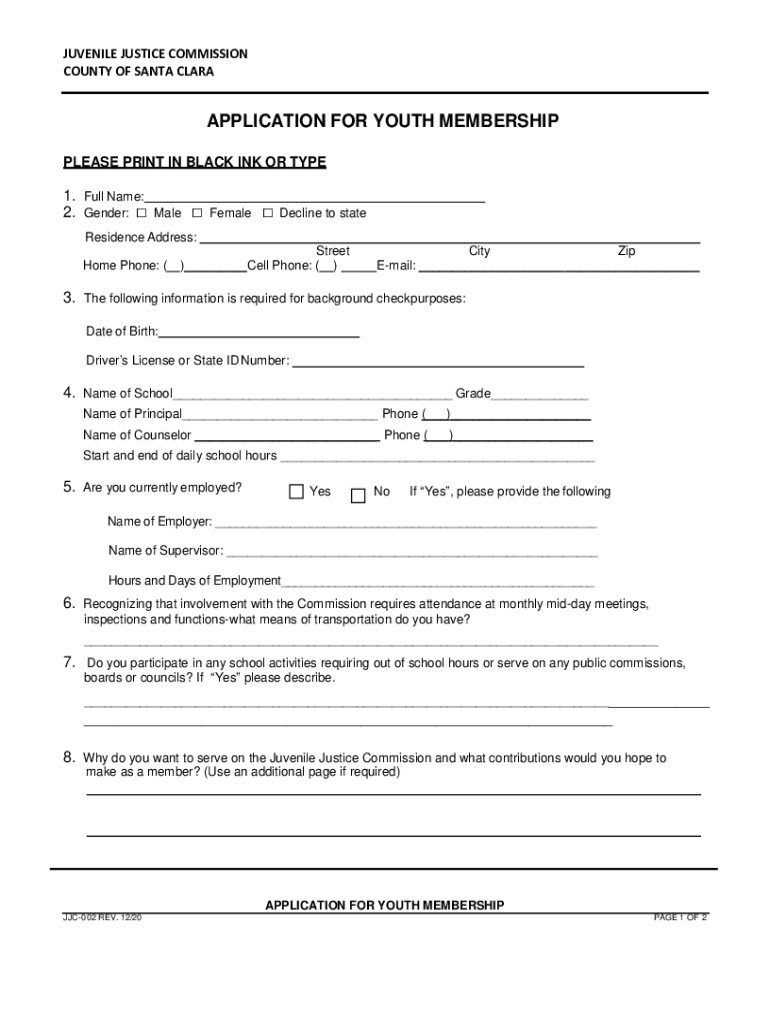
The application form for joining the Juvenile Justice Commission includes several core sections:
- Personal Details: Includes basic contact information and demographic data.
- Educational Background: Detailing qualifications and any relevant coursework.
- Employment History: Outlining work experience that aligns with the commission’s goals.
- Interest and Motivation: A statement articulating why the applicant wants to join and what they bring to the table.
- Commitment to Meetings: Understanding the expectations around attendance and participation.
Eligibility Criteria
Eligibility for joining the Juvenile Justice Commission generally includes:
- Age Requirement: Typically minimum age stipulations, often starting at eighteen years old.
- Residency: Must be a resident of the county where the commission resides.
- Interest in Juvenile Justice: A demonstrated interest or background in juvenile justice or related fields.
- Availability: Willingness and ability to attend regular meetings and participate fully in commission activities.

Application Process & Approval Time
The process of applying and being approved for membership involves several stages:
- Application Submission: Once all sections of the application are complete, submit to the relevant commission office.
- Review Period: The commission reviews applications, assessing them against the criteria and available slots.
- Interview: Candidates may be called for an interview to discuss their application and fit for the commission.
- Decision Notification: Applicants are informed of the outcome, which can take several weeks, depending on the commission’s schedule.