
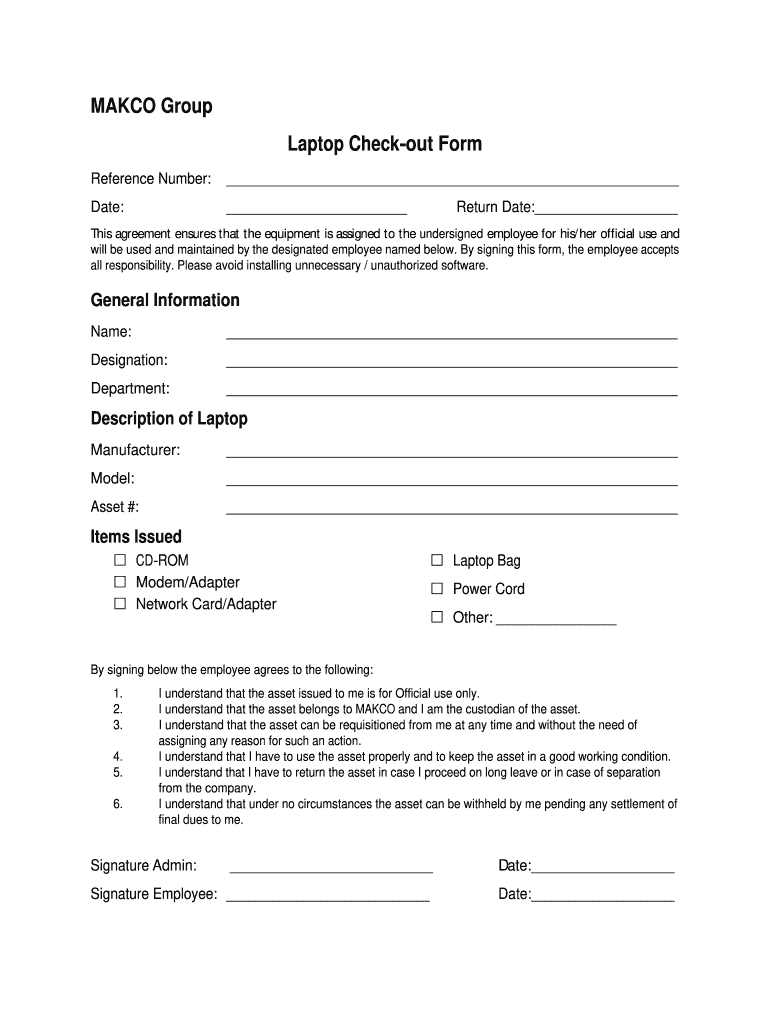







Overview of the Laptop Checkout Form
A laptop checkout form is an essential document that governs the loaning or sharing of laptops within an organization. This form formalizes the agreement between the company and the employee or user who receives the device, outlining the conditions under which the laptop may be used, maintained, and returned. Proper use of this form is crucial, as it helps in tracking asset usage and ensures responsible handling of company property.
Responsibilities of the Employee
When an employee checks out a laptop utilizing the laptop checkout form, specific responsibilities are assigned to them. These responsibilities typically include:
- Proper Usage: Employees must use the laptop strictly for work-related activities, avoiding personal use that could lead to security issues or device wear.
- Maintenance: The employee is expected to keep the laptop in good condition, which includes regular cleaning and preventing physical damage.
- Return Conditions: The form clearly stipulates that the laptop should be returned in its original condition. Any damage beyond normal wear and tear may incur a repair or replacement fee.
These guidelines ensure that employees understand their obligations and consequently help maintain company assets.
Required Signatures and Approval Process
The laptop checkout form requires signatures from both the employee and an administrator to validate the agreement. This approval process may include a few critical steps:
- Review of Terms: The employee is encouraged to read through the terms and conditions outlined in the form.
- Acknowledgment: Both parties must sign, signifying their acceptance of the terms.
- Record Keeping: The signed form is typically retained by the administrative department for inventory tracking and accountability purposes.
By ensuring that all parties acknowledge their roles and responsibilities, the organization can mitigate risks associated with laptop usage.
Key Elements of the Laptop Checkout Form
The structure of a laptop checkout form generally incorporates several key elements that provide clarity and detail:
- Employee Information: Collects necessary identification details such as name, employee ID, department, and contact information.
- Laptop Information: Provides details about the laptop being checked out, including model number, serial number, and any accessories included.
- Checkout and Return Dates: Specifies when the laptop was checked out and the expected return date, creating a timeline for tracking usage.
- Signature Lines: Designated spaces for the signatures of both the employee and an authorized representative of the organization.
These components collectively ensure that the form is comprehensive and fulfills its purpose effectively.
Importance of Record Keeping
Effective record-keeping practices surrounding the laptop checkout form are crucial for asset management. Companies should maintain records for several reasons, including:
- Accountability: Tracking who has checked out which laptops helps in holding employees responsible for the devices.
- Inventory Management: Regularly updated records assist in monitoring the status and availability of laptops, making asset management more efficient.
- Audit Trail: In case of disputes or loss, having a well-maintained record acts as valuable documentation for investigations.
Implementing a systematic approach to record-keeping enhances organizational efficiency and reduces potential asset-related conflicts.
Handling Damaged or Lost Equipment
In the unfortunate event that a laptop is damaged or lost while in the employee's possession, the checkout form should outline a clear protocol to follow. Elements of this protocol might include:
- Reporting Procedures: Employees must immediately report damages or loss to their supervisor and IT department.
- Assessment of Damage: An examination of the laptop's condition by IT personnel will determine whether the damage is beyond normal wear and tear.
- Financial Responsibility: Depending on the outcome of the assessment, employees may be held liable for repair costs or replacement of the laptop. Clear guidelines should be defined in the form to establish the employee's financial obligations.
These detailed protocols help in nurturing a culture of responsibility and proper asset management within the organization.
Legal and Regulatory Compliance
The laptop checkout form also aids organizations in adhering to legal and regulatory standards, particularly in sectors like education, finance, and healthcare, where data security is paramount. Elements relevant to compliance include:
- Data Protection Policies: The form can incorporate regulations that address how employees should handle sensitive or proprietary information stored on the laptop.
- Return and Destruction Procedures: Instructions for returning laptops and properly erasing any data are critical to safeguarding client information and complying with regulations.
- Regular Reviews: Organizations can conduct periodic reviews of their checkout processes to ensure alignment with changing legal requirements.
By integrating compliance measures within the laptop checkout form, organizations can reduce legal risk and bolster their data security frameworks.




