






Definition & Meaning
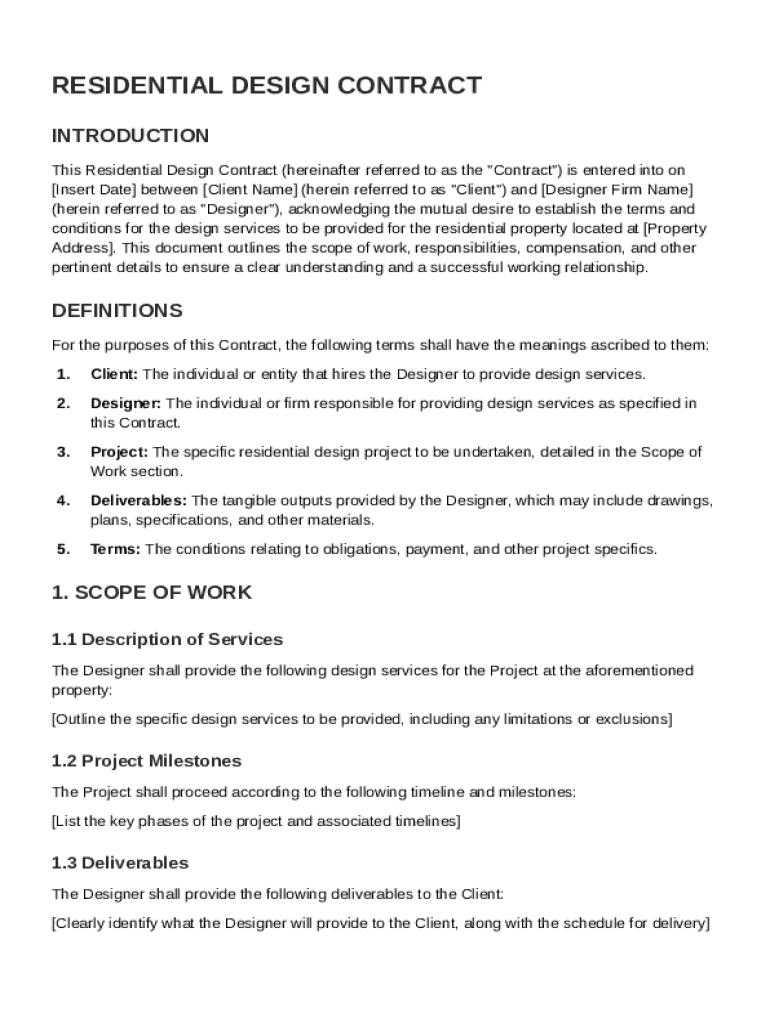
A Residential Design Contract Template serves as a legal framework to establish a clear and formal agreement between a client and a designer regarding design services for a residential property. This template defines the scope of the work, delineates roles and responsibilities, and clarifies financial expectations. It covers essential aspects such as design terms, payment structures, and project timelines, ensuring that both parties have a mutual understanding of the project specifics. By setting precise conditions, this template minimizes the potential for disputes and ensures a smooth collaboration.
How to Use the Residential Design Contract Template
Using a Residential Design Contract Template involves several straightforward steps, designed to tailor the form to the specific needs of each project:
-
Download or access the template: Obtain the residential design contract from trusted sources like DocHub to ensure compliance with legal standards.
-
Customize the template: Input project-specific details such as client and designer names, project address, and scope of services. Adjust clauses to reflect tailored payment schedules, deadlines, and deliverables.
-
Review and modify terms: Both parties should carefully review the terms and ensure any necessary modifications are made, particularly around project changes and conflict resolutions.
-
Legal consultation: Seek professional legal advice to confirm that the contract abides by state-specific regulations and adequately protects the interests of both parties.
-
Sign and execute: After review, both parties sign the contract. Utilize electronic signature platforms like those provided by DocHub, which offer legally binding signatures and ease in document management.
Key Elements of the Residential Design Contract Template
The Residential Design Contract Template includes several pivotal components essential for both clarity and legal protection:
-
Scope of Work: Detailed description of all design services to be rendered, including design phases, deliverables, and key milestones.
-
Compensation Structure: Clear outline of payment terms, including fees, payment schedules, and any potential additional costs incurred during the project.
-
Roles and Responsibilities: Identifies what is expected from both the client and the designer, such as communication procedures and decision-making processes.
-
Modifications Clause: Procedures and implications of any changes to the scope or nature of work, including additional charges and timeline adjustments.
-
Confidentiality Obligations: Ensures that any proprietary or sensitive information shared during the project is protected against unauthorized disclosure.
Steps to Complete the Residential Design Contract Template
To complete this template efficiently while ensuring comprehensiveness, follow these steps:
-
Read through the template: Familiarize yourself with the structure and pre-filled content to understand the template's intention.
-
Fill out client and designer information: Include the names, contact details, and pertinent identifiers for both parties.
-
Define the project scope: Specify all required design services, phases, timelines, and deliverables to avoid ambiguity.
-
Establish payment terms: Enter the agreed-upon pricing structure, including initial deposits, installment amounts, and final payments.
-
Add additional clauses as needed: Customize clauses related to modifications, termination, or any specific agreements unique to the project.
-
Review and revise: Both parties should read and revise the document to confirm all conditions are agreeable and unambiguous.
Legal Use of the Residential Design Contract Template
The contract should adhere to applicable federal and state legal standards, ensuring that it is enforceable and provides adequate legal protection for both parties:
-
Governing Law: Specify the state laws governing the contract to ensure applicable legal frameworks are recognized.
-
Dispute Resolution: Define processes for resolving conflicts, whether through mediation, arbitration, or court proceedings.
-
Compliancy with the ESIGN Act: Confirm that any electronic signatures applied are duly recognized under U.S. law for legal enforceability.
State-Specific Rules for the Residential Design Contract Template
Different states may have unique legal requirements impacting the contract's enforceability and terms:
-
Workman’s Compensation: Some states require designers to have specific insurance coverages noted in contracts.
-
License Requirements: Verify that the designer holds any needed state certifications or licenses for contractual validation.
-
Liability Clauses: Include state-mandated liability limitations or insurance requirements where applicable.
Understanding these distinctions can help tailor the contract to be both compliant and enforceable within the relevant jurisdiction.
Who Typically Uses the Residential Design Contract Template
Various parties involved in the residential design process will find this template invaluable:
-
Residential Designers and Architects: Use the template to ensure clarity and protection when engaging with clients.
-
Homeowners: Utilize the template when hiring design professionals to safeguard interests and articulate expected service levels clearly.
-
Legal Professionals: Employ the framework as a basis for customized agreements when representing design professionals or clients.


Examples of Using the Residential Design Contract Template
The practical applications of the contract template include the following scenarios:
-
New Home Construction: Offering clear guidelines on design phases from conceptual planning to the final execution stage.
-
Home Renovations: Detailed agreements relating to specific renovations, timelines, and the usage of materials, ensuring project coherence.
-
Interior Design Projects: For interior designers focusing on aesthetics, specifying decor-related services and expected results.
By explicitly defining each aspect of a project, these templates help ensure that every involved party understands their roles, responsibilities, and expected outcomes, thus minimizing potential disputes.