






Definition & Meaning
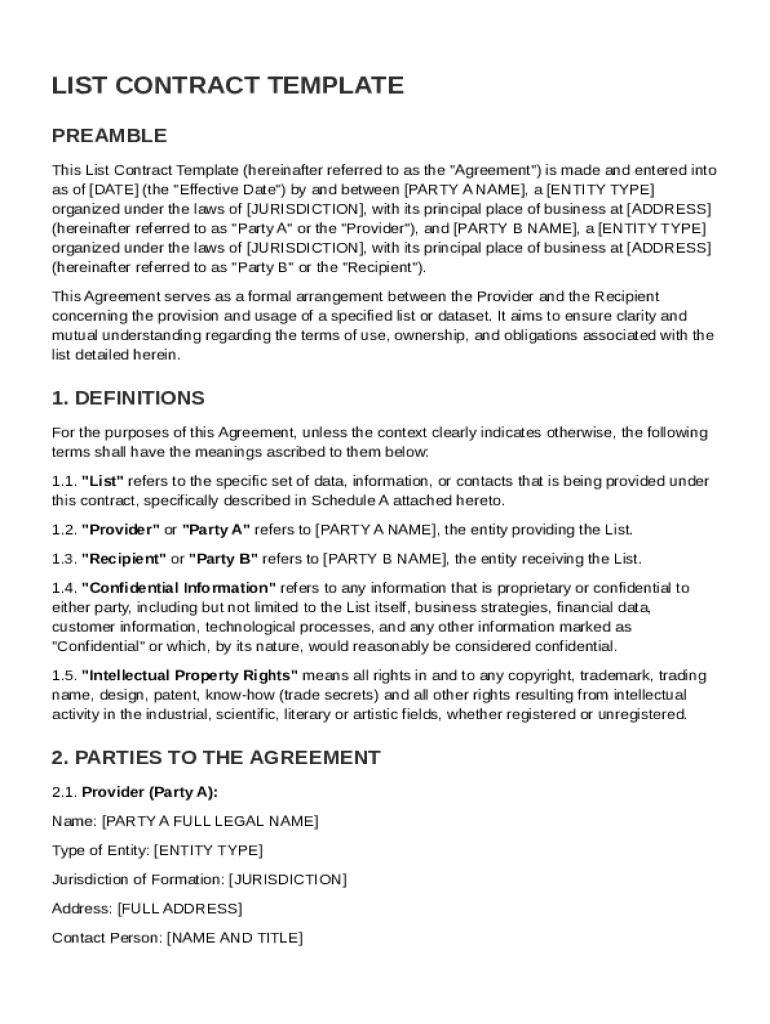
The List Contract Template is a formal agreement between two parties, known as Party A (Provider) and Party B (Recipient), specifically tailored to articulate the terms surrounding the provision and use of a dataset or list. This template is essential for clearly defining the ownership, usage rights, and responsibilities related to the dataset. It includes comprehensive sections covering definitions, scope of services, and other pertinent terms that provide clarity for both parties involved.
The primary objective of this template is to ensure transparency and mutual understanding between the provider and recipient, which helps in minimizing potential disputes. By outlining specific terms, this contract assists both parties in managing expectations regarding the dataset's use and the obligations tied to it. The template serves as a robust framework for safeguarding confidential information and maintaining professional relationships between the parties involved.
Key Elements of the List Contract Template
The List Contract Template encompasses several key components that are critical for its effectiveness:
-
Scope of Services: This section delineates the nature of the services provided, detailing the type of data covered and any limitations or conditions on its use.
-
Payment Terms: Clearly specifies the financial responsibilities, including payment amounts, schedules, and methods for transactions between the parties. This prevents misunderstandings regarding fiscal obligations.
-
Confidentiality Obligations: Establishes the need for maintaining the confidentiality of the dataset, including any restrictions on sharing or disclosing sensitive information to third parties.
-
Indemnification Clauses: Protects parties against potential legal claims by specifying conditions under which each party will be held harmless, aligning with the legal frameworks governing such agreements.
-
Termination Conditions: Outlines the scenarios under which the contract can be terminated, ensuring both parties are aware of their rights to cease the agreement under predefined conditions.
How to Use the List Contract Template
To effectively use the List Contract Template, the involved parties should follow a systematic approach:
-
Initiation: Start by clearly listing the involved parties and identifying the dataset being contracted through thorough documentation.
-
Customization: Modify the template to fit the specific contexts and requirements of both parties. This might involve tailoring terms, especially in parts like payment, usage rights, and proprietary rights, to meet the contractual expectations.
-
Review: Conduct a detailed review ensuring that all sections are clearly understood, modifying any terms or clauses to prevent ambiguities in the agreement.
-
Execution: Both parties should duly sign the contract, thereby initiating the terms and policies within the template.
-
Storage: Store the signed document securely using a platform like DocHub for easy access and retrieval when necessary.
Steps to Complete the List Contract Template
Completing the List Contract Template involves multiple steps that ensure all relevant fields and conditions are addressed:
-
Identification of Parties: List Party A and Party B, including any aliases and legal identifiers that define their role within the contract.
-
Agreement Terms: Fill in the agreement terms related to the scope, payment, and confidentiality. Ensure these terms align with the legal requirements and business practices.
-
Signature Section: Allocate space for each party to sign, providing legality to the document under applicable laws.
-
Form Field Finalization: Use tools to ensure all sections have been completed satisfactorily, with no omitted fields, as this could affect the contract’s enforceability.
-
Digital Submission and Storage: Leverage DocHub or similar platforms for digital execution and storage, reducing paper waste and ensuring easy access.
Legally Binding Electronic Signatures
Electronic signatures within the List Contract Template provide a legally binding solution for complex transactions. By adhering to the ESIGN Act provisions, involved parties can create secure and authentic signatures through multiple modalities such as typing, drawing, or uploading an image of their handwritten signature.
To ensure compliance, it is important to:
- Initiate a secure signature process using reliable software that offers robust security features.
- Confirm the participants’ identities using validation methods, strengthening legal enforceability.
- Provide a comprehensive audit trail detailing the document's status, crucial for legal scrutiny.
Who Typically Uses the List Contract Template
This template is particularly valuable to businesses involved in data sharing or service-oriented agreements, including:
- Data Providers and Receivers: Companies that regularly exchange client or business data.
- Legal Practitioners: Professionals who require a clear-cut contract template to protect their clients’ interests.
- Technology Firms: Entities that develop, share, or utilize datasets for software solutions or data analytics.
The usage spans many sectors, including marketing, technology, and professional services, each benefiting from the assurances provided by a standard List Contract Template.

Important Terms Related to List Contract Template
Understanding essential legal terminology within the List Contract Template enhances its application:
- Service Level Agreements (SLA): Describes the expected performance standards from the service provision.
- Proprietary Rights: Rights reserved for the dataset originator, ensuring protection against unauthorized distribution.
These terms play a pivotal role in ensuring that both parties are not only aware but fully comprehend the stipulations of their agreement, safeguarding against potential breaches or overstepping of prescribed boundaries.
Legal Use of the List Contract Template
For the List Contract Template to be legally valid, several factors must be considered:
- Compliance with State Laws: Every state may have specific requirements for contract acceptability, and ensuring compliance with such laws is crucial.
- Validity under the ESIGN Act: The template must conform to electronic signature regulations.
Adhering to these legal standards guarantees the enforceability of the contract, protecting the interests of all parties involved. Additionally, using platforms like DocHub ensures that these standards are consistently met across various jurisdictional requirements.
Each section provided above aims to offer comprehensive coverage and utility, equipping users with a thorough understanding of the List Contract Template and its practical applications in real-world scenarios.