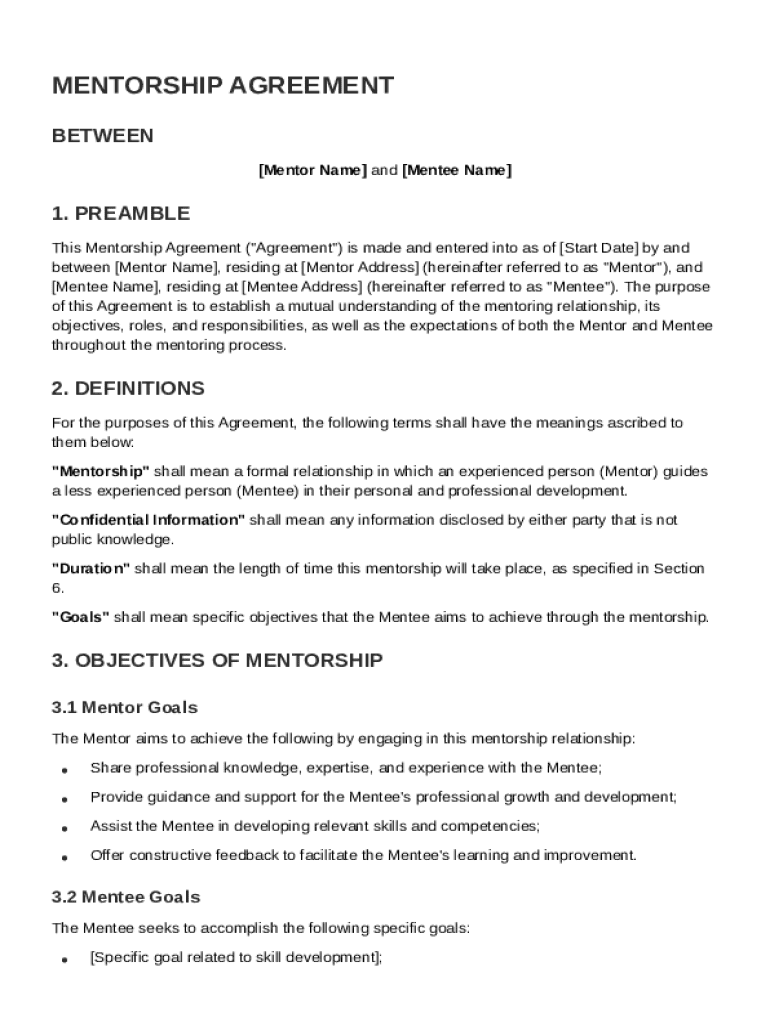







Definition & Meaning
A Mentorship Contract Template serves as a formal agreement between a mentor and a mentee. This document outlines the roles, responsibilities, expectations, and goals of both parties involved in the mentorship process. The contract is designed to create a structured framework that fosters the personal and professional development of the mentee. It includes essential components such as definitions of key terms, confidentiality provisions, termination clauses, and an acknowledgment of understanding. By establishing a clear foundation, both mentor and mentee can work towards achieving their agreed objectives effectively.
Key Elements of the Mentorship Contract Template
The Mentorship Contract Template comprises several critical elements ensuring a successful mentoring relationship:
- Roles and Responsibilities: Clearly delineates the tasks and expectations for both mentor and mentee.
- Objectives: Specifies the goals both parties aim to achieve during the mentorship period.
- Meeting Schedule: Outlines the frequency and duration of meetings.
- Confidentiality Provisions: Ensures that any sensitive information shared remains protected.
- Duration and Termination: Defines the length of the mentorship agreement and conditions for termination.
- Acknowledgment of Understanding: Both parties sign this section, confirming their agreement to the terms specified.
This structure enables clarity and mutual understanding, preventing potential conflicts.
How to Use the Mentorship Contract Template
Using the Mentorship Contract Template involves several steps to tailor it to the unique needs of the mentor-mentee relationship:
- Identify the Purpose: Determine the specific focus of the mentorship, whether it is career development, skill enhancement, or personal growth.
- Customize Roles and Responsibilities: Adjust the template to fit the specific duties each party will assume.
- Set Goals and Objectives: Collaborate on establishing realistic and measurable targets.
- Agree on Meeting Schedules: Decide on the frequency and mode of communication, whether in-person or virtual.
- Incorporate Confidentiality Clauses: Ensure privacy for both parties by including relevant confidentiality agreements.
Adapting the template ensures it effectively serves its purpose in aligning both parties' expectations and goals.
Steps to Complete the Mentorship Contract Template
Completing the Mentorship Contract Template involves the following steps:
- Review the Template: Familiarize yourself with the sections and language of the template.
- Gather Information: Collect all necessary details from both mentor and mentee.
- Fill in Personal Details: Input the names, contact information, and any pertinent demographic details.
- Specify Roles and Responsibilities: Clearly define what is expected from each party.
- Outline the Goals: State the mentorship objectives and any milestones.
- Confirm the Schedule: Agree upon and record the meeting frequencies.
- Include Legal Clauses: Ensure confidentiality, termination, and acknowledgment sections are complete.
- Final Review and Signatures: Both parties should review the document for accuracy before signing.
These steps ensure the contract serves as a comprehensive and binding document.
Important Terms Related to Mentorship Contract Template
Understanding critical terms within a Mentorship Contract Template is essential:
- Mentor: An experienced individual who offers guidance, advice, and support.
- Mentee: A less experienced person who receives guidance and learns from the mentor.
- Confidentiality Clause: Legal terms that protect the information shared during the mentorship.
- Termination Clause: Conditions under which the mentorship agreement can be ended.
- Acknowledgment of Understanding: A signed section confirming both parties agree to the terms.
Defining these terms within the contract ensures clarity and enforceability.
Legal Use of the Mentorship Contract Template
In the United States, Mentorship Contract Templates must comply with general contract law principles to be legally enforceable. This involves:
- Consent: Both parties must agree to the terms without any form of coercion.
- Capacity: Both parties should have the legal capacity to enter into a contract.
- Consideration: There should be a mutual exchange of value or promises.
- Legality: The contract's terms must not violate public policy or laws.
Ensuring these elements are present guarantees that the mentorship agreement is legally binding.
Examples of Using the Mentorship Contract Template
Mentorship agreements can be applied in various contexts, such as:
- Corporate Mentorship Programs: Companies may implement mentorships to develop emerging leaders.
- Academic Settings: Universities often use these agreements between professors and students for research projects.
- Professional Associations: Industry groups may facilitate mentorships to help newcomers acclimate to the field.
- Entrepreneurial Guidance: Startups often pair with experienced entrepreneurs to receive strategic advice.
Each context adapts the template to meet its specific goals.
State-Specific Rules for the Mentorship Contract Template
While mentorship contracts are largely governed by general contract law, some states may have specific regulations:
- Non-Compete Clauses: Vary by state and may need to be adjusted within the contract.
- Minimum Age for Agreement: Some states define legal age differently for entering contracts.
- Employment Relationships: States have specific rules regarding mentorships as part of employment relationships.
Parties should consult legal counsel to ensure state laws are appropriately reflected in the contract.