
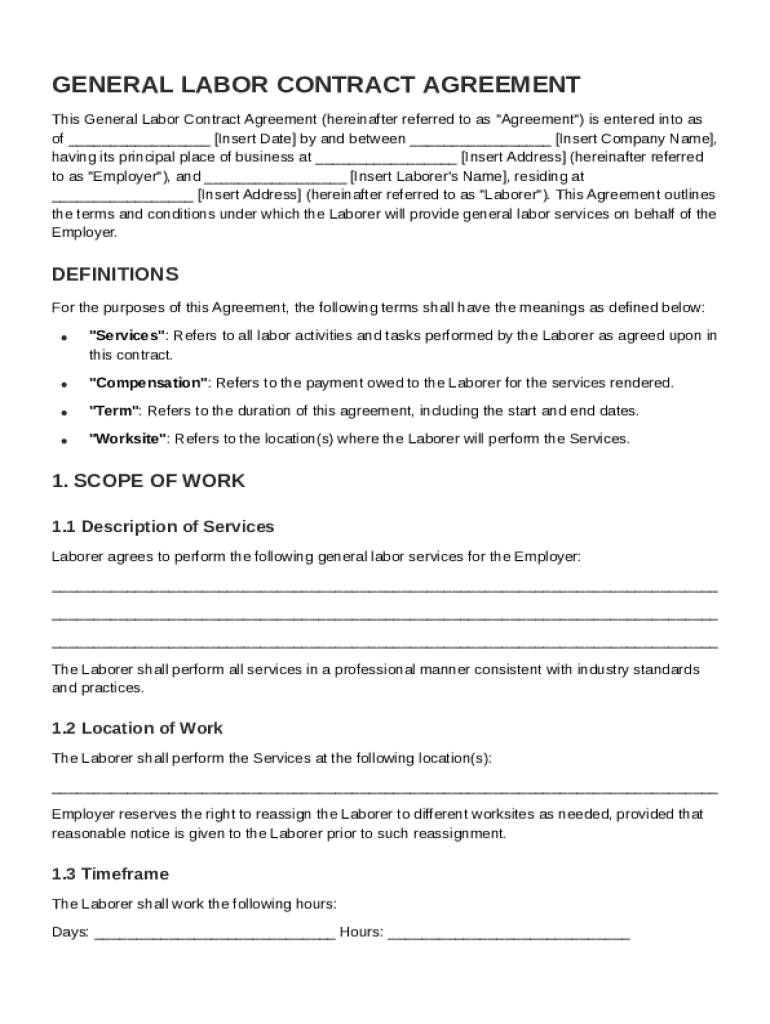







Key Elements of The General Labor Contract Template
The General Labor Contract Template serves as a comprehensive guide to structuring agreements between employers and laborers. Understanding the key elements helps ensure compliance and clarity for both parties involved.
-
Scope of Work: This section delineates the specific tasks and responsibilities to be fulfilled by the laborer. Clearly defining these helps avoid misunderstandings and sets clear expectations for performance.
-
Compensation Details: This part includes information about wage rates, payment schedules, and any overtime provisions. It is crucial to lay out this information clearly to ensure fair compensation and mutual understanding.
-
Employment Status: Specifies whether the laborer is classified as an employee or an independent contractor. This distinction affects taxation, benefits, and employment rights.
-
Rights and Responsibilities: Outlines both parties' obligations, including maintaining safety standards and delivering agreed-upon work quality and timelines.
-
Confidentiality Obligations: If applicable, this area covers agreements to protect sensitive information, preventing unauthorized disclosure during and after the term of employment.
How to Use the General Labor Contract Template
Properly utilizing the General Labor Contract Template can streamline the contract drafting process. This guide covers how both employers and laborers can use the template efficiently.
-
Review the Template: Familiarize yourself with each section of the template to understand its components and purpose.
-
Customize the Sections: Adapt the provided clauses to suit the specific requirements of your agreement. This includes specifying tasks, deadlines, and any unique stipulations.
-
Consult Legal Advice: It's advisable to have a legal expert review the template to ensure it aligns with state and federal labor laws.
-
Incorporate Company Policies: Ensure the agreement references relevant internal policies, such as safety protocols or attendance expectations.
-
Finalize and Sign: Once reviewed and agreed upon, both parties should sign the document. Store copies for future reference.
Important Terms Related to the General Labor Contract Template
Understanding the terminology associated with the General Labor Contract Template aids in accurate interpretation and compliance.
-
Laborer: The contracted individual responsible for executing the specified work.
-
Employer: The entity contracting the laborer's services.
-
Breach of Contract: A failure by either party to comply with the terms set out in the agreement. This can include late payments or unfulfilled obligations.
-
Indemnification: A clause that protects one party from legal liability due to the conduct of the other party.
-
Termination Clause: Specifies conditions under which the agreement can be ended prematurely by either party.
Steps to Complete the General Labor Contract Template
To ensure all necessary components are covered, follow these outlined steps to complete the General Labor Contract Template.
-
Gather Information: Compile all necessary information, such as personal details of the employer and laborer, work scope, and payment terms.
-
Fill in the Template: Input the collected data into the template's designated sections, customizing language as necessary to fit specific needs.
-
Review and Edit: Go through the filled template to ensure accuracy, making adjustments for clarity and completeness.
-
Legal Review: Have a legal professional review the completed document to verify compliance with applicable laws.
-
Final Approval: Discuss the draft with the involved parties and make any additional changes before obtaining signatures.
State-Specific Rules for the General Labor Contract Template
It's essential to check for state-specific regulations that can affect the General Labor Contract Template. These variations might influence wages, worker classifications, and required clauses.
-
Minimum Wage Laws: Different states have varying minimum wage requirements, which must be followed.
-
Worker’s Compensation Insurance: Some states mandate that employers provide this insurance to their employees.
-
Employment Classification: Definitions for employees vs. independent contractors can differ by state, affecting rights and obligations.
-
Notification Periods: States may have specific rules regarding notification periods for termination of employment.
Legal Use of the General Labor Contract Template
Comprehensive understanding of the legal implications of the General Labor Contract Template ensures lawful usage.
-
Compliance with Labor Laws: Ensure all conditions within the template adhere to federal, state, and local labor laws, including wage, hour, and safety standards.
-
Enforceability: Well-drafted contracts are enforceable in court, providing a legal basis for action if disputes arise.
-
Modifications: Any changes or modifications to the contract should be documented in writing and signed by both parties to be legally binding.
Examples of Using the General Labor Contract Template
Real-world scenarios can demonstrate the practical application of the General Labor Contract Template.
-
Construction Projects: Employers can clearly outline construction timelines and deliverables, ensuring transparent expectations.
-
Seasonal Employment: Ideal for agricultural or retail sectors, where labor demand fluctuates throughout the year.
-
Freelancers and Independent Contractors: Use the template to structure agreements on project-based work, defining deliverables and payment terms.
Versions or Alternatives to the General Labor Contract Template
Different templates or versions may be more suitable based on the nature of the work or industry requirements.
-
Short-Term Project Contracts: Simplified templates focusing on one-off tasks or short-term engagements without long-term obligations.
-
Full-Time Employment Contracts: Comprehensive templates addressing ongoing work relationships, benefits, and termination procedures.
-
Industry-Specific Templates: Tailored contracts that incorporate industry regulations, such as those for construction or healthcare sectors.
Business Types that Benefit Most from General Labor Contract Template
Certain types of enterprises find the General Labor Contract Template especially advantageous due to their operational dynamics.
-
Construction Companies: With frequent hiring for projects, this template ensures clear communication and expectation management.
-
Start-Ups: Small businesses with fluctuating staffing needs can benefit from the flexibility usually inherent in labor contracts.
-
Event Planning Firms: These companies can secure varied labor services for one-off events while avoiding lengthy employment commitments.




