Definition and Meaning
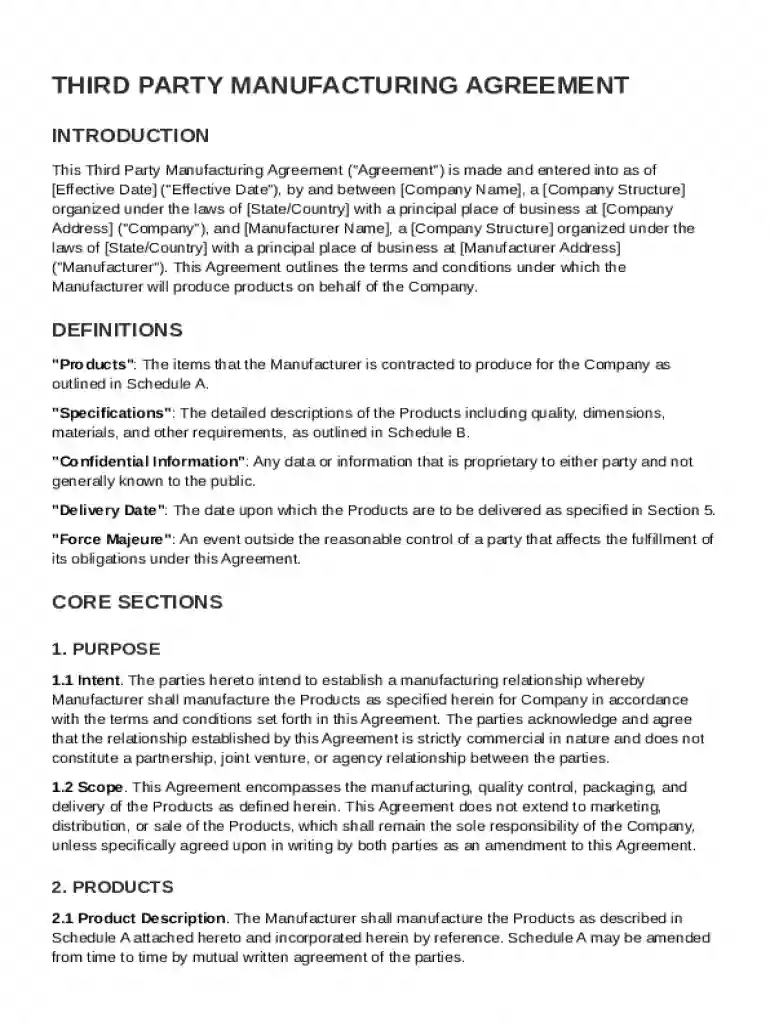
A Third Party Manufacturing Agreement Template is a structured document that outlines the relationship between a company and a manufacturer, where the latter is contracted to produce specified products on behalf of the former. It is vital in establishing clear expectations and obligations for both parties, ensuring a mutual understanding of roles and responsibilities. Key elements typically detailed within this template include the definitions of terms, manufacturing obligations, pricing structures, delivery and acceptance criteria, confidentiality measures, intellectual property rights, and dispute resolution processes. By utilizing such an agreement, businesses can formalize their manufacturing processes while maintaining sound commercial relationships, avoiding the establishment of a partnership or agency.
Key Elements of the Agreement Template
Comprehensively addressing all facets crucial to an effective partnership, the Third Party Manufacturing Agreement Template encapsulates various essential elements:
- Definitions: Clearly outlines terminology used within the agreement to avoid misunderstandings.
- Manufacturing Obligations: Details the manufacturer's responsibilities in producing and delivering products according to specified standards and within set timelines.
- Pricing and Payment Terms: Specifies agreed-upon costs, invoicing schedules, and payment mechanisms.
- Delivery and Acceptance Procedures: Defines the methods through which products are delivered, tested, and accepted or rejected.
- Confidentiality Clauses: Sets forth terms for maintaining proprietary information confidentiality.
- Intellectual Property Rights: Covers ownership and usage rights of intellectual property related to the manufacturing process.
- Warranties and Liability Limitations: Establishes the warranties provided by the manufacturer and limits on liability for both parties.
- Termination Conditions: Describes the situations under which the agreement may be terminated by either party.
- Dispute Resolution: Outlines procedures for resolving conflicts, often providing for mediation or arbitration as preferred methods.
How to Use the Template
Using the Third Party Manufacturing Agreement Template effectively requires a step-by-step approach:
- Initial Review: Carefully read through the entire template to understand its structure and stipulations.
- Customization: Modify the template according to the specific needs and details of the transaction, including tailoring definitions, obligations, and any unique requirements.
- Legal Consultation: Engage legal counsel to review the customized document to ensure compliance with applicable laws and regulations.
- Agreement Execution: Both parties should review the finalized document for mutual understanding and sign it to formally enter into the agreement.
- Implementation: Begin the manufacturing and supply process according to the guidelines established in the agreement.
Steps to Complete the Agreement
When completing the Third Party Manufacturing Agreement Template, several precise steps ensure the accuracy and validity of the final document:
- Fill Out Company Information: Include complete details for both the client and the manufacturer.
- Define Product Specifications: Clearly detail the products to be manufactured, including any quality standards and specifications.
- Outline Logistics: Set forth the logistics for production, delivery schedules, and methods.
- Detail Financial Arrangements: List out the pricing, payment methods, and invoicing instructions.
- Incorporate Legal Sections: Integrate necessary legal sections covering intellectual properties, confidentiality, and liability issues.
- Finalize and Execute: Review the document with all stakeholders before signing to confirm agreement with all terms detailed within the template.
Why Utilize this Agreement Template
Adopting a Third Party Manufacturing Agreement Template offers multiple benefits, including:
- Clarity and Structure: Provides a clear framework for the business relationship, outlining each party's duties and expectations.
- Risk Management: Minimizes risks by addressing potential issues beforehand and setting procedures for conflict resolution.
- Legal Protection: Offers legal safeguards and adherence to compliance through explicitly stated terms and conditions.
- Efficiency in Execution: Streamlines manufacturing processes by providing a well-organized layout for operations and collaboration.
Important Terms Related to the Agreement Template
Understanding the terminology within the Third Party Manufacturing Agreement is crucial for effective implementation:
- Contract Manufacturing: The practice of hiring an external producer to manufacture products on behalf of a company.
- Supply Chain Management: The oversight and management of the entire supply chain from manufacturing to delivery.
- Non-Disclosure Agreement (NDA): A separate or integrated agreement that protects sensitive information disclosed during the term.
- Force Majeure: Clauses that relieve parties from obligations due to unforeseeable, extraordinary events.
Legal Use of the Agreement Template
Operating within the legal framework is essential when executing a Third Party Manufacturing Agreement:
- Compliance with Laws: Ensure that all terms comply with international trade laws and domestic regulations pertinent to manufacturing and distribution.
- Contract Enforcement: The agreement must be enforceable under applicable jurisdiction to hold all parties accountable for their obligations.
- Legal Representation: Both parties should ideally have legal representation when drafting and reviewing the document to avoid potential legal pitfalls.
State-Specific Rules for the Agreement
When implementing the Third Party Manufacturing Agreement, it's vital to be aware of any state-specific legislation and requirements:
- Jurisdictional Variations: Different states may have unique commercial and consumer protection laws that affect how manufacturing agreements are structured.
- Local Compliance: Ensure that the agreement acknowledges and adheres to any state-specific manufacturing, labor, and safety regulations.
- Regional Dispute Resolution: Consider local practices for arbitration or litigation that may influence the choice of dispute resolution methods within the agreement.