Definition and Purpose of a Design Retainer Contract Template
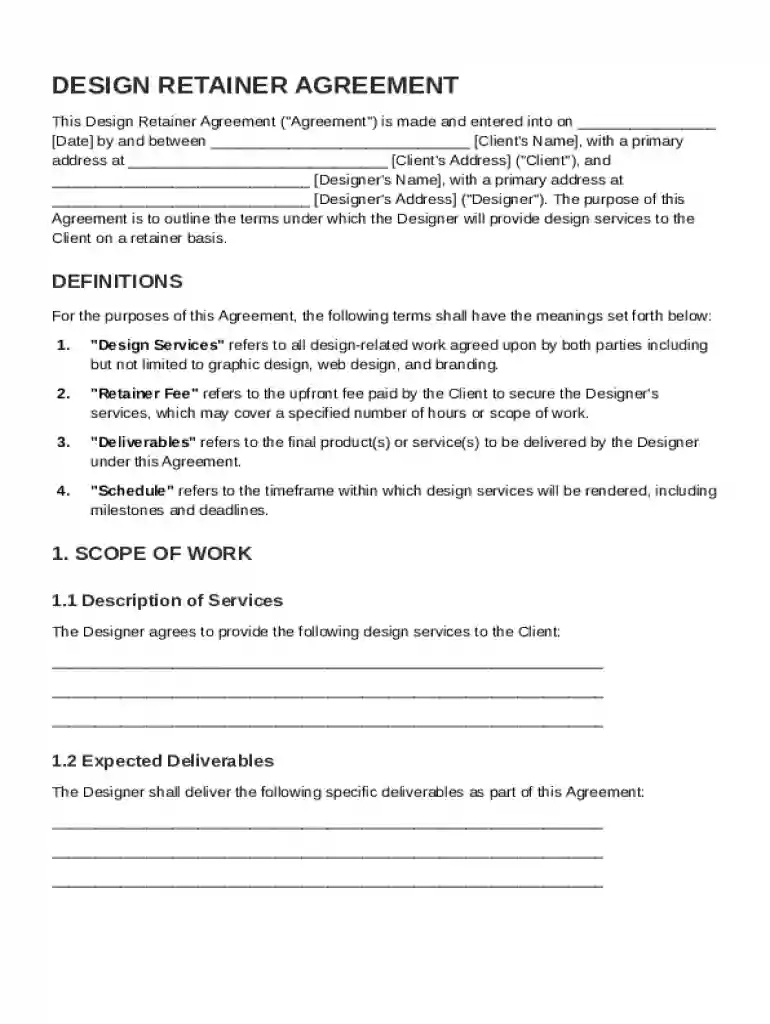
A Design Retainer Contract Template is a structured document used to outline the terms and conditions between a client and a designer for services rendered on a retainer basis. This template serves as a foundational agreement that defines essential aspects such as the scope of work, payment arrangements, and the responsibilities of each party. The primary purpose of this document is to establish clear expectations and legal protections for both the client and the designer, ensuring a smooth, mutually understood business relationship. By using a standardized template, both parties can efficiently navigate the complexities involved in contractual obligations without unnecessary confusion or dispute.
Key Elements Included
- Scope of Work: Details the specific services the designer is expected to deliver. This element prevents misunderstandings about what tasks are included under the retainer.
- Payment Structure: Outlines how and when the designer will be compensated. This includes specifying fixed monthly fees or hourly rates, as well as billing cycles.
- Responsibilities of Parties: Clearly defines the obligations of both the client and designer. This helps ensure that both parties understand their roles and what is expected of them throughout the contract duration.
- Confidentiality: Addresses how confidential information is to be handled and ensures that sensitive information exchanged during the project is protected.
How to Use the Design Retainer Contract Template
Using a Design Retainer Contract Template involves several steps to ensure the document is tailored to the specific needs of the client-designer relationship. Here’s how to effectively utilize this template:
- Customize the Template: Begin by filling in the relevant details, such as names, addresses, and contact information for both parties.
- Define the Project Scope Clearly: Specify the tasks and deliverables that are included under the retainer to avoid future disputes.
- Set Payment Terms: Clearly outline how the designer will be paid, including the retainer amount, payment schedule, and any conditions for additional work.
- Include Legal Provisions: Consider incorporating clauses on confidentiality, intellectual property rights, and termination conditions that are common in legal agreements to protect both parties.
- Review and Sign: Both parties should review the agreement thoroughly, make necessary revisions, and sign the document to formalize the agreement.
Steps to Complete the Design Retainer Contract Template
Completing a Design Retainer Contract Template requires attention to detail and an understanding of the contractual and business elements involved. Here are the detailed steps:
- Gather Required Information: Collect all necessary information about both parties, including names, contact details, and business registration numbers if applicable.
- Define the Work: Use language that is clear and precise to describe what is expected regarding design services. Include examples if necessary for clarity.
- Determine Financial Terms: Decide on payment structures, such as a flat retainer fee or hourly billing, and ensure they are clearly documented.
- Set Dates and Duration: Indicate the start date, anticipated end date (if applicable), and review dates to maintain alignment on work progress.
- Draft Legal Clauses: Incorporate sections on intellectual property, confidentiality, dispute resolution, and termination.
- Review and Agree: Both parties should review the document, make sure all points are agreeable, and sign to confirm acceptance.
Important Terms in the Design Retainer Contract Template
A clear understanding of the terms used within the Design Retainer Contract Template is critical. Here are some important terms often included:
Scope of Work
Defines the specific design tasks the agreement covers, preventing misunderstandings and setting a clear path for execution.
Retainer Fee
The pre-agreed amount a client pays upfront to secure services. This is typically non-refundable and applied as credit towards future work.
Intellectual Property
Specifies ownership and rights related to the created work. In design contracts, this often determines who retains rights to the final product.
Termination Clause
Outlines the conditions under which either party can terminate the contract. This may include breaches of contract or predetermined contract end dates.
Legal Use of the Design Retainer Contract Template
For the contract to be legally binding, it should meet specific criteria that are often dictated by contractual law:
- Signature Requirement: Both parties must voluntarily sign the agreement.
- Consideration: There must be a clear exchange of value—design services in return for payment.
- Capacity: Both parties must have the legal capacity to enter into a contract, meaning they are of legal age and sound mind.
- Legal Purpose: The agreement must serve a legal purpose; it cannot support any illegal activity.
Examples of Using the Design Retainer Contract Template
To illustrate the practical applications of a Design Retainer Contract Template, consider a few real-world scenarios:
- Freelance Graphic Designer for Startups: A startup wants ongoing branding services and enters into a retainer agreement to pay a monthly fee for the designer's time and deliverables, such as logo creation and digital content.
- Architectural Services for Real Estate Developers: An architect provides consultation and design expertise for a real estate expansion project on a retainer basis, specifying the number of hours included monthly and additional rates for hours beyond the retainer.
- Website Maintenance Services: A web designer maintains a company's site under a retainer agreement, ensuring regular updates and troubleshooting as part of the packaged services.
State-specific Rules for a Design Retainer Contract Template
While a Design Retainer Contract Template serves as a standard agreement, specific state laws can affect its terms and execution:
- State Regulations: Certain states may have unique requirements for contract enforceability, such as specific disclosures needed in service agreements.
- Intellectual Property Norms: States differ in how they regulate ownership and transfer of intellectual property, requiring customization of those clauses based on jurisdiction.
- Tax Implications: The way retainers are reported for tax purposes can vary, affecting both billing practices and record-keeping.
Software Compatibility
The Design Retainer Contract Templates can be utilized through various digital platforms:
- Document Management Tools: Compatible with platforms like DocHub, allowing users to edit and customize contract templates in PDF formats and others.
- Cloud Integration: Easily integrates with Google Drive, Dropbox, and other cloud services for streamlined access and sharing.
- E-Signature: Use e-signature solutions to digitally sign contracts, ensuring legality and prompt execution in the workflow.
By harnessing these tools, individuals and businesses can efficiently manage their contracts, benefiting from flexibility and security provided by digital management solutions.