




01. Edit your early occupancy agreement template online
Type text, add images, blackout confidential details, add comments, highlights and more.

Type text, add images, blackout confidential details, add comments, highlights and more.

Draw your signature, type it, upload its image, or use your mobile device as a signature pad.

Send early possession agreement form via email, link, or fax. You can also download it, export it or print it out.
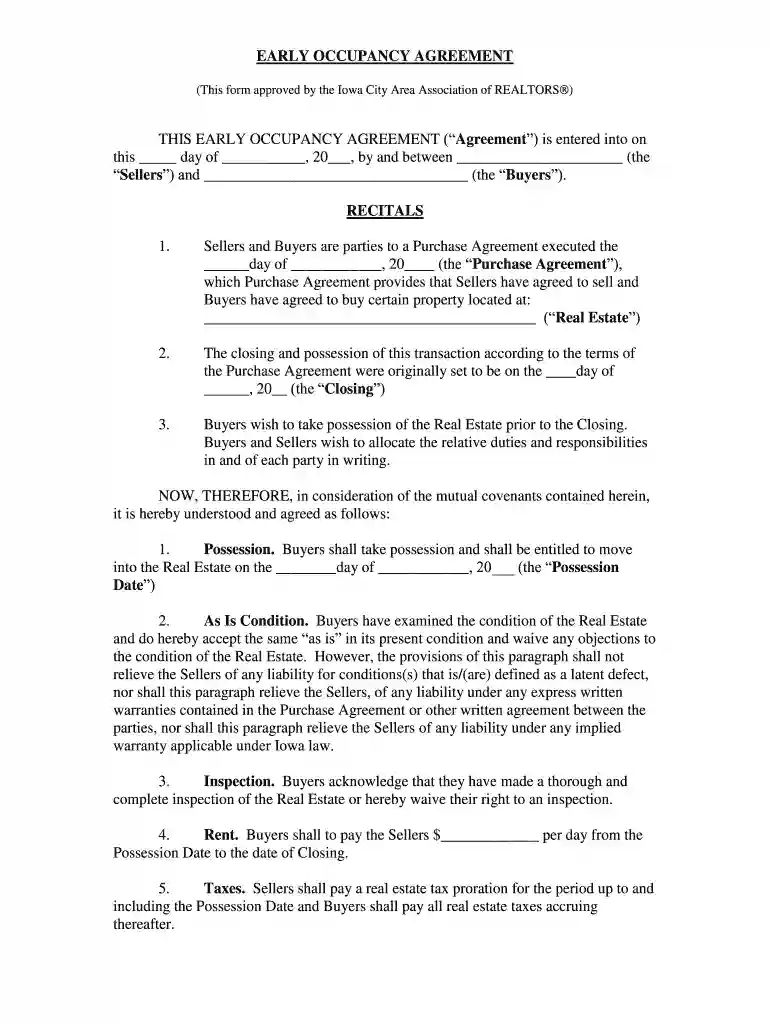
The Iowa early occupancy form, commonly referred to in real estate transactions, serves as a crucial document allowing buyers to occupy a property prior to its official closing date. This form encapsulates the essential terms that govern the temporary occupancy of the buyer, protecting the interests of both parties involved in the transaction.
This form should meticulously detail the responsibilities of the buyer during their occupancy period, including:
The early occupancy agreement must also delineate restrictions, ensuring that buyers understand their limitations prior to the formal closing:
It is critical to address what happens if either party fails to adhere to the terms outlined in the agreement. Potential remedies may include:
The Iowa early occupancy form must indicate that it is legally binding, recognizable under Iowa law. This ensures that both parties have legal recourse should any disputes arise related to the agreement. It can also affirm compliance with the ESIGN Act, allowing for digital signatures and electronic storage.
In some situations, buyers may need to occupy a property early due to an urgent relocation or other time-sensitive circumstances. Examples include:
The Iowa early occupancy form serves as a protective measure for both buyers and sellers in a real estate transaction, thus ensuring a clear understanding of responsibilities and limitations during the pre-closing phase. Having a thorough agreement fosters transparency and helps mitigate potential disputes, aligning both parties' expectations throughout the transition. It is advisable that both parties consult legal professionals to review the terms outlined in the early occupancy agreement to ensure it meets all necessary legal standards and adequately protects their interests.
We've got more versions of the early occupancy agreement template form. Select the right early occupancy agreement template version from the list and start editing it straight away!
| Versions | Form popularity | Fillable & printable |
|---|---|---|
| 2011 | 4.8 Satisfied (125 Votes) |
At DocHub, your data security is our priority. We follow HIPAA, SOC2, GDPR, and other standards, so you can work on your documents with confidence.
Applicants must be notified of approval or denial of initial applications within 120 days from the date the application is submitted. Page 8. Comm. 204 (07/25).Read more
Early stakeholder involvement is critical. Too often, risk communication is seen as something that takes place only at the end of a project after all theRead more
This section is for people who may need to arrive before their official move-in dates. If you need Early Arrival housing, please log in to the HousingRead more


