






Definition and Meaning
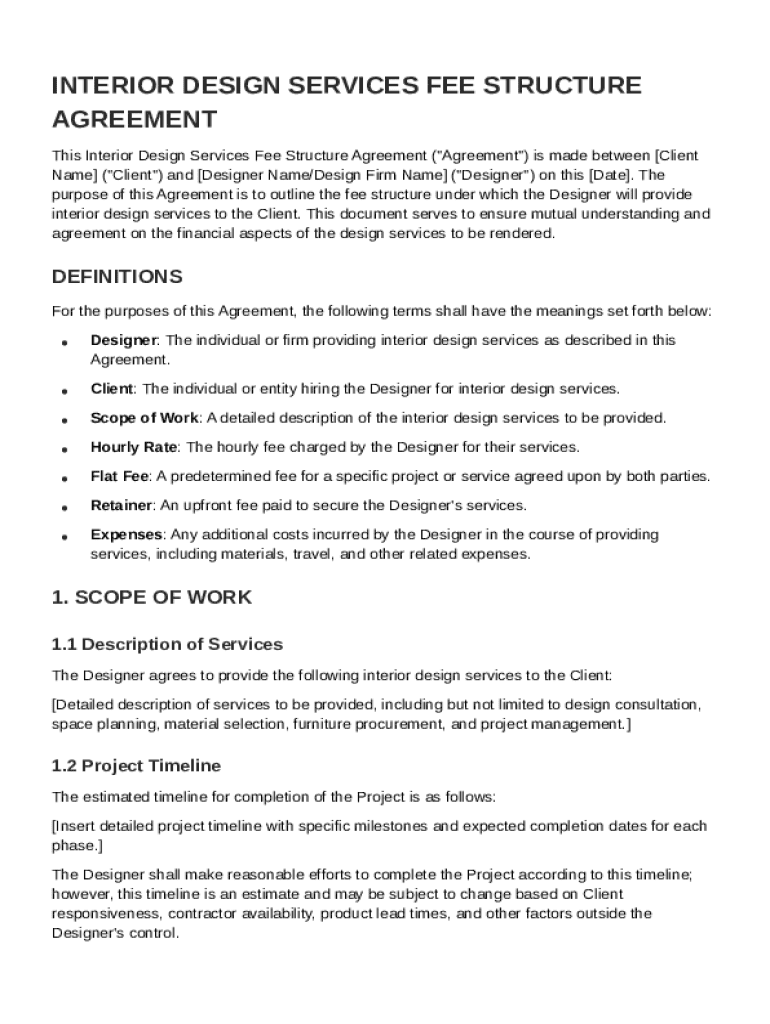
An "Interior Design Fee Structure Contract Template" outlines the financial agreement between a client and an interior designer. This essential document establishes the terms of payment, details the scope of services provided, and covers other critical aspects like additional expenses and timelines. It ensures both parties share a clear understanding of the financial obligations and services involved.
Key Components
- Scope of Services: Describes specific tasks the designer will perform.
- Payment Terms: Details how and when payments will be made.
- Additional Expenses: Lists any costs outside of the base fee, such as materials or third-party services.
- Agreement Duration: Specifies the timeline from start to completion.
This template is vital for avoiding misunderstandings between clients and designers by detailing expectations clearly.
How to Use the Interior Design Fee Structure Contract Template
Using the Interior Design Fee Structure Contract Template involves modifying it to suit the specific needs of a project and involved parties.
- Review Template Content: Start by thoroughly reading through the template to understand its provisions.
- Customize the Details: Modify sections such as client information, project details, and fee amounts to accurately reflect the agreement.
- Clarify Payment Structures: Clearly outline whether payments will be hourly, a flat fee, or a retainer.
- Address Additional Clauses: Add clauses pertinent to this agreement, such as cancellation policies or refund processes.
- Seek Legal Advice: Consider consulting a legal professional to ensure the document complies with relevant laws and regulations.
The template serves as a foundational document, which can be adapted to various projects and client needs.
Key Elements of the Interior Design Fee Structure Contract Template
This contract template comprises several vital sections that define the financial and operational relationship between the interior designer and the client.
Fee Structure
- Hourly Rates: Clear delineation of how hours are tracked and billed.
- Flat Fees: Total amount charged for completing the defined scope of work.
- Retainer Fees: Upfront payment to secure services over the agreement duration.
Additional Provisions
- Cancellation Terms: Conditions under which either party may terminate the contract.
- Dispute Resolution: Methods for resolving disagreements, such as mediation or arbitration.
- Governing Law: The legal framework overseeing the contract, typically based on the locality of the project.
These elements ensure comprehensive coverage of potential contingencies and operational specifics.
Legal Use of the Interior Design Fee Structure Contract Template
The legal effectiveness of this contract template hinges on compliance with standard contractual laws.
Binding Agreement
- ESIGN Act Compliance: For electronic contracts, adherence to federal and state electronic signature standards is crucial.
- Confidentiality Clause: Protecting sensitive client and project information through legal stipulations.
- Force Majeure: Outlines circumstances under which obligations can be deferred due to unforeseen events.
Through these legal frameworks, the document provides a solid foundation for safeguarding both parties' interests.
Steps to Complete the Interior Design Fee Structure Contract Template
Filling out the Interior Design Fee Structure Contract Template entails several pivotal steps:
- Input Basic Information: Enter the names and contact details of both parties.
- Define Scope: Clearly define the work, including specific project milestones.
- Detail Payment Terms: Include all payment-related information, such as frequency and payment methods.
- Add Additional Clauses: Customize clauses applicable to your project, ensuring that they align with both parties' expectations.
- Review and Finalize: Conduct a thorough review, possibly with legal assistance, to ensure terms are complete and compliant.
Completing these steps effectively will formalize the agreement and create a reliable framework for your project.
Examples of Using the Interior Design Fee Structure Contract Template
Real-world applications of this contract template reflect various project scenarios:
Residential Design
- Whole Home Renovations: Covers comprehensive services, often involving flat fees or retainer structures.
- Room-Specific Projects: Typically billed hourly, addressing particular client needs such as kitchens or living rooms.
Commercial Design
- Office Spaces: Involves specific commercial terms such as project timeline commitments and fixed fees.
- Retail Outfits: May include clauses for periodic adjustments as business needs evolve.
Each example illustrates the template's flexibility in adapting to different scales and natures of projects.
Who Typically Uses the Interior Design Fee Structure Contract Template
This template is beneficial for a variety of users in the interior design industry.


Designers
- Freelancers: Manage client relationships and expectations through well-outlined agreements.
- Design Firms: Streamline the process with consistent and legally sound templates.
Clients
- Homeowners: Protect their interests by setting clear terms with designers.
- Business Owners: Ensure project success with structured financial agreements.
The users range from independent professionals to larger firms and clients, demonstrating the template's broad applicability.
Important Terms Related to Interior Design Fee Structure Contract Template
Key terms within these agreements provide clear descriptions of the expectations and responsibilities of each party involved.
Terms to Know
- Scope of Work: Detailed description of tasks to be completed.
- Retainer: A fee paid in advance to secure services.
- Governing Law: Identifies the legal jurisdiction overseeing the contract.
Understanding these terms is crucial for successful contract implementation, reducing misunderstandings, and ensuring clarity.