Definition and Meaning
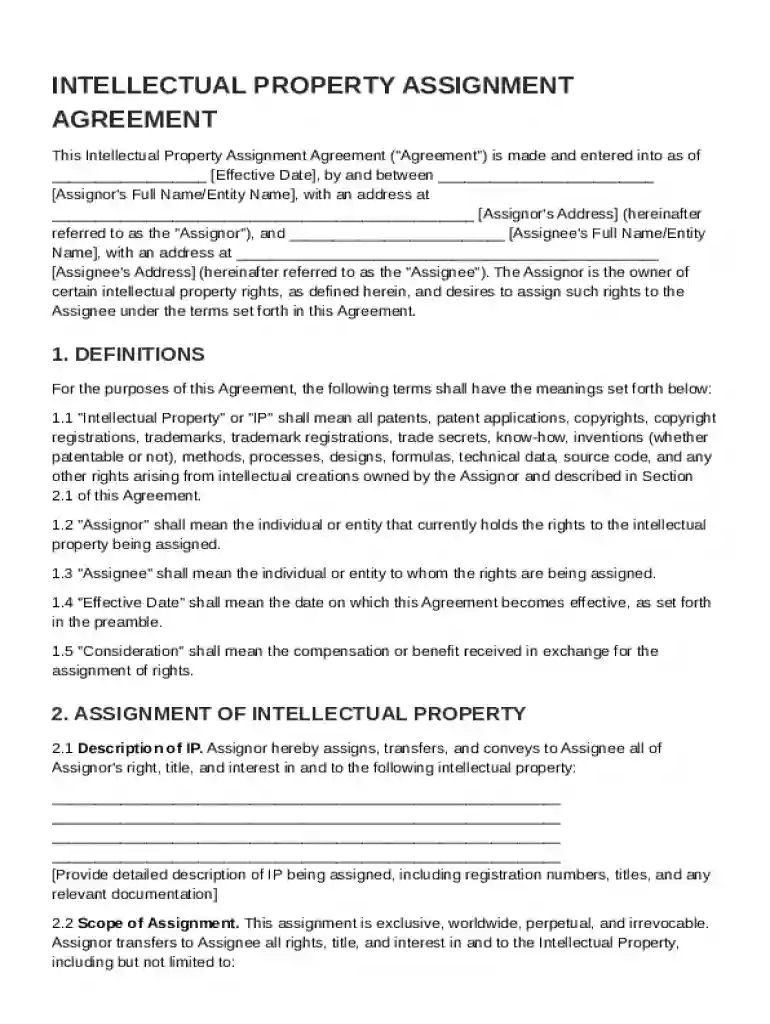
An IP Assignment Agreement Template is a formal document used to transfer intellectual property rights from the original holder, known as the Assignor, to another party, the Assignee. This type of agreement outlines the specific intellectual property assets being transferred, such as patents, trademarks, or copyrights, and specifies the terms under which the transfer occurs. The document ensures that the Assignee obtains all rights previously held by the Assignor, which can include the right to modify, reproduce, or distribute the intellectual property. This legal transfer is crucial for businesses or individuals looking to secure proprietary technology, designs, or creative works.
Key Elements of the IP Assignment Agreement Template
This template includes several core components that are essential for a legally sound transfer of intellectual property rights. These elements are integral in defining the scope, responsibilities, and protections offered by the agreement:
- Description of the Intellectual Property: Clearly identifies the assets being transferred, detailing their nature and scope.
- Rights and Obligations: Specifies the rights being assigned to the Assignee and any ongoing obligations for both parties.
- Consideration Clause: Outlines any financial or non-monetary compensation involved in the transfer.
- Representations and Warranties: Includes assurances from the Assignor regarding their ownership and right to transfer the intellectual property.
- Confidentiality Agreements: Ensures any proprietary information shared during the assignment process remains protected.
- Dispute Resolution: Establishes the procedures to resolve any disagreements that may arise from the agreement.
- Governing Law: States the jurisdiction under which the agreement will be interpreted and enforced.
Steps to Complete the IP Assignment Agreement Template
Filling out this template involves several key steps to ensure all necessary details are accurately captured and legally binding:
- Identify the Parties: Start by clearly stating the names and addresses of the Assignor and Assignee.
- Describe the Intellectual Property: Provide a comprehensive description of the intellectual property, including any registration numbers or filings, if applicable.
- Define the Scope of the Assignment: Specify exactly what rights are being transferred and any limitations that apply.
- Detail the Consideration: Outline the agreed-upon compensation, whether it is a lump-sum payment or royalty arrangement.
- Include Warranties and Representations: Ensure the Assignor provides assurances about their ownership and right to transfer the intellectual property.
- Add Confidentiality Terms: If applicable, include clauses to protect confidential information.
- Establish Dispute Resolution Procedures: Define the methods for resolving conflicts, such as mediation or arbitration.
- Select Governing Law: Choose the state's law that will govern the agreement.
Legal Use of the IP Assignment Agreement Template
The template serves multiple legal functions and is vital for ensuring a smooth and enforceable transfer of intellectual property rights. It provides clarity on ownership status and mitigates potential risks associated with the transfer by outlining parties' obligations. This document is used in various transactions, such as mergers, acquisitions, or licensing deals, where controlling intellectual property is essential. Additionally, it serves as a protective measure to preserve proprietary rights, offering legal recourse in case of disputes.
Important Terms Related to IP Assignment Agreement Template
Understanding the terminology associated with this template is crucial for effectively managing intellectual property transactions:
- Assignor: The original owner or holder of the intellectual property rights.
- Assignee: The party receiving the intellectual property rights.
- Intellectual Property: Includes patents, copyrights, trademarks, trade secrets, and other creative works.
- Consideration: The payment or compensation exchanged for the transfer of rights.
- Warranties: Legal promises made by the Assignor regarding the legitimacy of the transfer.
- Confidentiality: The obligation to protect sensitive information shared during the assignment.
- Governing Law: The jurisdiction's legal framework under which the agreement is enforceable.
Who Typically Uses the IP Assignment Agreement Template
Various individuals and organizations utilize this agreement to facilitate the transfer of intellectual property. Common users include:

- Businesses and Corporations: Often engage in such transfers during mergers or acquisitions to secure proprietary assets.
- Inventors and Creators: Transfer rights to companies or partners for commercialization purposes.
- Legal Professionals: Draft and review these agreements to protect clients’ intellectual property interests.
- Startups and Entrepreneurs: Acquire patents or trademarks to build competitive advantages.
- Research Institutions: Often involved in transferring developed technologies or methodologies to commercial partners.
Examples of Using the IP Assignment Agreement Template
Real-world applications of this template illustrate its flexibility and importance:
- Acquisition Deals: A tech company purchasing a startup might use this agreement to acquire patents and software.
- Licensing Arrangements: A pharmaceutical firm could assign proprietary formulas to a partner for production and distribution.
- Franchising: Restaurants might transfer branding and operational manuals to franchisees through this agreement.
- Collaborative Projects: Joint ventures often use the template to define ownership and usage rights of resulting intellectual property.
- Publishing Rights: Authors might transfer their publication rights of a book to a publishing house.
State-Specific Rules for the IP Assignment Agreement Template
While the template provides a general framework, certain state-specific variations can impact its application and enforcement:
- Intellectual Property Laws: States may have distinct laws regarding what constitutes intellectual property, affecting the details within the agreement.
- Contractual Considerations: States have different norms and legal precedents regarding contracts, influencing how agreements are interpreted.
- Tax Implications: The transfer of intellectual property can have varying tax consequences depending on the state’s tax regulations.
- Dispute Resolution: The effectiveness of specified dispute resolution methods might differ based on the courts and legal traditions within a state.
Understanding these distinctions helps tailor the IP Assignment Agreement template to comply with local regulations and ensure robust protection of the involved parties’ interests.