




01. Edit your substance abuse treatment progress report template online
Type text, add images, blackout confidential details, add comments, highlights and more.

Type text, add images, blackout confidential details, add comments, highlights and more.

Draw your signature, type it, upload its image, or use your mobile device as a signature pad.

Send treatment progress report template via email, link, or fax. You can also download it, export it or print it out.
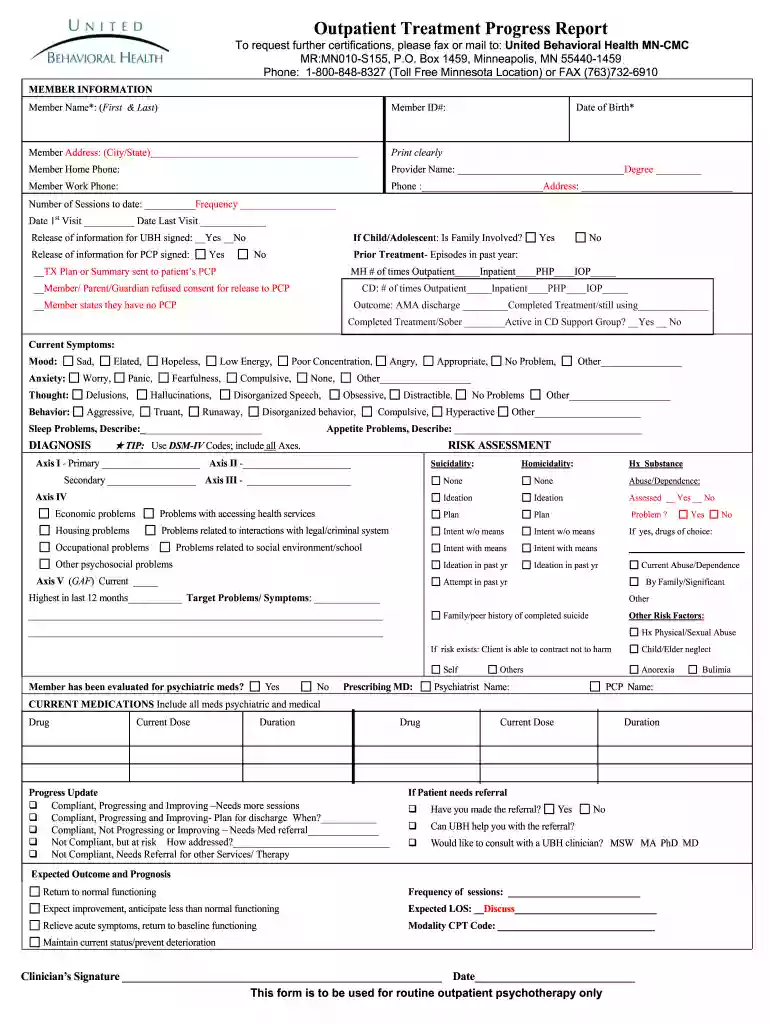
The behavioral treatment progress report is an essential tool used to document and assess the progress of individuals undergoing psychotherapy or behavioral therapy. This report includes detailed information about the patient's treatment history, current symptoms, risk assessments, diagnosis, prescribed medications, and updates on the patient's progress toward their treatment goals.
The primary purpose of the behavioral treatment progress report is to facilitate communication between healthcare providers. It ensures that clinical teams can provide the most appropriate and tailored care for each patient, enabling a collaborative approach to treatment that is essential in mental health care. Progress reports are often utilized by therapists, psychologists, and psychiatrists to evaluate therapeutic effectiveness and modify treatment plans as necessary.
Using the behavioral treatment progress report effectively involves several key steps that streamline the process of monitoring patient progress.
Maintaining regular updates in the behavioral treatment progress report is essential. Schedule consistent intervals for updating the report, such as after each therapy session or every few weeks. This practice allows for ongoing adjustments in treatment and for tracking progress over time.
Completing a behavioral treatment progress report requires a systematic approach to ensure it captures all necessary information. The following steps will guide providers in creating a comprehensive report.
The behavioral treatment progress report is utilized by several professionals in the mental health field, serving as a critical component in delivering comprehensive care.


The behavioral treatment progress report is subject to regulations and compliance standards crucial for its lawful use in clinical settings.
Healthcare providers must ensure adherence to the Health Insurance Portability and Accountability Act (HIPAA) when handling any patient records. This includes implementing proper protocols for maintaining confidentiality and securing patient consent before sharing treatment reports.
Accurate and thorough documentation is imperative not only for patient care but also for legal protection. Inaccuracies in the behavioral treatment progress report could lead to legal complications, especially if treatment efficacy is questioned in a court setting. Therefore, clinicians should maintain high standards of accuracy and completeness when preparing the reports.
Different states may have specific laws regarding how long treatment records, including progress reports, must be maintained. It is essential for providers to be knowledgeable about these regulations to ensure compliance and protect patient information effectively.
In summary, the behavioral treatment progress report is a fundamental document that serves various functions in patient care, from tracking progress to ensuring legal compliance. Its comprehensive composition allows for effective communication among healthcare professionals and supports the overall therapeutic process in behavioral health settings.
At DocHub, your data security is our priority. We follow HIPAA, SOC2, GDPR, and other standards, so you can work on your documents with confidence.
by P Tuso 2014 Cited by 11 The Treatment Progress Indicator (TPI) was created to improve access to care and help clinicians get a better assessment of a patients overall behavioralRead more
Aug 26, 2025 What Are Progress Notes In Mental Health? By documenting every session, therapists can evaluate the effectiveness of remedy plans and makeRead more


