



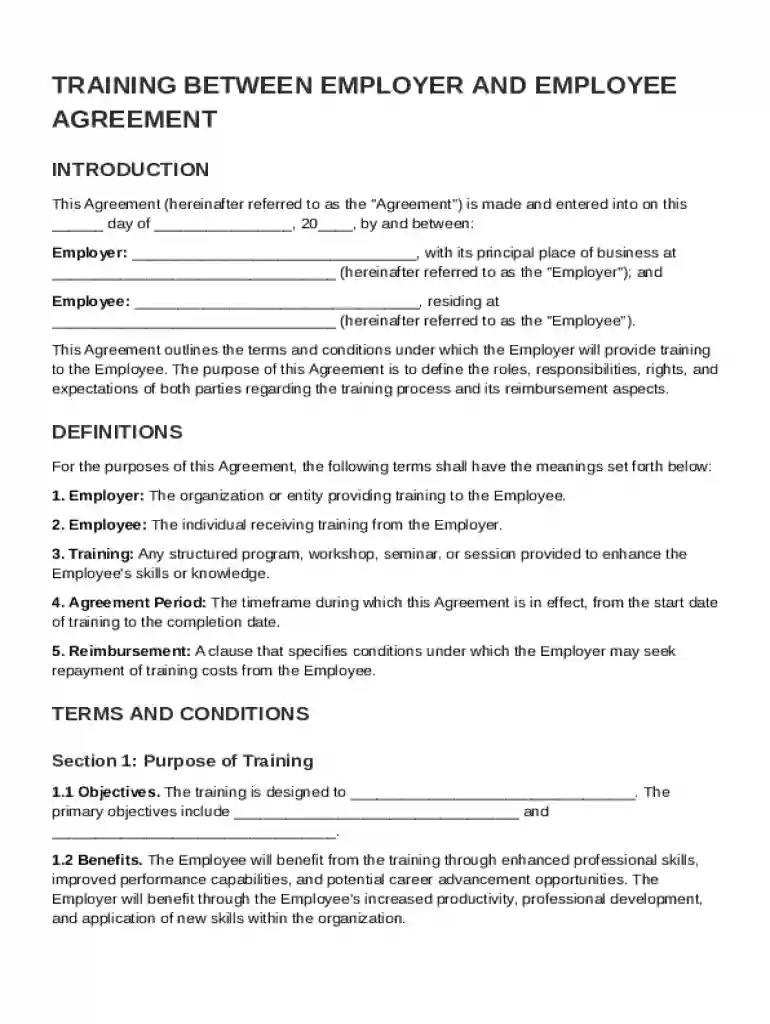
01. Edit your form online
Type text, add images, blackout confidential details, add comments, highlights and more.

Type text, add images, blackout confidential details, add comments, highlights and more.

Draw your signature, type it, upload its image, or use your mobile device as a signature pad.

Send it via email, link, or fax. You can also download it, export it or print it out.
A Training Agreement between an Employer and an Employee is a formal document that delineates the terms and conditions under which an employer provides training to an employee. This agreement outlines the roles and responsibilities of both parties, ensuring clarity and mutual understanding. By defining key elements such as training objectives, costs, reimbursement conditions, confidentiality agreements, and termination clauses, the agreement aims to enhance the skills of the employee while protecting the employer's investment in training. This structured approach ensures that the benefits of the training are maximized for both the employee and the employer.
Using the Training Agreement template involves several steps to ensure that it effectively captures all necessary terms and conditions. Begin by reviewing the template to familiarize yourself with its sections. Next, customize the template to fit specific organizational requirements and training objectives. This may include inserting details about the training program, timelines, roles of the trainer and trainee, and any reimbursement policies. It's crucial to have a legal expert review the draft to ensure compliance with applicable laws. Finally, both parties should read and understand the complete document before signing. This ensures that all provisions are clear and agreed upon.
The Training Agreement template includes several critical elements that are vital to its effectiveness:
Each of these sections should be tailored to fit the specific context of the organization and the training being provided.
Completing the Training Agreement requires a structured approach:
The Training Agreement serves a legal purpose by formalizing expectations and obligations between the employer and employee regarding training activities. Legally, it is designed to protect both parties. For employers, the agreement reassures that their investment in an employee's skills will be utilized within their organization. For employees, it clarifies what they can expect in terms of learning objectives and financial commitments. Compliance with laws, such as the Fair Labor Standards Act (FLSA), is crucial to ensure the agreement's enforceability.
The Training Agreement encompasses specific terms that define the scope and application of the training. Important terms include:
Understanding and clearly detailing these terms helps avoid misunderstandings and provides legal clarity.
The Training Agreement is most commonly used by organizations that invest heavily in employee development. This includes corporations, educational institutions, and professional training organizations. Human Resource departments typically administer these agreements to ensure alignment with the organization's strategic goals. Employees who are likely to undergo specialized or extensive training programs, especially those in technical, managerial, or senior roles, are often the primary users of these agreements.

Consider a technology company offering an advanced coding boot camp to its software engineers. The Training Agreement would outline the cost-sharing arrangements, the skills to be developed, and the expectation that the trained employee would remain with the company for a specified period. In another scenario, a healthcare provider may train nurse practitioners on new medical software, detailing the expectations of use within their practice post-training. Such examples underscore how agreements are tailored to specific contexts and needs.
Digital Training Agreements are compatible with various document management platforms, facilitating easy customization and distribution. Platforms like DocHub provide tools to edit, annotate, and sign agreements electronically. The compatibility extends to integration with cloud storage services like Google Drive and Dropbox, allowing seamless access and sharing. This digital approach ensures that agreements are easily manageable and accessible, promoting efficiency and compliance in document management practices.
By following these detailed insights and guidelines, organizations can effectively utilize the Training Agreement to enhance employee skills while safeguarding their training investments.
At DocHub, your data security is our priority. We follow HIPAA, SOC2, GDPR, and other standards, so you can work on your documents with confidence.
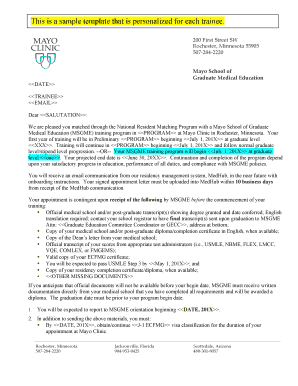


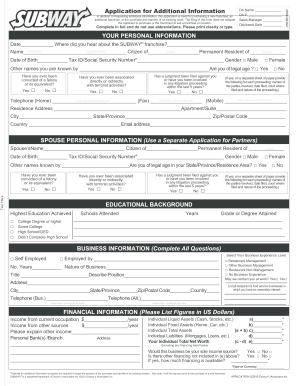


May 6, 2012 Handbooks can be valuable communications and employee relations tools. They can be extremely helpful in maintaining consistency among
This memorandum is for the purpose of outlining the agreement between the school and employer on the conditions of training to be given a student learner while
This agreement is between a college and a corporation for training, where the college provides training in exchange for a fee. College provides materials,


